

The conflict that began when Israel launched a series of strikes against Iran on Friday has continued to escalate in the days since. The protracted exchange of attacks is one of the fiercest episodes to date in the decades-long discord between the two nations.
Strikes in Iran and Israel since Friday
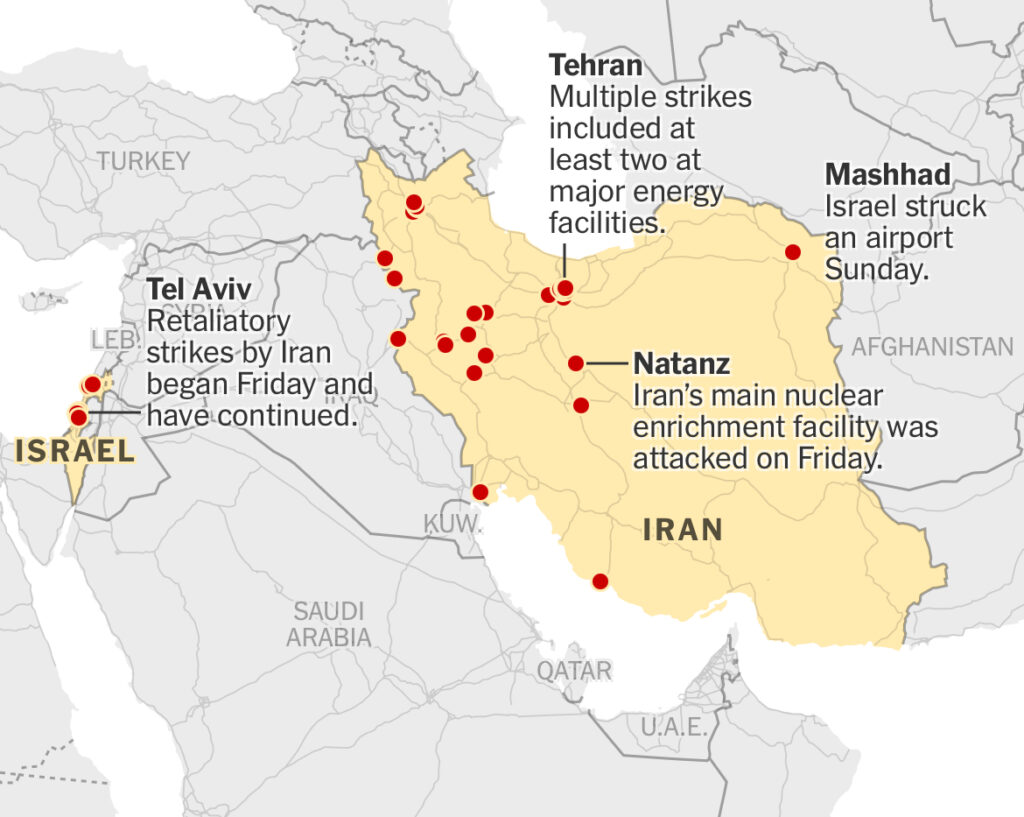
Israel bombarded Tehran with a new wave of strikes on Sunday afternoon. Before that, it struck about 80 targets overnight in Tehran, according to an Israeli military spokesman. Israeli strikes have killed at least 224 people in Iran and injured at least 1,200 more, according to Iran’s health ministry.
Late Saturday night, Israel struck two major energy facilities in Tehran, including its main gas depot and central oil refinery. Israel’s targeting of critical energy infrastructure represented a significant escalation in its military campaign against Iran.
Shahran fuel and gasoline depot
Israel has delivered a major blow to Iran’s chain of command, killing top commanders.
Many of Iran’s strikes have been intercepted by Israel’s missile defense system, but not all. Overnight Saturday was the deadliest night in Israel since Israel launched its surprise attack on Iran on Friday. At least 10 people are known to have been killed during multiple Iranian missile barrages overnight. Three were killed earlier. All were civilians.
Where strikes hit in the Tel Aviv area
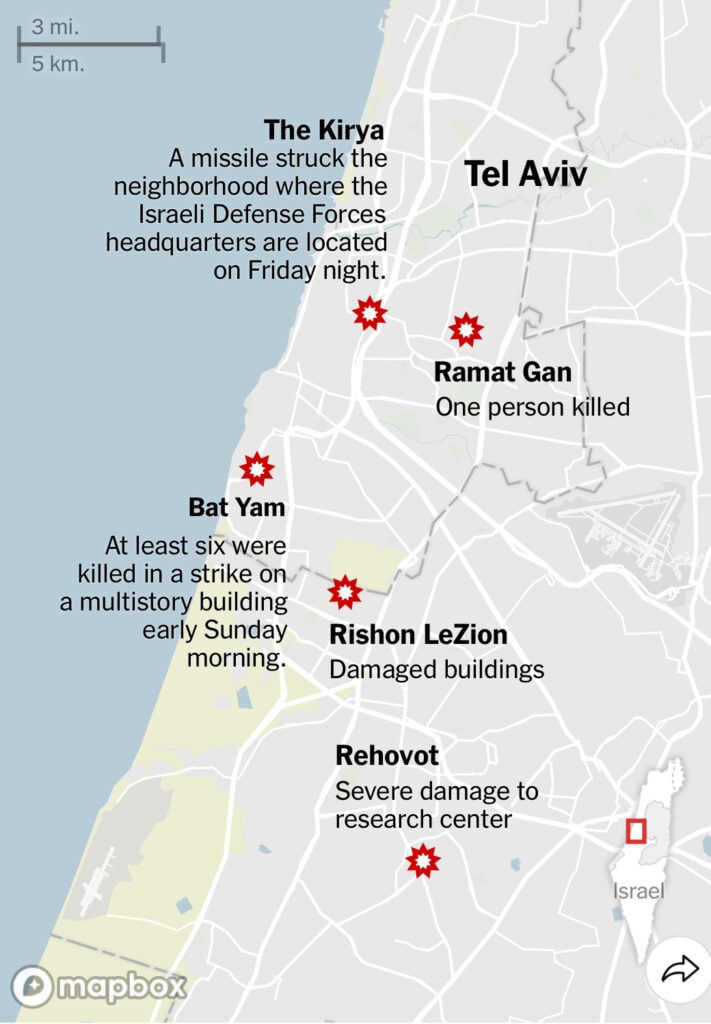
At least six were killed and dozens wounded when a blast heavily damaged buildings in Bat Yam, a city just south of Tel Aviv, early Sunday morning. More people are considered missing, according to the police commander.

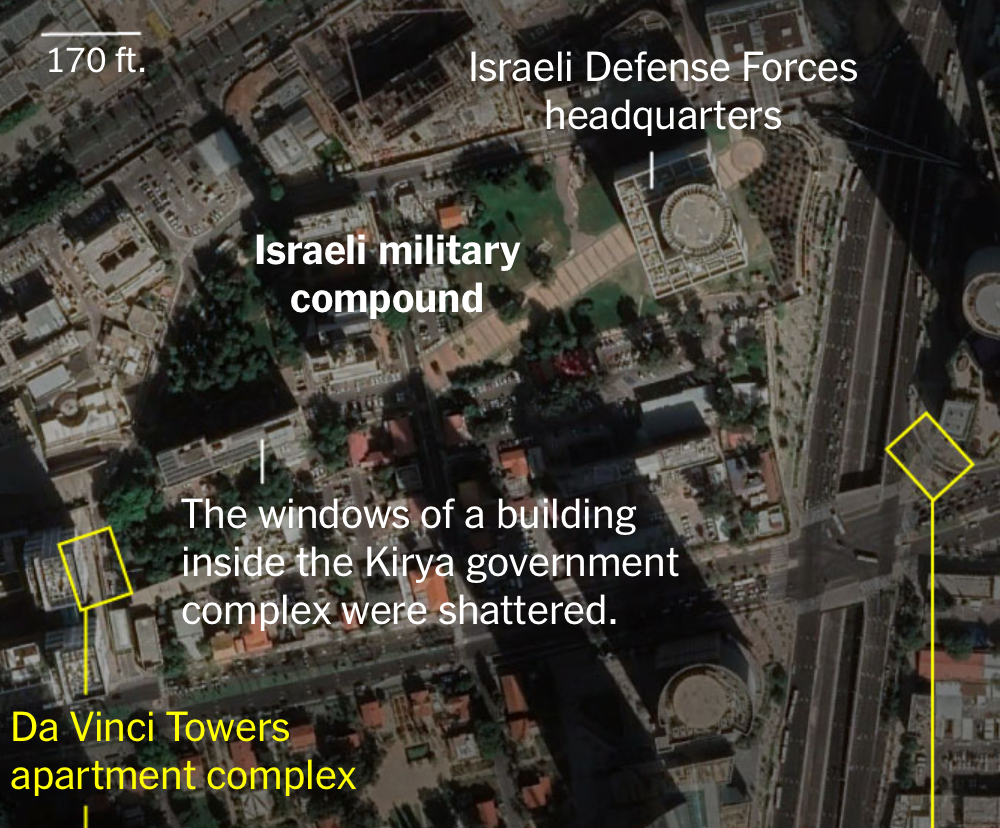
Videos posted on social media on Friday and verified by The Times showed a large explosion in the Kirya area in central Tel Aviv, where a number of government and military facilities are located, including the headquarters of the Israeli Defense Forces. Several buildings in the area were damaged.
Tehran
Israeli strikes collapsed a section of a 14-story residential building near Nobonyad Square in northeastern Tehran on Friday, according to videos of the immediate aftermath and rescue efforts verified by The Times. One of them showed a section of the building torn in two, with apartments ripped open. Iranian state television reported that 60 people died in the strike, including 20 children.
Israel attacked military bases around Tehran, including Parchin. Multiple residential buildings were also attacked, including highly secure complexes for military commanders, in what appeared to be targeted assassinations, according to four senior Iranian officials.
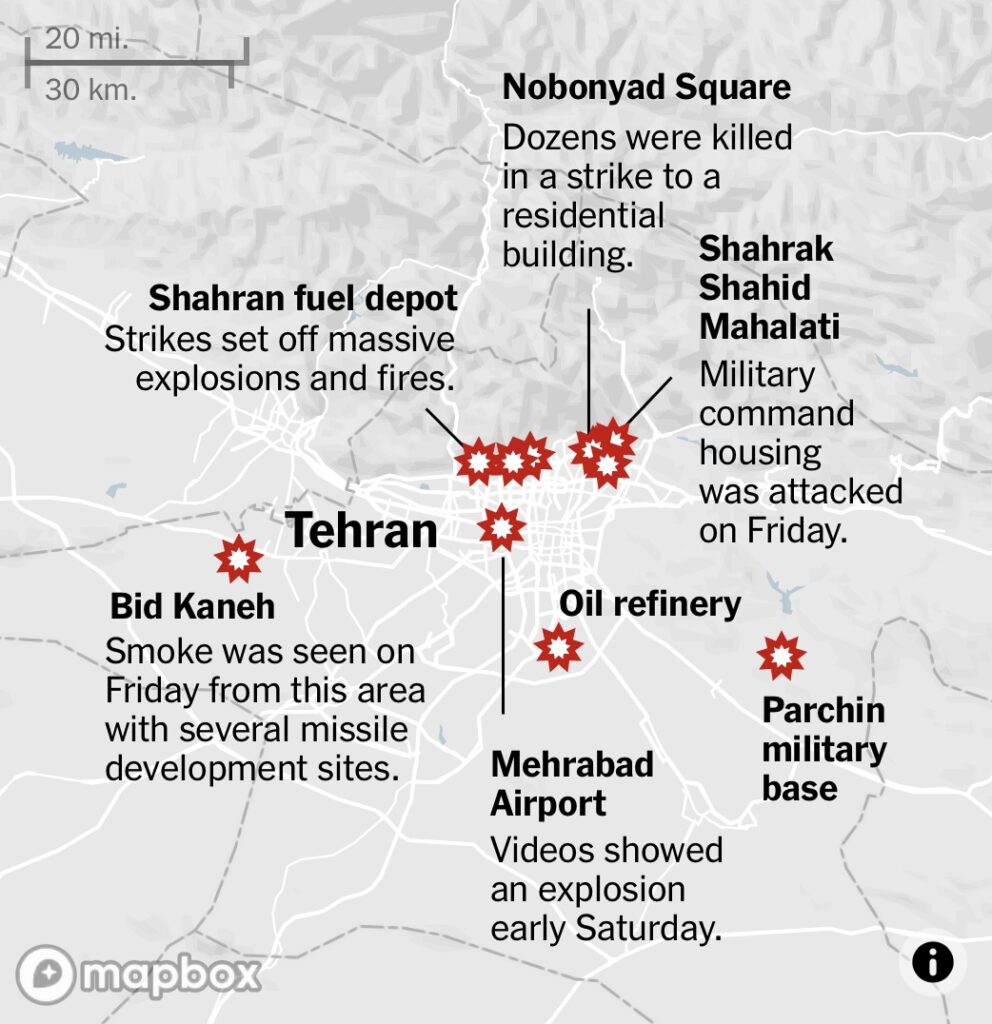
Residents of Tehran reported hearing huge explosions and seeing Israeli fighter jets.

Iranian state television broadcast images of smoke and fire billowing from buildings.

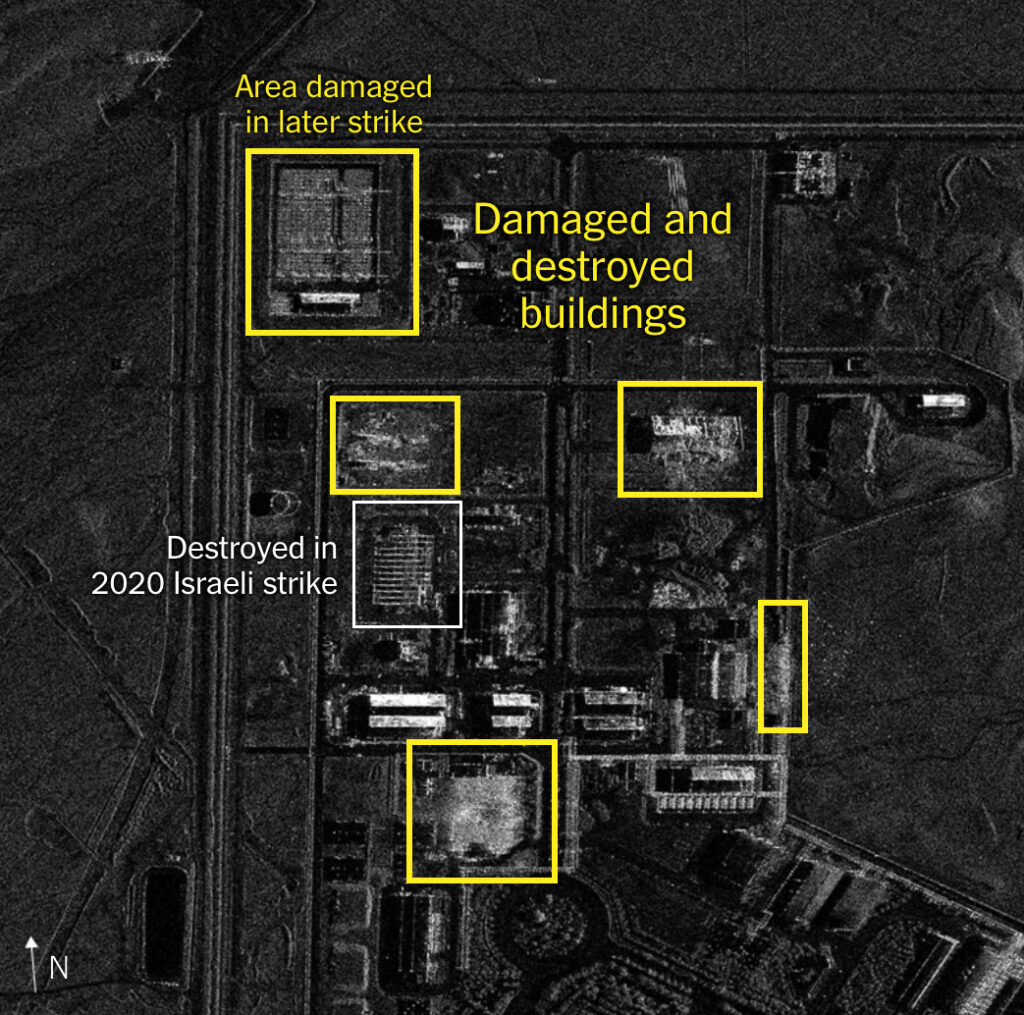
Natanz nuclear-enrichment complex
Social media footage verified by The New York Times, as well as an Iranian news report, showed flames and thick black smoke from the Natanz nuclear enrichment complex on Friday.
Natanz is Iran’s main nuclear enrichment facility. It is where Iran has produced a vast majority of its nuclear fuel — and, in the past three years, much of the near-bomb-grade fuel that has put the country on the threshold of the ability to build nuclear weapons.
Tabriz
Tabriz, a city in northwestern Iran, was hit on Friday. Social media footage verified by The Times shows that an airport in the city was hit by Israeli strikes.
Large plumes of thick black smoke were seen over Tabriz as several apparent strikes continued to hit the area.
Kermanshah
Video verified by The Times shows large plumes of dark smoke near a mountain range in Kermanshah, in western Iran, on Friday morning.
The smoke appeared to be rising from an area believed to be the site of an underground missile base. An Iranian army aviation base and an Islamic Revolutionary Guards Corps facility are also nearby.
Also read: Why did Israel attack Iran in the middle of US-Iran nuclear talks?
Featured photo source: Atta Kenare – AFP
Source: Martín González Gómez-Julie Walton Shaver-Pablo Robles-Daniel Wood-Samuel Granados-Bora Erden-Malachy Browne-Christiaan Triebert-Devon Lum-Lazaro Gamio-Elena Shao-Ashley Wu / New York Times
