

Parliament votes to remove Hungarian president from office

Date:

The Hungarian parliament has voted to remove President Tamás Sulyok from office, who was widely seen as a loyalist of former prime minister Viktor Orbán who lost power in April after 16 years.

Prime Minister Péter Magyar’s Tisza party used its two thirds majority to steamroll through the 17th amendment to the constitution, ending the term of Sulyok and the head of the Constitutional Court Péter Polt.

It was the most dramatic day in parliament since the new government took office in early May, after its surprise landslide victory against Orbán’s Fidesz party on 12 April.
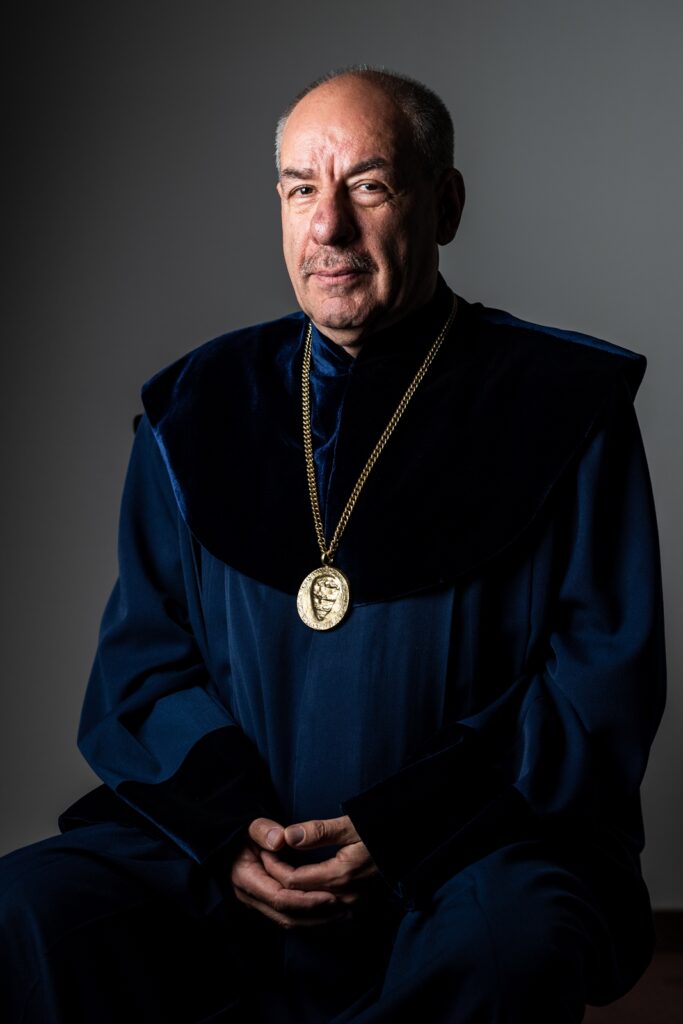
Sulyok faces five-day deadline

Sulyok now has five days to sign the amendment – his own political death warrant – or refer it to the Constitutional Court.

If Sulyok refers it to the court, Magyar has said he will launch impeachment proceedings against him, which would suspend him from office automatically.

Another option would be to simply resign to avoid a constitutional crisis in the interest of the country, as the new government has been urging him to do.

Deputies of the now opposition Fidesz party walked out of parliament before Monday’s vote, accusing the Tisza party of building a tyranny.

Fidesz argues that the amendment grants the government the arbitrary power to dismiss any public official from office, with immediate effect.

‘Fidesz have fallen foul of their own concept of power’

“The great irony of the situation is that Fidesz have fallen foul of their own concept of power,” Péter Rona – a former opposition presidential candidate – told the BBC.

The 2011 constitution, written by Orbán’s government, enshrined the principle that “the winner takes all”.

In office from 2010 until 2026, Fidesz reshaped the Hungarian state to its own will, and filled supposedly independent state positions with party loyalists – using its own two-thirds majority.

The 141 Tisza deputies in parliament gave a standing ovation as the results of the vote were announced.

The amendment also removes Constitutional Court judges who are over the age of 70, and forbids deputies who have served three terms in parliament from standing again – which applies to more than half the current Fidesz deputies.

Former Supreme Court chief backs president’s removal

“I quite agree with the removal of the president,” András Baka, former head of the Supreme Court, told the BBC.

Hungary was governed by the rule of law from 1989 to 2010, he argued. After that, Fidesz captured state institutions and created an authoritarian state.

“And it is now very difficult to break up a sophisticated authoritarian regime… which was designed to survive even after electoral defeat,” Baka said.

The 17th amendment is in fact a package of many laws, intended to guide the country until a new constitution can be adopted in two or three years’ time.

The only part of the package he disagrees with, Baka said, is the section which prevents parliamentary deputies who have served three terms from running again.

“This limits the right of the public to vote for whom they wish,” he argued.

Orbán absent as Fidesz faces turmoil

Since the April election, Orbán’s party has been in free fall, reeling from the shock defeat.

Orbán himself has hardly been seen in public, and refused to take his seat in parliament. On Monday, he left Hungary to watch the finals of the football World Cup in the US.

There is growing anger with Orbán within what is left of Fidesz. Many feel bewildered by his absence.

Gergely Gulyás, the party number two, resigned as head of the parliamentary group of the party on Monday, adding to its woes.

Source: BBC


Also read: Christodoulides’ Paris visit includes talks with EU leaders
For more videos and updates, check out our YouTube channel

Share post:

Popular

More like this
Related

ON THIS DAY: Chile miners rescue ends after 69 days (2010)

On 13 October 2010, the Chile miners rescue came to a successful conclusion when the last of 33 miners trapped deep underground was brought safely to the surface, ending a 69-day ordeal that had captivated audiences around the world. The men had been trapped since 5 August, when a collapse at the San José gold and copper mine near Copiapó, in northern Chile, cut off their route to the surface. Their survival and eventual rescue became one of the most remarkable mining emergencies in modern history. Trapped beneath the Atacama Desert The miners were working approximately 700 metres underground when the mine collapsed, leaving them stranded with limited supplies and no immediate means of escape. For more than two weeks, rescue teams drilled exploratory boreholes in an attempt to locate the men. As hopes of finding survivors began to fade, a breakthrough came on 22 August. A note attached to a drill probe confirmed that all 33 miners were alive. Its message, written in Spanish, declared: “We are well in the shelter, the 33.” The discovery transformed the operation from a search for survivors into an international effort to bring them home. How the 33 miners survived During the first 17 days, the trapped men rationed the emergency food available in their shelter, sharing small quantities of tuna, biscuits, and milk. They organised themselves into groups, maintained routines and relied on their collective discipline to survive the uncertainty. Once rescuers established contact, narrow boreholes became lifelines through which food, water, medicines, letters and communications equipment could be delivered. The miners were also able to speak with relatives and medical specialists, while preparations continued for the complex task of extracting them individually. A rescue watched around the world Engineers developed several drilling plans to reach the miners, ultimately creating a shaft wide enough for a specially designed rescue capsule. The narrow, cylindrical device, known as the Fénix 2, was built to carry one person at a time through the rescue shaft. The extraction began late on 12 October, with the first miner, Florencio Ávalos, reaching the surface shortly after midnight on 13 October. Over the following hours, the miners emerged one by one, greeted by relatives, rescue workers and Chilean officials. The final miner, shift supervisor Luis Urzúa, reached the surface on the evening of 13 October, completing an operation followed by millions of viewers worldwide. A historic moment for Chile Chile's then-president, Sebastián Piñera, was present at the rescue site as the miners emerged, celebrating alongside their families and the rescue teams. All 33 survived, although they subsequently underwent medical examinations and faced the physical and psychological effects of their prolonged confinement. The successful operation was widely celebrated as a triumph of engineering, international cooperation and human endurance. It also drew attention to mining safety standards and the risks faced by workers in the industry. Sixteen years later, the events of 13 October 2010 remain a powerful reminder of the determination of the trapped miners and the extraordinary effort undertaken to bring every one of them home. Also read: Trump weighs firing Kimberly Guilfoyle as Greece...

Rally car crashes into pickup truck during unauthorised event in Limassol

One person was taken to hospital as a precaution...

Christodoulides tells Erhürman Cyprus is not afraid of dialogue or negotiations

President Nikos Christodoulides has said he is ready to...

Vino Cultura Celebrates 20 Years of Wine, People and Hospitality

Vino Cultura marked its 20th anniversary with a special...