

Ukrainian President Volodymyr Zelensky reached Presidential Palace shortly before 11:20 a.m. President Nikos Christodoulides formally welcomed him at the official residence.
Zelensky visits Cyprus specifically for extensive high-level engagements marking Cyprus’ assumption of the EU Council Presidency.
Comprehensive visit programme
Zelensky’s packed schedule includes key bilateral meeting with President Christodoulides. He will also hold official audience with Archbishop Georgios of Cyprus.
The Ukrainian leader participates in the official launch ceremony of the Cypriot EU Council Presidency. He holds bilateral discussions with European Council President Antonio Costa and European Commission President Ursula von der Leyen.
Live arrival coverage
Video footage documents Zelensky’s presidential motorcade procession along Griva Digeni Avenue approaching the Presidential Palace. Additional social media videos circulated earlier showing his arrival at Larnaca International Airport.
Social media account NOELREPORTS detailed the complete visit programme confirming scheduled meetings with Christodoulides, Archbishop Georgios, Costa and von der Leyen.
Strategic EU Presidency context
Zelensky’s visit coincides precisely with Cyprus assuming EU Council Presidency responsibilities. His presence underscores Ukraine’s strategic engagement during Cyprus’ six-month leadership of EU foreign policy coordination.
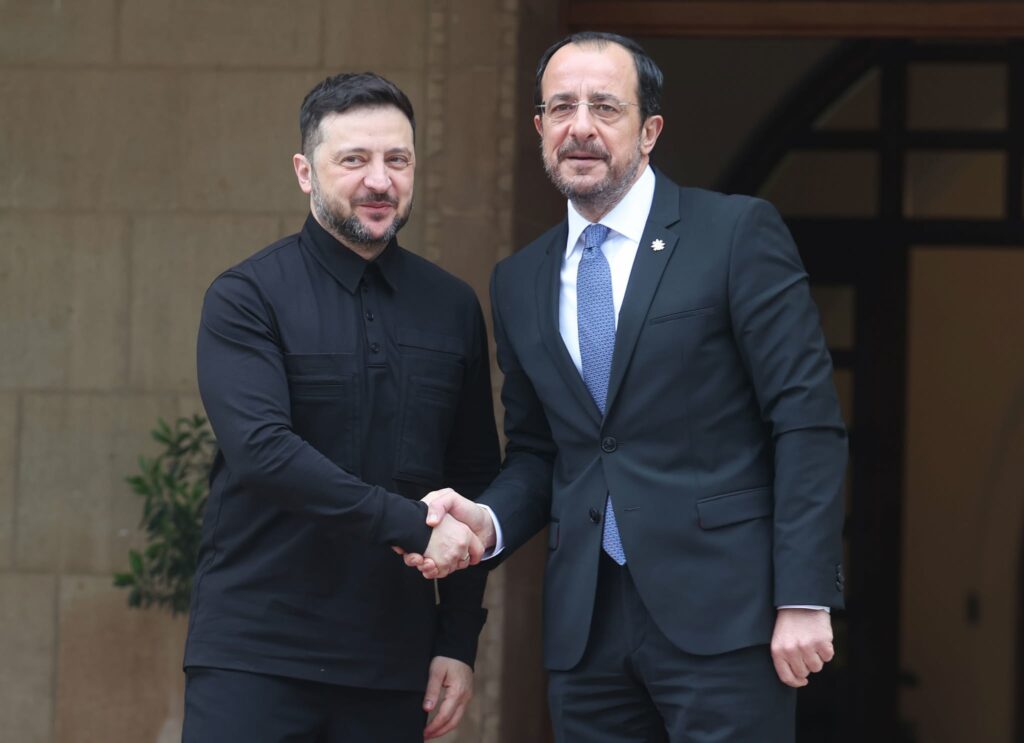
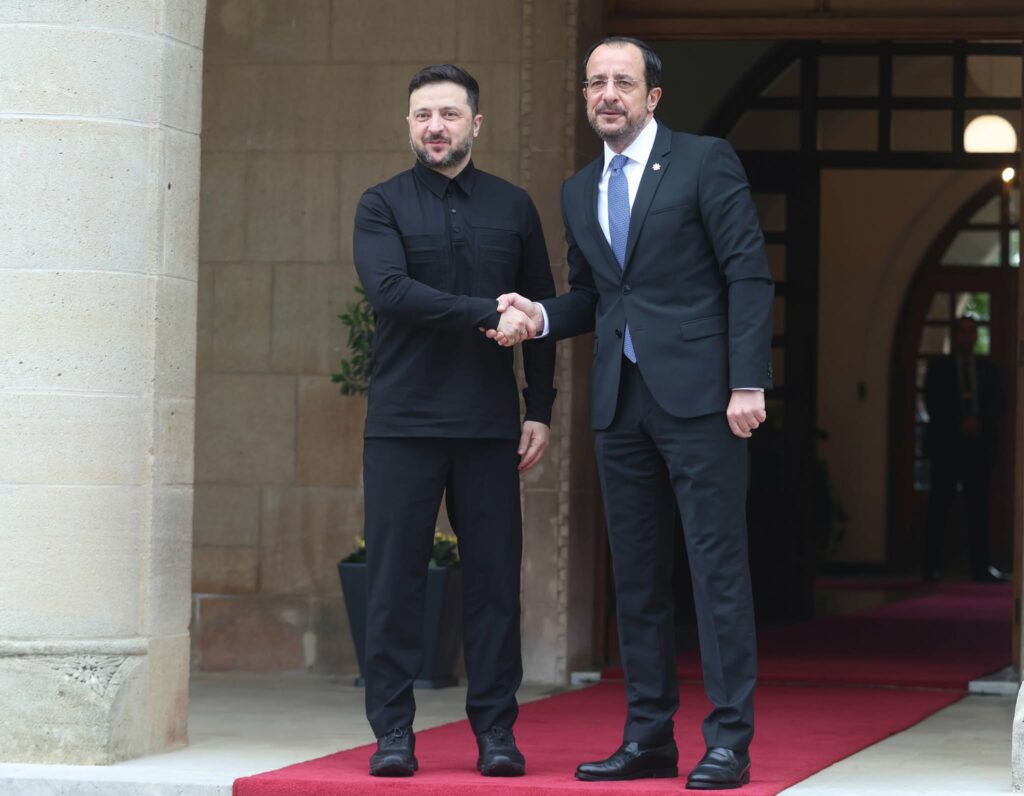
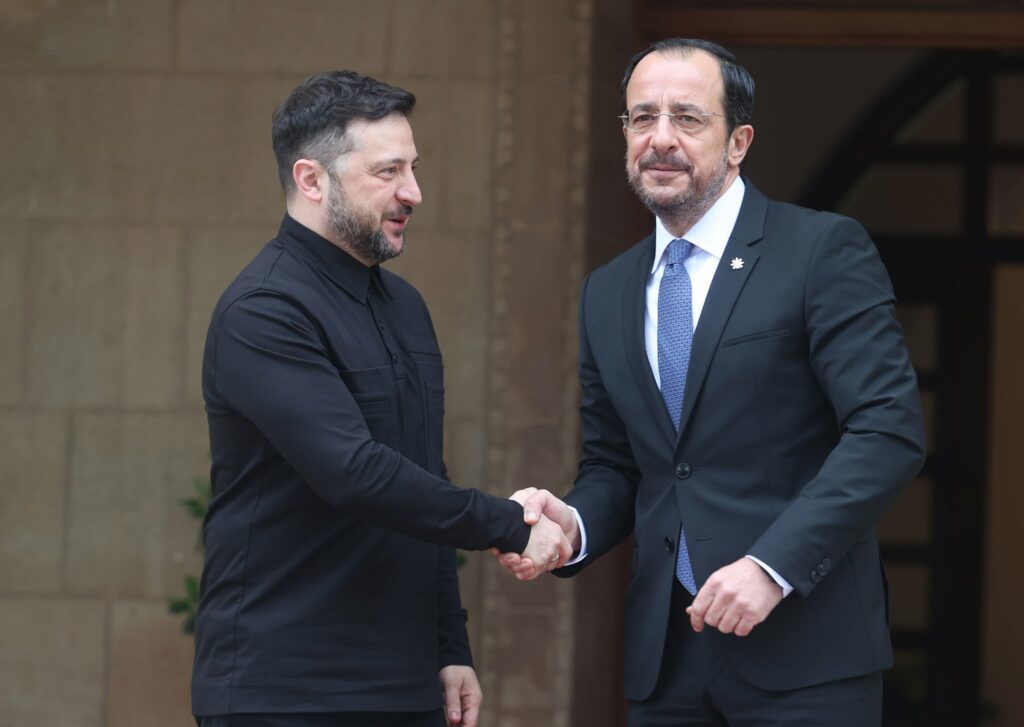
Mutual optimism expressed
Zelensky thanked Christodoulides for invitation and congratulated Cyprus EU Council Presidency assumption. “Very important,” he stated, expressing hope for “many steps forward” bringing Ukraine closer to EU.
Zelensky expressed gratitude for Cyprus support, particularly the humanitarian aid received. Promised to brief Christodoulides on recent American and European partner meetings.
Cyprus reaffirms solidarity
Post-meeting X post by Christodoulides described “substantive and constructive” meeting weeks after his Kyiv visit. Cyprus reaffirms “unwavering support for Ukraine’s sovereignty, independence, and territorial integrity.”
“As country experiencing illegal invasion and ongoing occupation consequences, Cyprus fully understands stakes,” Christodoulides emphasised.
EU Presidency priorities set
Ukraine constitutes central Cyprus EU Presidency priority. Every effort made to continue EU multifaceted support across all levels. Cyprus stands firmly beside Ukraine for just sustainable peace based fully on UN Charter respecting sovereignty and territorial integrity.
Fruitful meeting with President 🇺🇦 @ZelenskyyUa, weeks after my visit to Kyiv. Cyprus reaffirms its steadfast commitment to Ukraine’s sovereignty and territorial integrity. As a country that still lives with the consequences of illegal invasion and ongoing military occupation, we… pic.twitter.com/7Lpu3OGIea
— President of the Republic of Cyprus (@PresidentCYP) January 7, 2026
Meeting with Archbishop Georgios – Mutual appreciation expressed
Archbishop Georgios of Cyprus welcomed Ukrainian President Volodymyr Zelensky at the Archdiocese, expressing strong support for Ukraine and its people. He prayed for justice and divine help for Ukraine, noting ongoing communication with Kyiv Metropolitan Epiphanius.
Zelensky thanked the Archbishop for his solidarity and past visits to Ukraine, stressing the importance of such support during wartime, and invited him to visit Kyiv.
The Archbishop highlighted shared experiences of occupation in Cyprus and Ukraine, including destroyed churches, and discussed strengthening church ties. He confirmed plans to visit the Ukrainian Orthodox Church, while noting that ecclesiastical visits are arranged through church channels.
Зустрівся з архієпископом Нової Юстиніани та всього Кіпру, предстоятелем Церкви Кіпру Блаженнішим Георгієм.
— Volodymyr Zelenskyy / Володимир Зеленський (@ZelenskyyUa) January 7, 2026
Поінформував про наші зусилля для досягнення миру. І також для України, для наших людей зараз, під час війни, важлива гуманітарна підтримка – медична, продовольча допомога… pic.twitter.com/kJVVxgz7N4
Source: Philenews/CNA
Also read: Zelensky visit to Cyprus begins with arrival in Larnaca
For more videos and updates, check out our YouTube channel.