

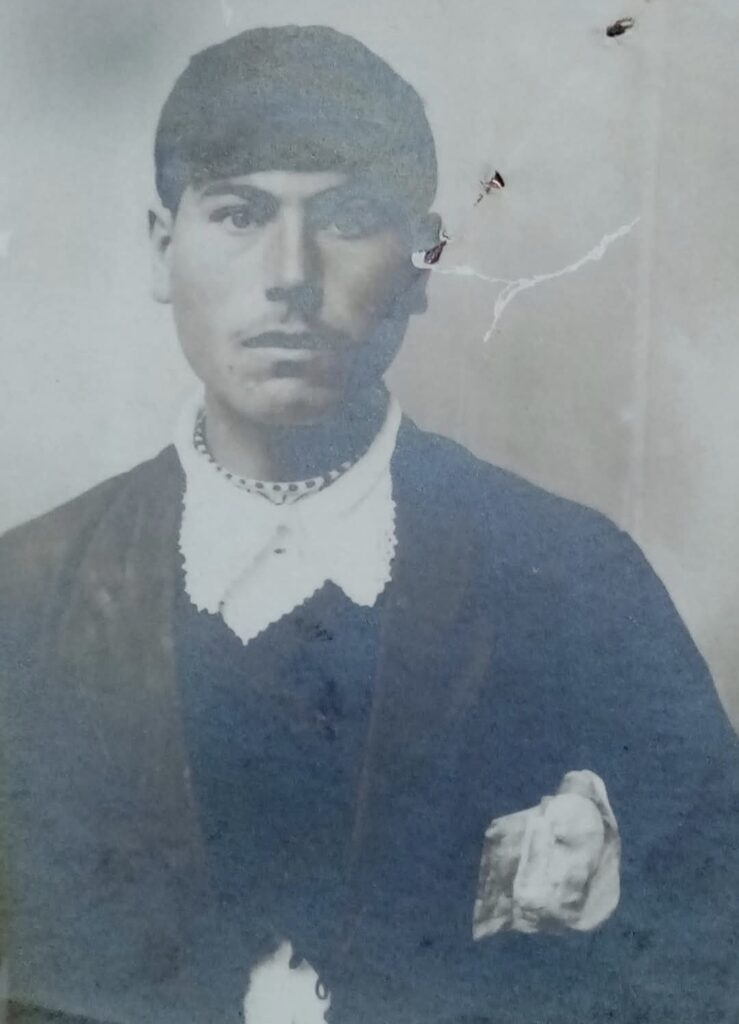
At the age of 18, he left for America in pursuit of a dream. He shared accommodation with world wrestling champion Jim Londos, worked in coal mines and, after the Wall Street Crash of October 1929 brought everything crashing down, found himself sleeping on park benches. In 1933, he boarded a ship and, after a 40-day journey through Italy and Egypt, returned to Cyprus.
He married, raised a family in Assia and, in 1974, at the age of 73, was arrested and murdered alongside around 70 other people, most of them residents of Assia and neighbouring communities. Only a few years ago were his remains finally identified.
Fate took an extraordinary turn when some fragments of his bones were once again sent to America for identification, as the process could not be completed in Cyprus. The approximately 2,400 bone fragments transferred to the United States belonged to various missing persons. While some of his remains had been discovered and identified several years ago, additional fragments were identified more recently. In total, his family has received roughly 70 bone fragments in two separate handovers, out of the more than 200 bones that make up the human body.
The story belongs to Kyriakos Hadjikyriakou Kotsiinis, whose grandson, Michalis Pileidis, described his grandfather’s life as truly unique.
Chasing the American dream
According to Pileidis, his grandfather was born in 1901 and emigrated to the United States at the age of 18, joining many others who viewed America as a land of opportunity.
There, he worked in coal mines before eventually opening his own restaurant. However, when the stock market collapsed in 1929 and unemployment soared, he lost his livelihood and was forced to sleep on public benches.
Pileidis says that circumstances led his grandfather to live alongside Greek-American wrestling legend Jim Londos, who remained world heavyweight wrestling champion for 16 consecutive years. Londos died on 19 August 1975, one year after Kotsiinis was murdered.
Returning home and building a family
Documents from Kotsiinis’ passport show that he departed New York on 3 August 1933, travelling first to Italy and then to Egypt before returning to Cyprus after a month-long voyage.
Remarkably, nearly 120 years after his birth, some of his remains made the same journey back to America, where they were transported for identification before eventually being returned to Cyprus.
Following his return home in 1933, Kotsiinis married and had four children — three daughters and one son.
“I am his first grandson,” says Pileidis.
He remembers his grandfather as a farmer who cultivated cotton, sesame and aubergines while also crafting furniture.
“Whenever schools were closed and I was older than 12, I would look out the window and, if I saw his cart outside, I would rush to help him prepare the mule before we headed to the fields,” he recalled.
“Sometimes he would let me guide the mule. He taught me that pulling the left rein turned the animal left, pulling the right rein turned it right, and holding both reins while using the whip kept it moving straight ahead. Those were some of the happiest moments of my childhood. I do not know if there is anyone else in Cyprus with a similar story.”
Execution and an attempt to erase the crime
Kotsiinis’ remains were discovered in one of two wells at the Orinthi site, where detainees from Assia were taken and executed during the Turkish invasion in August 1974.
According to available information, the remains were exhumed around 1994–1995 in an apparent attempt to conceal evidence of the crime and were transferred to the former Dikomo landfill site, which was later converted into a public park.
One question that continues to trouble Pileidis and other relatives of missing persons from Assia concerns whether authorities on the Greek Cypriot side were aware that the remains had been dumped at the Dikomo landfill when approximately €12 million was allocated for the park’s construction around 2010.
On 12 April 2024, Pileidis sent a letter to the President of the Republic seeking clarification on the issue. He argues that if such information had been known at the time, pressure could have been exerted or conditions imposed to ensure the remains were recovered and returned to their families.
In the past, an official from the Ministry of Foreign Affairs who attended a meeting of the Parliamentary Committee on Missing Persons stated that the Republic’s authorities were unaware that the remains had been disposed of at the Dikomo landfill site.
Source: Vasos Vaseiliou- Philenews
Also read: Violent incident in Limassol: 40-year-old seriously injures 45-year-old in knife attack
