

From the Carriage Convoy of Sir Samuel White Baker unto the Dusty Thoroughfares of Larnaca in the Year 2026, wherein History appears most curiously inclined to revisit the very ground upon which we had presumed ourselves to have advanced.
By Christopher Pitsillides
Upon taking even the briefest promenade through the centre of Larnaca in this present year of Our Lord 2026, the observant citizen or indeed the unsuspecting traveller may find himself overcome by a most curious sensation: namely, that he hath somehow wandered not merely through a city undergoing improvement, but through a portal of time itself.
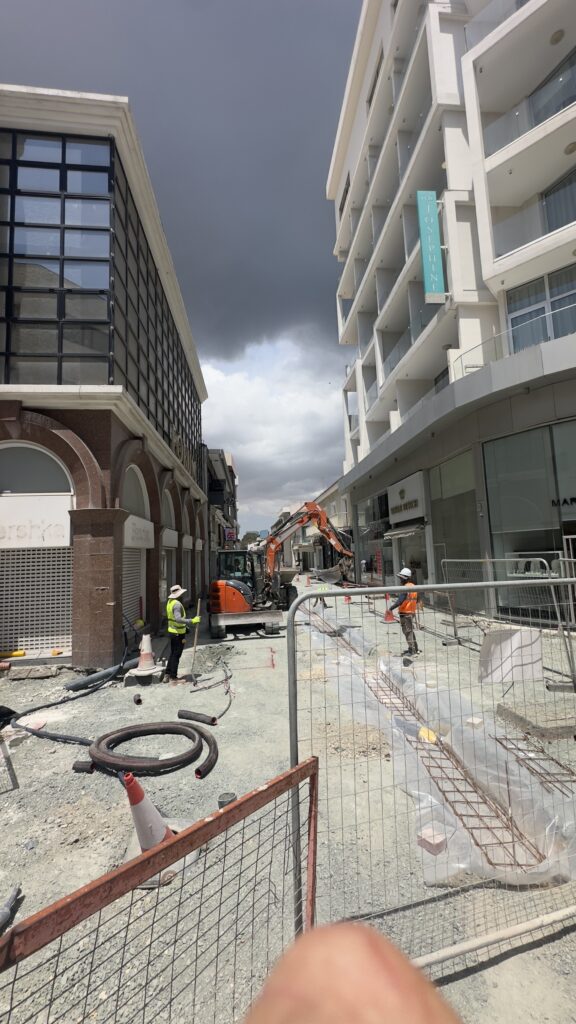
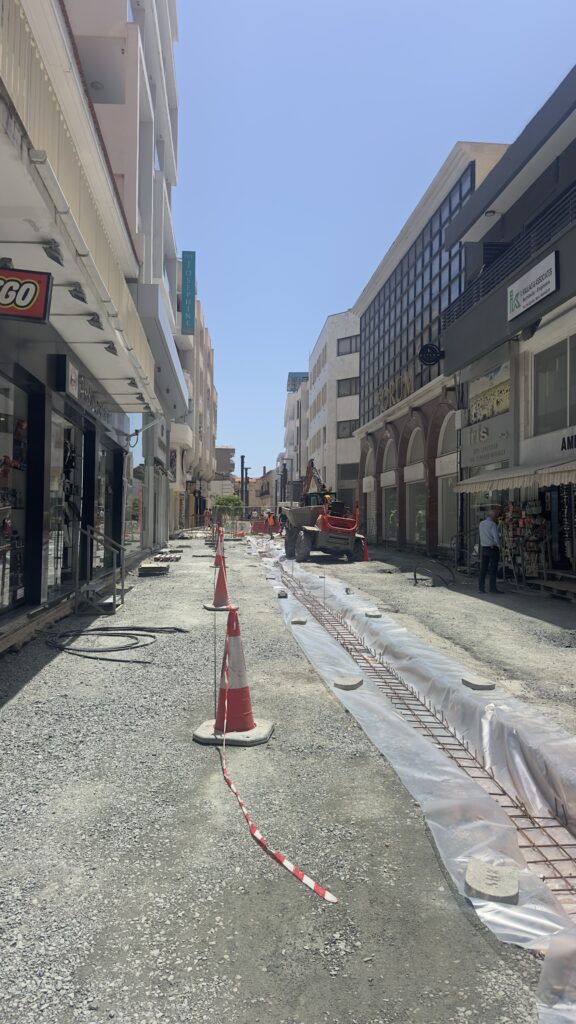
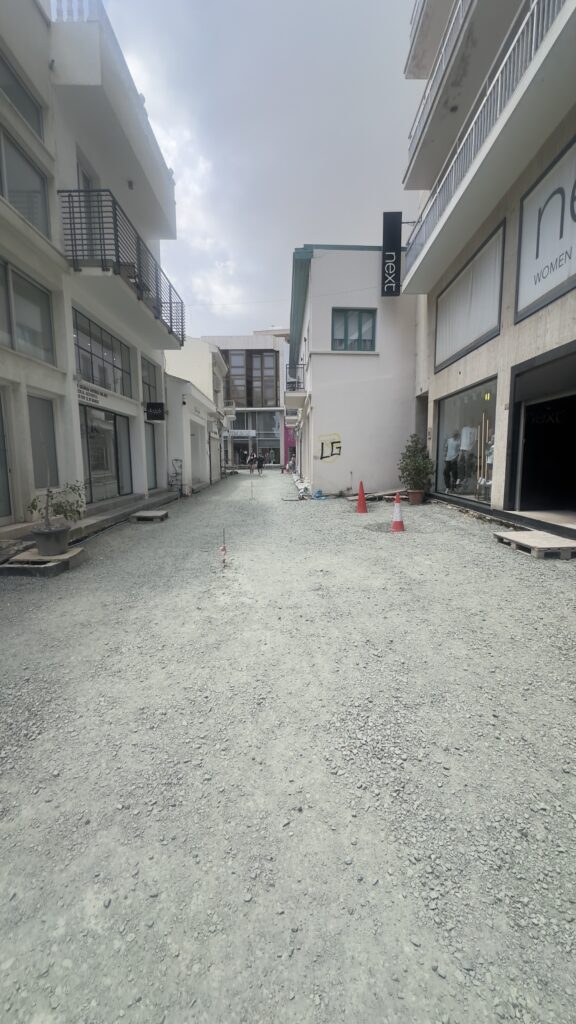
For the “roads”, if such an honourable term may presently be afforded them, bear an extraordinary resemblance to those dusty and uneven thoroughfares more commonly associated with the age of carriage, oxen, and imperial correspondence than with the polished ambitions of a European municipality.
Thus arises a question at once absurd and strangely reasonable:
Might it now be necessary to return unto the carriage convoy of Sir Samuel White Baker of the year 1879, so as properly to traverse the modern city of Larnaca?
What once might have been dismissed as theatrical exaggeration now presents itself, rather inconveniently, as practical advice.
And yet, history, ever possessed of a mischievous fondness for irony, offers us here a coincidence too elegant to ignore.
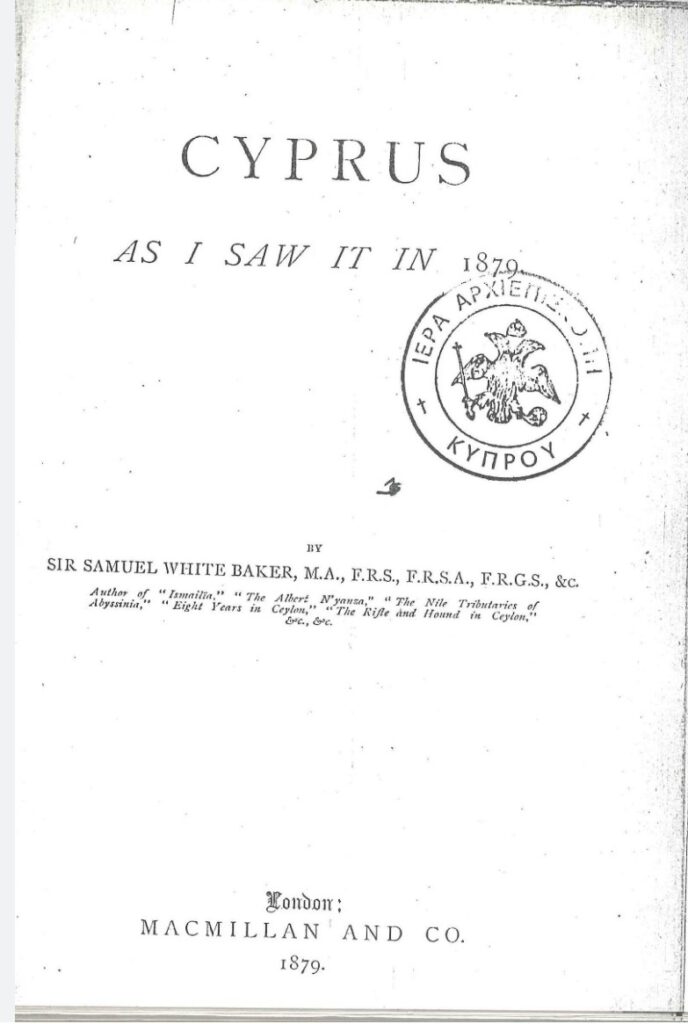
In the year of Our Lord 1879, but one year after Cyprus had passed from the dominion of the Ottoman Porte into the administration of the British Crown, the distinguished explorer, soldier, and chronicler Sir Samuel White Baker visited this island and faithfully recorded his impressions within the pages of his celebrated volume, Cyprus as I Saw It in 1879.
The Empire then beheld a Cyprus newly emerged from three hundred and eight years of Ottoman rule, a land possessed of uncertain roads, modest infrastructure, and settlements which frequently appeared more akin to oriental stations than to the orderly municipalities favoured by European sensibilities.
And let no reader hasten overmuch to laughter.
Larnaca is no ordinary town.
Long before bureaucracy, municipal inconvenience, and ambitious public works, there stood here the ancient city of Kition, one of the oldest continuously inhabited settlements in the world, with a memory extending beyond four thousand years.
The city hath endured the passage of Mycenaeans, Phoenicians, Byzantines, Ottomans, British governors, merchants, refugees, and Europeans, each leaving behind their sedimentary mark upon the soul of the place, layer resting solemnly upon layer.
The Larnaca encountered by Sir Samuel, then the principal gateway of the island, was a settlement of low dwellings, dusty roads, beasts of burden, caravans, and journeys measured less in distance than in patience.
Passing near the district of the Monastery of the Nuns at Kalograion, the good Sir travelled in an extraordinary convoy of wagons, specially conveyed from London for the purpose of enduring the harsh and often inhospitable Cypriot terrain. Within these travelling contrivances were found beds, provisions, utensils, storage compartments, and accommodations befitting a gentleman determined not merely to traverse the island, but to survive it with dignity.
In many places, horses themselves surrendered their station to the slower yet sturdier ox, lest carriage and traveller alike perish in the undertaking.
And here, dear reader, satire begins gently to intrude upon history.
For one hundred and forty-seven years later, wandering through the centre of modern Larnaca amidst excavations, gravel, clouds of dust, barricades, diversions, and roads whose completion appears perpetually deferred unto some mysterious tomorrow, one cannot help but suspect that the city is, whether intentionally or otherwise, staging a remarkably convincing historical reenactment.
Only now, we do not speak of a fledgling possession of Empire emerging from Ottoman administration.
Rather, we speak of a city of the European Union in the year 2026, a city which not only aspires to project a modern cultural vision, but hath already been proclaimed European Capital of Culture for the year 2030, and now finds itself tasked with reconciling lofty cultural ambition with the altogether earthly challenge of permitting its inhabitants safely to cross the street.
Indeed, the contradiction proves rather magnificent.
For there exists a peculiar difficulty in harmonising the cultivated promises of Europe’s future with roads so enthusiastically devoted to preserving the inconveniences of the nineteenth century.
Perhaps, therefore, the authorities ought to consider, if only symbolically, a modest return unto the trusted methods of…1879.
Carriages. Carts. Donkeys… and, should necessity require, even oxen.
Not from sentiment.
From necessity.
For when the roads bear greater resemblance to the Larnaca inherited by the British Empire than to the polished avenues of a modern European city, perhaps a well-maintained carriage may yet prove more dependable than the finest automobile.
And why ought we not think creatively?
“The Authentic Larnaca Experience: Travel as Sir Samuel White Baker Did… Anno Domini 1879.”
A guided excursion through genuine dusty thoroughfares; complimentary clouds of earth; immersive construction-site observation; and favourable custom extended unto those valiant merchants who continue heroically, one dares say to preserve the commercial heart of the city amidst circumstances of uncommon perseverance.
Naturally, none would dispute the necessity of improvement. Cities, like empires, must evolve, and temporary inconvenience is oft the tax levied upon progress.
Yet there remains a delicate distinction betwixt advancement and exhaustion; between careful planning and the melancholy sensation of inhabiting a grand municipal excavation without visible conclusion.
For cities possess memory.
And Larnaca, perhaps more than many others, bears within her the accumulated layers of Mycenaean, Phoenician, Byzantine, Ottoman, colonial, mercantile, refugee, and European life — histories not erased, merely resting beneath the surface, waiting patiently to remind us of themselves whenever the dust is stirred.
The question, therefore, is not whether we ought to return unto 1879.
The question is whether, gazing upon the images of 2026, we may honestly claim to have travelled sufficiently far from it.
And perhaps the greatest irony of all is this:
Were Sir Samuel White Baker to stroll once more through the streets of old Skala (Larnaca), he would scarcely require either map or guide.
For he would already know the dusty the old track.
Christopher Pitsillides
Historian of the Collective Memory
A Note Concerning the Historical Illustration: The accompanying visual reference is drawn from the distinguished work of Sir Samuel White Baker, Cyprus as I Saw It in 1879 (London, 1879), with grateful acknowledgement to the archival collection of the CVAR Costas & Rita Severis Foundation / Centre of Visual Arts & Research, Nicosia, wherein such remnants of Cyprus’s visual past continue faithfully to be preserved.
Also read: Cyprus Yesteryears: From Donkeys to Electric Scooter, Progress or Plot Twist?
For more videos and updates, check out our YouTube channel
