

Protests in Albania entered a seventh consecutive day of violent clashes on Monday, as demonstrators, many of them high school and university students, demanded the resignation of Prime Minister Edi Rama.
Official figures showed that 295 people had been injured before Monday’s violence, including 186 police officers. Protesters have attacked a police station and government buildings in the capital, Tirana, amid growing anger over corruption, university conditions and the government.
Clashes erupt as police use tear gas and water cannon
Violence continued as riot police confronted protesters in central Tirana. Police vehicles, including an armoured truck, advanced along a main boulevard, firing water cannon and tear gas as demonstrators fled.
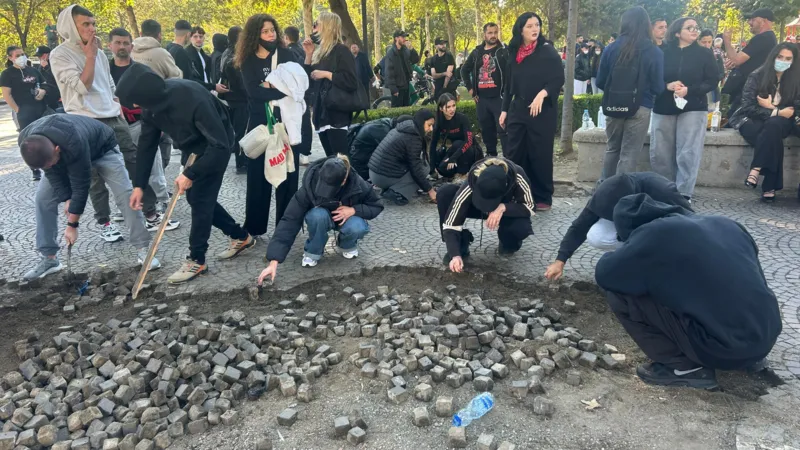
Some protesters were seen loosening cobblestones in Rinia Park to use against police. Others sought shelter in nearby cafés, while volunteers in high-visibility jackets helped people affected by tear gas.
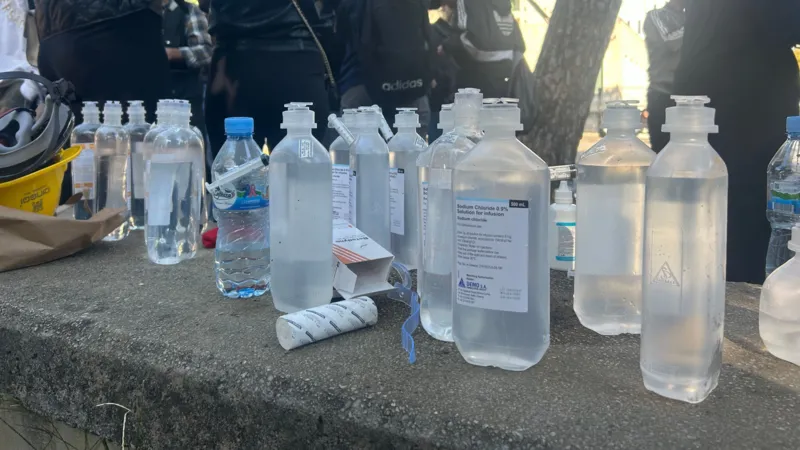
Protesters also carried saline solution to relieve the effects of the gas.
Human rights lawyer Gentian Sejrani, who provides legal assistance to more than 100 people arrested during the demonstrations, criticised police tactics.
He told the BBC that police actions were often chaotic and alleged that officers rarely presented evidence in court. He also cited cases in which people had allegedly been arrested despite having no connection to the protests.
Rama accuses protesters of wider attack on Albania
Rama has condemned the violence and warned that negotiating with those responsible would undermine the state.
“The moment the state negotiates with this, the state has fallen,” he told police chiefs, holding up a rock that had been thrown at officers.
The prime minister also claimed that young protesters had been radicalised by “dark forces” in Europe and the United States, describing Albania as a target of a coordinated attack.
Rama has been a dominant figure in Albanian politics since the turn of the century and has been in power for 13 years. He has pledged to secure EU membership for Albania by 2030, presenting himself as the leader capable of delivering that goal.
Young activists call for a technocratic government
Sidorela Vatnikaj, a 27-year-old activist and master’s student, described a daily routine of coordinating protest groups, arranging legal assistance and first aid, and checking on the safety of friends and family.
Although uncomfortable with attacks on police, she said she understood the anger behind them and accused the authorities of fuelling the violence through their response.
Vatnikaj said young Albanians felt ignored and mistreated, pointing to the departure of around one million people from the country over the past decade, according to her account.
Asked what should happen if Rama stepped down, she called for a technocratic government to run the country for a year and prepare for what she described as genuine democratic elections. She has accused Rama of electoral manipulation and links with wealthy foreign investors and organised crime groups; these remain her allegations.
Vatnikaj said young demonstrators were drawing encouragement from Gen Z protest movements elsewhere in the world. She added that previous generations had spent their lives hoping for a democratic society where people could live with dignity, but had not seen that ambition fulfilled.
The protests continue amid a deepening confrontation between demonstrators and the authorities, with violence, arrests and allegations of police misconduct adding to tensions.
With information from the BBC
Also read: France imposes overnight curfews after riots and looting
For more videos and updates, check out our YouTube channel
