

About this Summary
This summary was created with the help of artificial intelligence (AI) to help readers quickly understand the key points of the article.
It has been reviewed by our editorial team before publication. For complete information and full details, please read the full article.
- Around 600 residents remain displaced, with some evacuated from Bédar and nearby neighbourhoods and homes.
- Officials said four victims may have been British nationals, though this has not been officially confirmed.
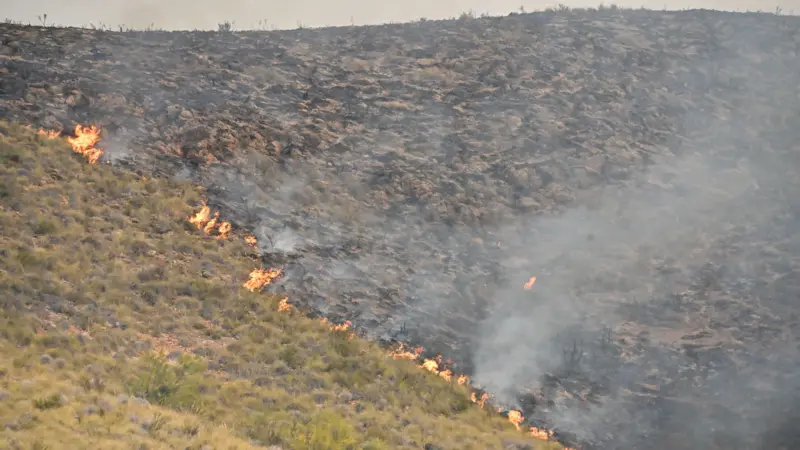
- The fire has burned about 3,000 hectares, with helicopters and planes used because difficult terrain blocks fire engines.
- Authorities suspect a downed power line caused the fast-moving blaze amid a heatwave of around 40°C.
Hundreds battle deadly blaze in Almería
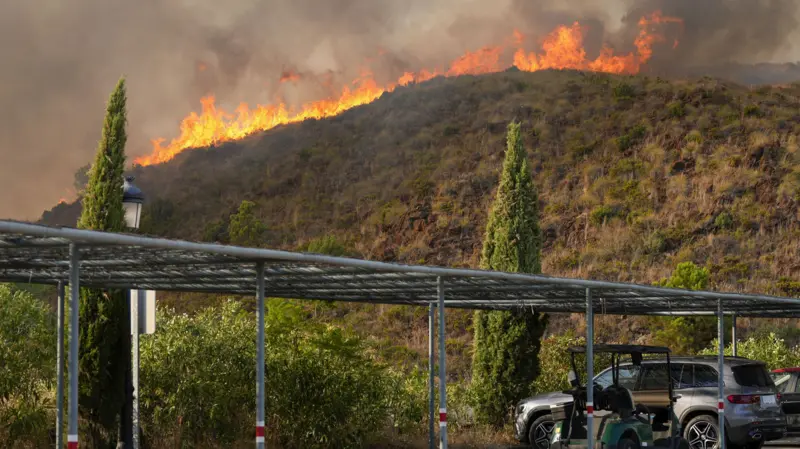
At least 11 people have died and 19 remain missing as a devastating Spain wildfire continues to burn in the southern region of Almería, with hundreds of emergency responders, soldiers and law enforcement personnel involved in the operation.
The bodies of the 11 victims were found in and around the small village of Bédar, near Los Gallardos in Andalusia, while around 600 people remain displaced from their homes.
Andalusia’s regional president, Juanma Moreno, described the impact of the fire as “devastating” and warned that the death toll could rise significantly.
Early indications suggest that four of those killed may have been British nationals, although this has not been officially confirmed. Andalusia’s health and emergencies minister, Antonio Sanz, said four victims were found trapped inside a right-hand-drive car and were believed to be “of British origin”.
The majority, or possibly all, of those killed may be foreign nationals, according to Sanz.
Some victims reportedly used their own evacuation route
Some of the victims died after attempting to leave the area using their own evacuation route rather than the one designated by local authorities, according to Spanish media reports citing Sanz.
The minister said some of those who died had “decided to leave on their own through a dry riverbed”, which “turned out to be a real trap”.
Bédar Mayor Ángel Francisco Collado Fernández said officials had gone door-to-door during the early stages of the fire to warn residents to evacuate their homes, but some were reluctant to leave.
Four people have suffered serious burns or smoke inhalation and were taken to hospital, while another four were treated at the scene for respiratory problems and minor burns.
Around 600 residents displaced
Around 600 people remain displaced by the Spain wildfire, according to emergency services.
Approximately 120 people were evacuated early on Friday, following separate evacuations on Thursday from the Almocáizar neighbourhood, Fuente del Albarico, Los Pinos and La Serena, as well as homes in the Pinar area of nearby Bédar.
The Emergency Agency of Andalucía said 148 people had been taken to two local shelters.
Sanz said the fire was not currently spreading, although an expected shift in winds could aggravate the situation.
Helicopters deployed as terrain blocks fire engines
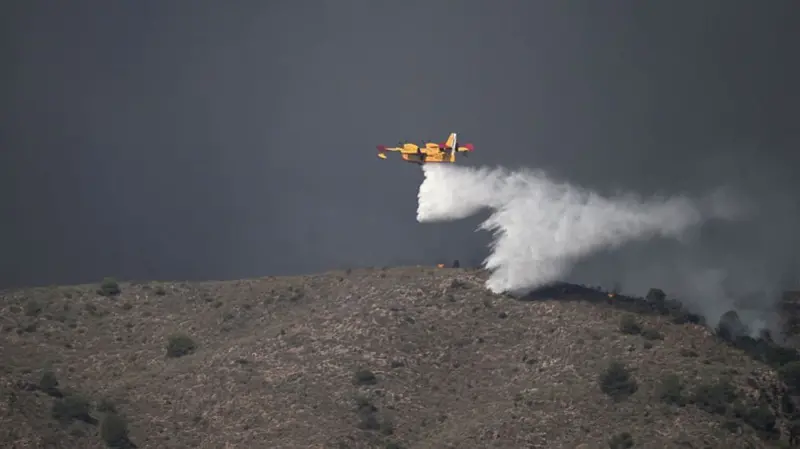
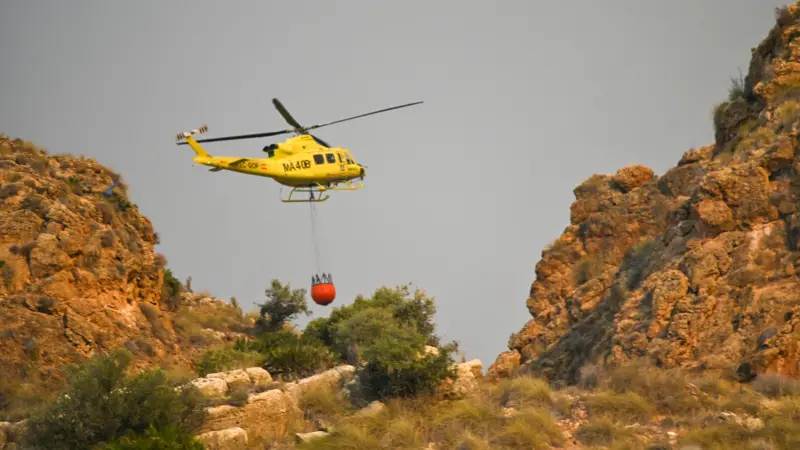
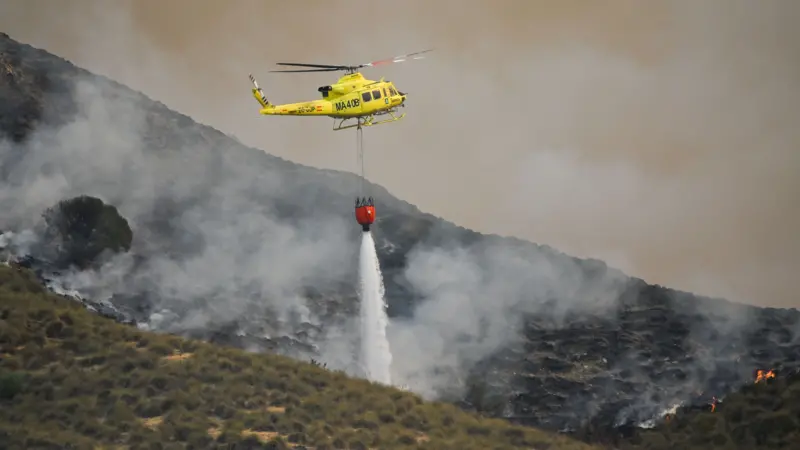
At least seven helicopters are involved in firefighting operations, while difficult terrain has prevented fire engines from reaching some areas affected by the flames.
Antas Mayor Pedro Riado told Spanish broadcaster RTVE that aerial resources were being used to tackle the fire because the local terrain made it difficult for engines to reach the flames.
Officials say the blaze has already burned through approximately 3,000 hectares.
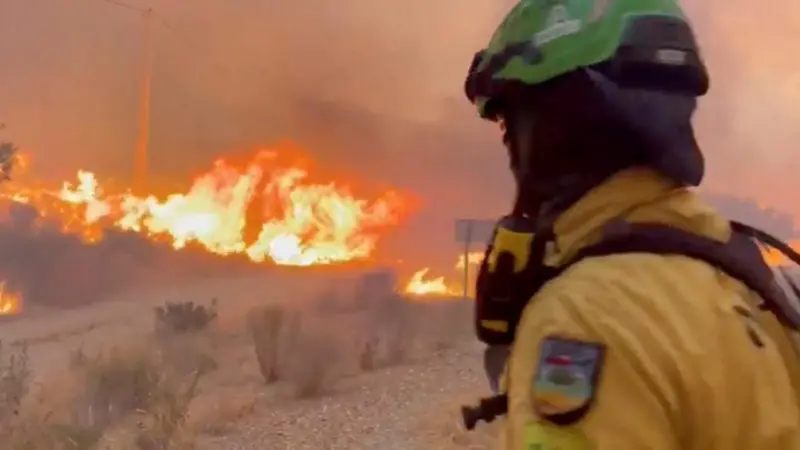
The Andalusian emergency agency has deployed 178 personnel, nine fire engines, seven helicopters and six planes.
Spain’s Military Emergency Unit has also sent 220 soldiers and 70 vehicles to Almería, while more than 160 Civil Guard personnel are assisting with evacuations, traffic management and efforts to establish the origin of the fire.
Downed power line suspected as cause
The fast-moving blaze appears to have been caused by a downed power line, according to Moreno.
Sanz described the fire as complex and rapidly spreading, saying it broke out in a wooded area before advancing around Los Gallardos.
Spanish Prime Minister Pedro Sánchez said all of the country’s available “material and human” resources had been deployed to extinguish the fire.
He said he had spoken with Moreno and that the central and regional governments had been working together since the emergency began.
“I reiterate the government’s condolences to the families of those who have died and our solidarity with all residents,” Sánchez said.
“Please follow the recommendations of the authorities and emergency services. Take extreme caution.”
Wildfires hit southern Europe during heatwave
The deadly Spain wildfire comes amid a sustained heatwave, with temperatures of around 40°C contributing to dangerous conditions across southern Europe.
Firefighters have been battling major wildfires in France, Portugal and Spain this summer, forcing thousands of people to leave their homes.
In Almería, emergency crews continue to battle the flames from the ground and air, while authorities search for those still missing and monitor changing wind conditions that could worsen the blaze.
Also read: Cyprus firefighting aircraft to return from France
For more videos and updates, check out our YouTube channel
