

Early life and family background
Peter Carl Fabergé was born in Saint Petersburg on 30 May 1846 (18 May in the Julian calendar). He became a famous Russian goldsmith and jeweller, best known for his diamond-studded Easter creations, the “Fabergé eggs”.
His father, Gustav Fabergé, of German origin, settled in Saint Petersburg in 1842 and worked in the design and production of decorative objects. His mother, Charlotte Jungstedt, was Danish and came from an artistic family.
The Fabergé family traced its roots back to France and belonged to the Protestant Huguenot community. Following religious persecution in Catholic France in the late 17th century, the family fled to the Berlin region and later moved to Estonia in the early 1800s, then part of the Russian Empire.
Education and artistic training
Fabergé completed his early education in Saint Petersburg before studying at the School of Arts and Crafts in Dresden, Germany, where his family had relocated in 1860. He later continued his studies at the Schloss Commercial School in Paris.
In 1872, after extensive travel across Europe, he returned to Saint Petersburg and married Augusta Julia Jacobs. During the following decade, he trained under Peter Pendin, a collaborator of his father, mastering the craft of jewellery making.
At the same time, the Fabergé workshop worked on restoring objects for the famous Hermitage Museum in Saint Petersburg, strengthening its reputation for high-quality craftsmanship.
Rise of the Fabergé workshop
In 1881, the business expanded into larger premises on Bolshaya Morskaya Street in Saint Petersburg, where it remains today as an exhibition space.
After Pendin’s death in 1882, Peter Carl Fabergé took full control of the family business. He quickly gained recognition as an outstanding designer, attracting elite clients from European royal courts.
He created elaborate decorative objects using precious and semi-precious materials such as gold, silver, malachite and jade. His style was inspired by the decorative arts of 18th-century France during the reign of Louis XVI.
With the help of his four sons, the workshop became internationally famous for its original creations, including figurines, frames, floral designs, animal sculptures and, most famously, the imperial Easter eggs.
The imperial Fabergé eggs
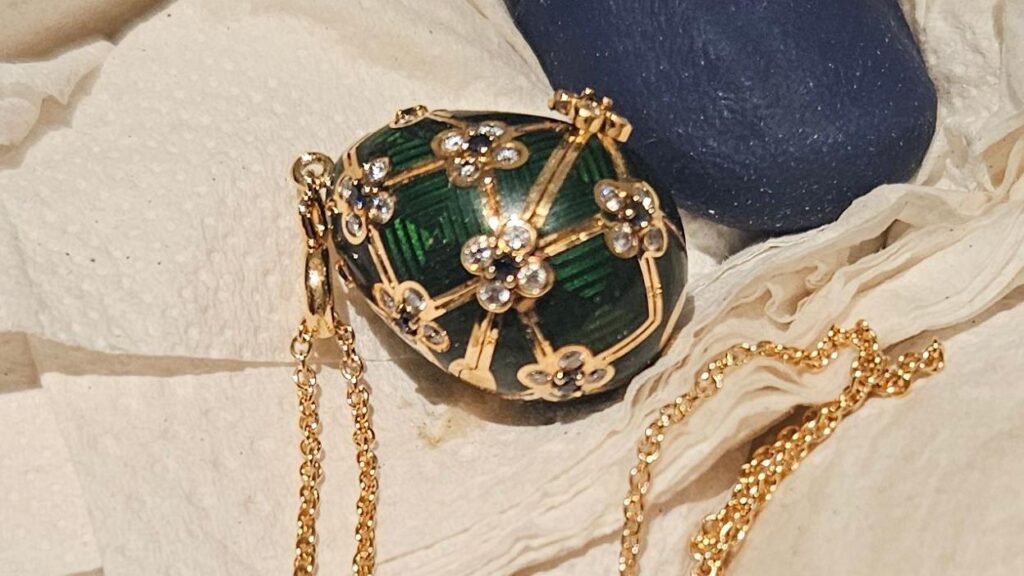
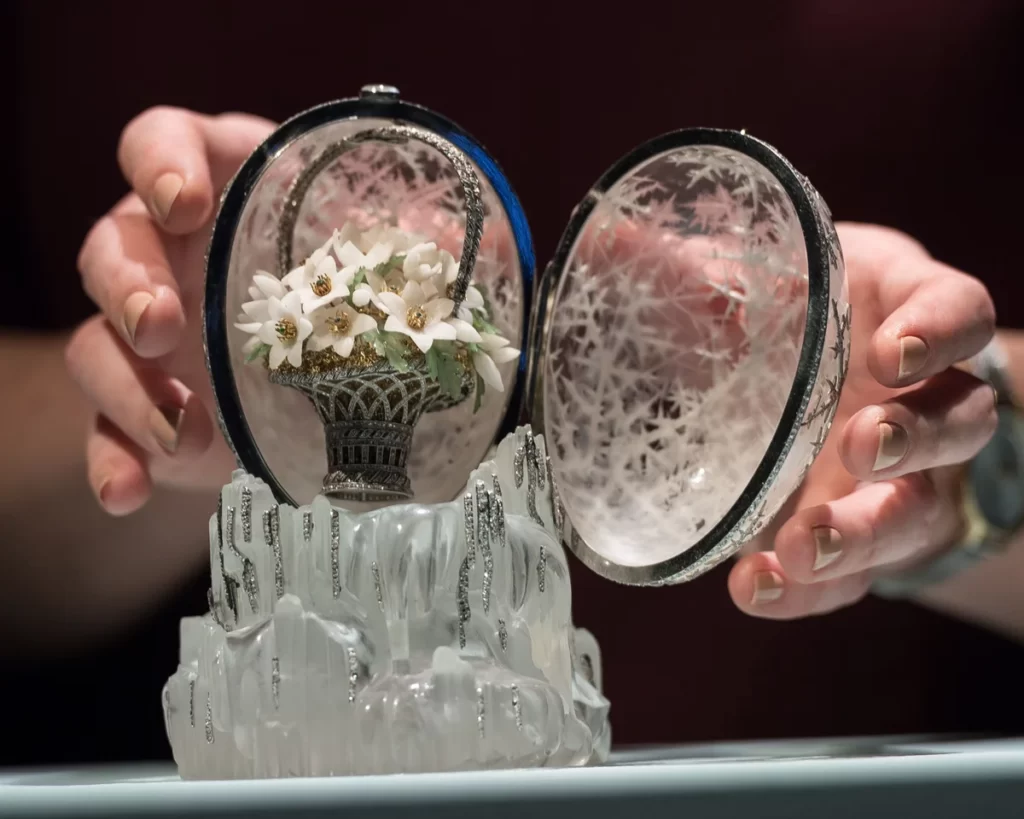
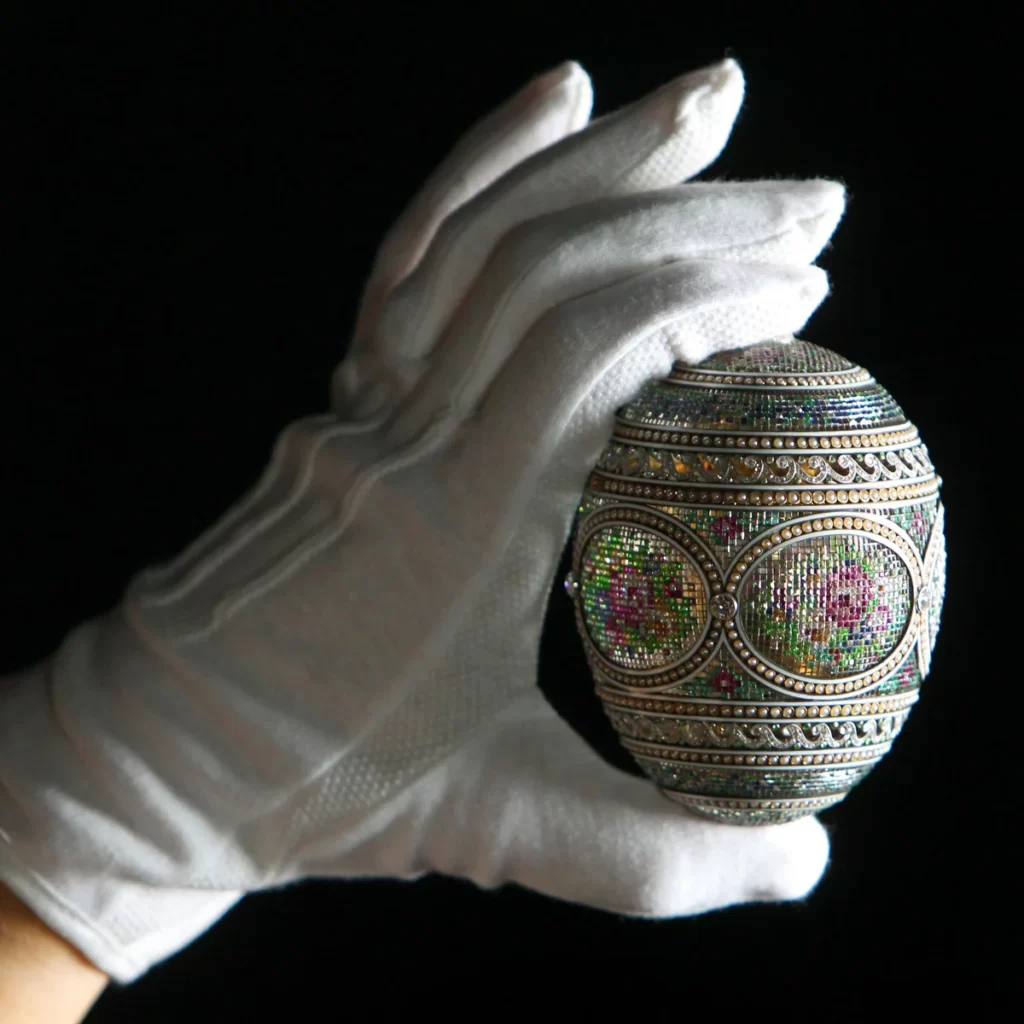
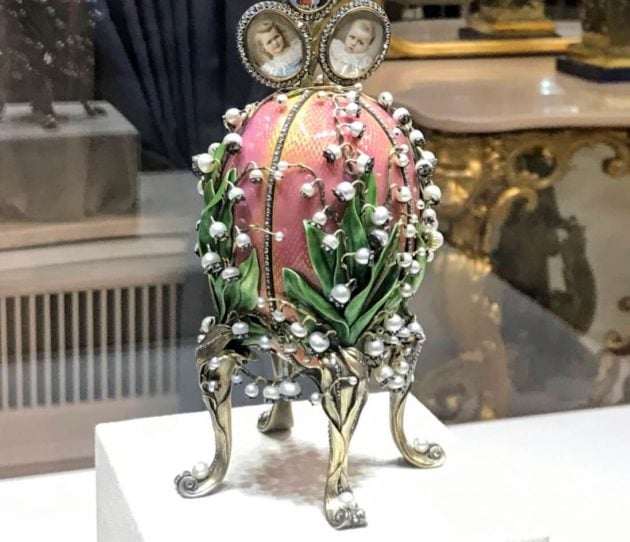
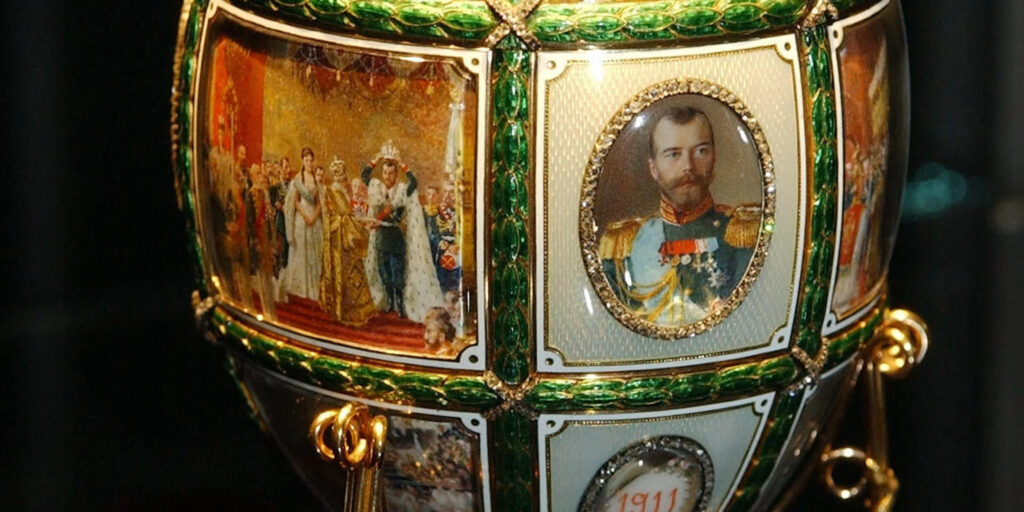
The Fabergé eggs became the hallmark of the workshop. In 1884, Tsar Alexander III commissioned the first egg for Empress Maria Feodorovna.
His successor, Nicholas II, continued the tradition, ordering two eggs each year, one for his mother and one for his wife, Empress Alexandra.
This tradition continued until the 1917 Russian Revolution. By then, 54 imperial Fabergé eggs had been created, each unique and highly detailed, crafted from precious materials and gemstones.
Expansion, revolution and legacy
Between 1882 and 1917, the House of Fabergé operated workshops in Saint Petersburg, Moscow, Odessa, Kyiv and London. At its peak, it employed around 500 workers and produced approximately 200,000 luxury objects.
In October 1918, following the Russian Revolution, the company was nationalised. The Fabergé family fled Russia via Germany and settled in Lausanne, Switzerland. Peter Carl Fabergé died there on 24 September 1920.
Also read: ON THIS DAY: First successful wagon train to California left (1841)
For more videos and updates, check out our YouTube channel
