

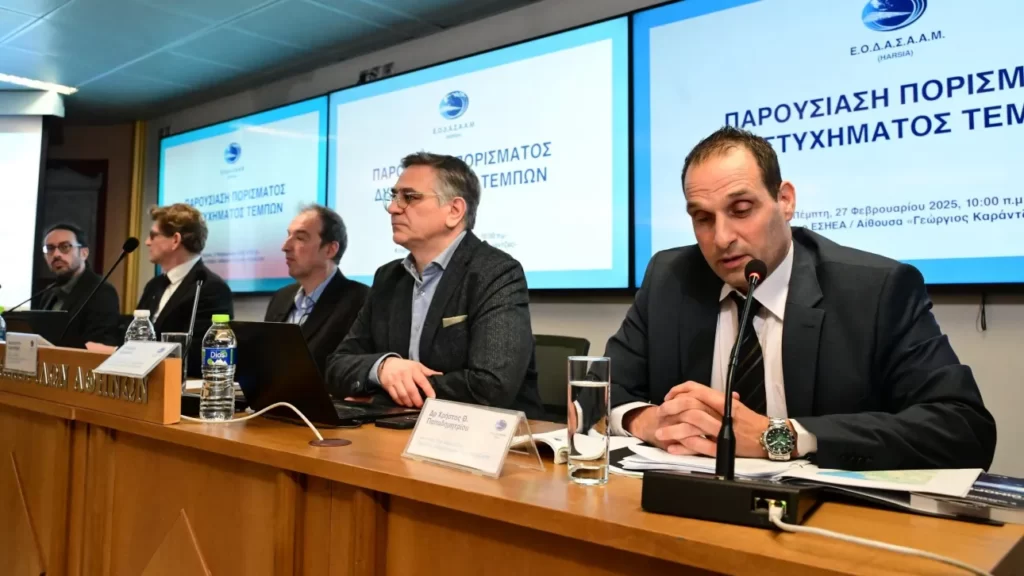
The findings of the National Organisation for the Investigation of Aviation and Railway Accidents and Transport Safety (EODASAAM) regarding the tragic accident at Tempi are currently being announced at the ESIEA offices.
The report will then be submitted to the appellate investigator to be included in the case file.
EODASAAM has stated that its findings will disclose the causes of the tragic accident, the condition of the Greek railway system, the failure to utilise funds for its improvement, as well as the factors that led to the explosion following the train collision.
C. Papadimitriou: Failure to secure the accident site led to loss of crucial evidence
At the start of the announcement, EODASAAM President Christos Papadimitriou emphasised that the organisation had no administration or investigators at the time of the accident. He stressed that “the report was written with full independence, and the EODASAAM council adopted it without altering a single word.”

“Tempi, an event of national tragedy that demands justice, is not the object of this investigation. EODASAM is an authority that must highlight the critical mistakes that led to this horrific accident. The responsibility for punishing the guilty lies with the judiciary,” said Mr Papadimitriou.
“We also examined Contract 717, but beyond that, we looked at the long-standing neglect of the railway system and how austerity measures led to the depletion of OSE’s workforce. The purpose of this investigation is to issue safety recommendations so that the steps taken after the tragedy proceed more swiftly, correcting malfunctioning systems to ensure that such an accident never happens again, and that no more lives are lost on the railway.”
K. Kapetanidis: Possible presence of unidentified fuel
“If the 180-page report is not shelved, we will have a much better and safer railway system,” stated Konstantinos Kapetanidis, Chief Engineer of the EODASAM Accident Investigation Unit, at the beginning of his speech.
“On that day, there were system failures and continuous delays in train schedules. The stationmaster had to handle an overwhelming number of communications.
The workstation was poorly designed—the stationmaster operated a control panel while communications had to be handled to his right, meaning he could not see the control board. Additionally, he was emotionally distressed from a previous mistake he had made earlier.”
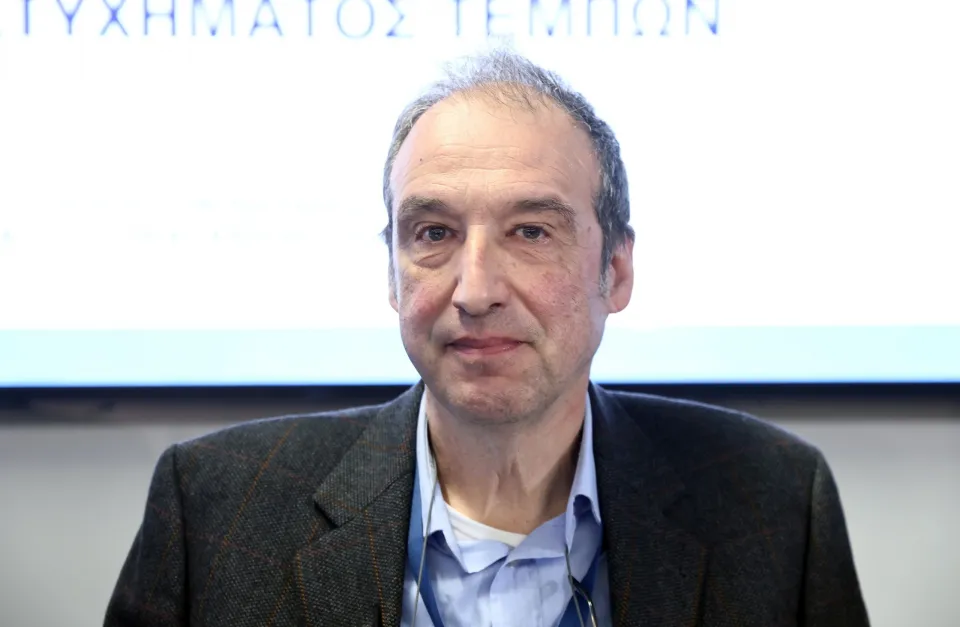
Kapetanidis explained that the stationmaster’s departure command was correct, and the train driver was supposed to repeat the instruction, but he did not. Instead, he proceeded and encountered the switches set diagonally but did not stop. “He should have asked for confirmation. The stationmaster had told him ‘straight ahead,’ but he did not follow up. We do not know why.”
“The competency management of OSE stationmasters does not guarantee their ability to handle safety-critical tasks. There was no systematic monitoring of stationmasters’ performance. As a result, staff worked beyond the acceptable limit,” said Mr Kapetanidis.
A. Alexandrou: No proper mapping of the site
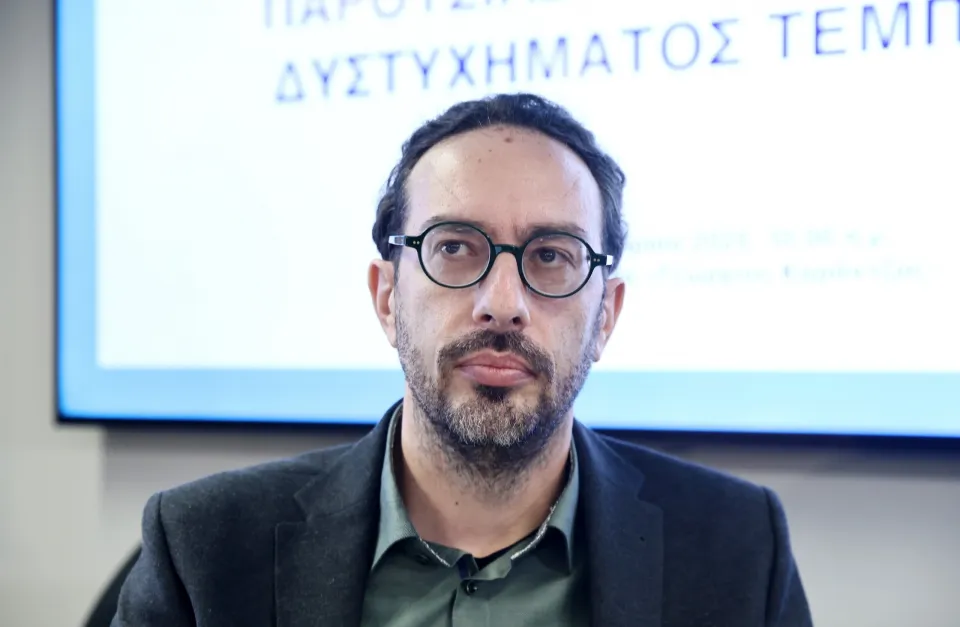
“There was no coordination at an operational level during the search and rescue procedures. The accident site was not properly mapped, leading to a loss of crucial information necessary to understand the accident,” stated Asterios Alexandrou, Head of the EODASAM Railway Accidents Department.
B. Accou: We found that there was some fuel
“The collection of evidence was not conducted in the appropriate manner to determine the type of fuel. Simulations were carried out. We found that some fuel was present. The officially declared cargo does not justify the fireball,” stated Bart Accou, Head of Railway Operations Safety for the European Union. He continued:
“Those working in the railway sector are very dedicated. We know that efforts are being made for safe travel, but to achieve a truly safe railway system, the safety recommendations we have outlined must be implemented.”
He also emphasised that:
“It is highly unlikely that silicone oils caused the fireball and fuelled the fire.”
Read the full report below
Also read: Justice for Tempi: Protests across Cyprus tomorrow
Also read: Tempi: The containers of flammable material on the freight train
Source: CNN.gr
