

More frequent use of cannabis may impair working memory, which could lead to problems with everyday tasks, a new study suggests.
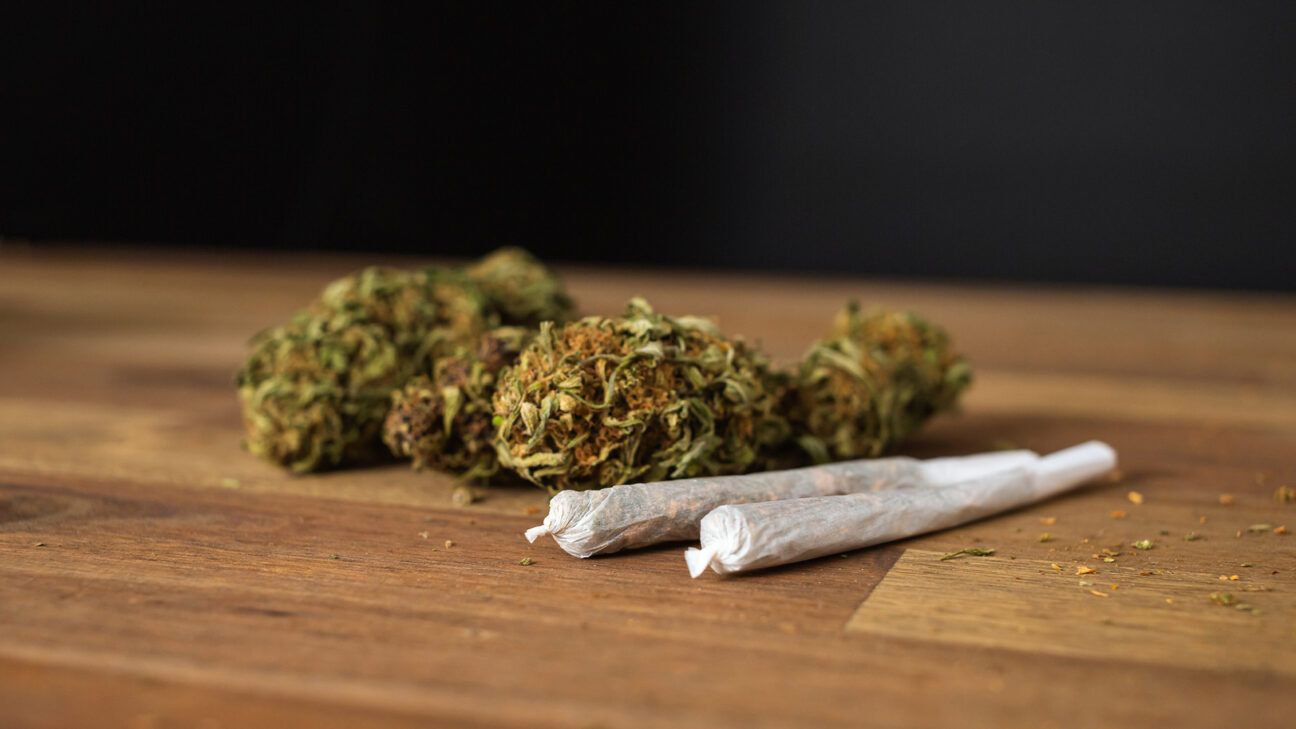
- Frequent cannabis use was associated with a small to medium decrease in working memory, a new study shows.
- Working memory is needed for everyday tasks such as driving, remembering a shopping list and following verbal instructions.
- The study is observational, so it can’t prove that cannabis damages the brain, but it adds to scientific evidence that cannabis may impact thinking.
“Working memory involves the ability to keep a small amount of information in the brain while performing a task,” said Natalie Klag, MD, assistant professor of psychiatry at The Ohio State University Wexner Medical Center in Columbus. “It is not just remembering the information, but being able to use it.”
“This can include things like following instructions, making plans or interacting with others in socially appropriate ways,” said Klag, who was not involved in the new study.
“Someone with impaired working memory may have difficulty following directions or completing a task that has multiple steps,” she told Healthline.
“They may also have difficulty with remembering questions or points in conversations long enough to wait until it is their turn to speak,” she said. “Or they may have difficulty with complex reasoning that involves considering multiple pieces of information to make a decision.”
Heavy cannabis use impairs cognition
The observational study, which was published January 28 in JAMA Network Open, does not prove that cannabis harms the brain, so the results should be viewed with some caution.
However, the new study adds to the scientific evidence that long-term cannabis use may affect cognitive abilities, including memory.
“I appreciate the fact that the researchers looked at seven different types of brain tests, but only one of them had a mild association,” said Sherry Yafai, MD, emergency medicine physician and director of integrated medicine at Providence Saint John’s Health & Wellness Institute in Santa Monica, CA.
“I would rather the researchers come out and say, ‘If you’re a young age, maybe it isn’t the right thing to smoke pot all day. And it’s not a good idea to be a heavy cannabis user,’” said Yafai, who was not involved in the new research.
In the new study, researchers examined data from the Human Connectome Project, which explores how age, growth, disease, and other factors affect the connections in the human brain.
Between 2012 and 2015, over 1,000 former or current cannabis users underwent functional MRI brain scans while completing seven kinds of cognitive tests.
This included measuring working memory, which includes how the brain processes rewards and emotions, as well as language and motor skills. Working memory also plays a role in social settings by processing important social inputs like other people’s emotions.
Study participants were 22 to 36 years old. Around half were female, and over three-quarters were white.
Researchers classified individuals as heavy users if they had used cannabis more than 1,000 times during their lifetime, moderate users if they had used it between 10 and 999 times, and non-users if they had used cannabis fewer than 10 times.
People also provided urine samples on the day of testing, which were used to determine if they had used cannabis recently.
Delta-9-tetrahydrocannabinol, or THC — the main psychoactive compound in weed that provides the euphoria often associated with cannabis use — can be detected in urine for up to three days after a single use and up to 30 days or more after chronic, heavy use.
Researchers found that heavy lifetime use of cannabis was associated with reduced activity in areas of the brain involved in working memory, with a “small to medium effect.”
This connection remained even when researchers excluded people who had used cannabis recently, based on the urine test. The results also weren’t affected by how much alcohol participants reported drinking, researchers found.
“This shows that these deficits are not related to recent use or intoxication,” said Klag, “but rather the actual structural changes that occur in the brain with heavy use.”
Klag was particularly concerned about the structural changes to the working memory areas of the brain observed on the MRI scans, especially since the study participants were younger adults.
“People who start using cannabis early in life while their brains are still developing are going to be additionally susceptible to these changes that could have lasting impacts on their daily functioning,” she said.
Moderate cannabis use may still have side effects
Recent cannabis use was associated with poor performance on working memory and motor (movement) tasks, researchers found, but this link went away when researchers did an additional statistical analysis.
However, they wrote that “abstaining from cannabis prior to cognitively demanding situations will likely help with performance.” It’s not clear how long people should abstain from cannabis, but the researchers point out that the effects of cannabis on cognitive abilities may last for 2 to 4 weeks.
Researchers also looked at whether people had a diagnosis of cannabis dependence, and found that this was not related to changes in brain function.
“This means that people don’t have to have cannabis use disorder — defined by negative life consequences, difficulty controlling their use, and physical dependence and tolerance — in order to see negative outcomes on their cognitive performance,” said Klag.
“Even those who define themselves as ‘social’ users can still have negative cognitive effects without seeing the negative life consequences that often lead them to seek treatment,” she said.
Klag cautioned that although the legal availability of cannabis products is growing, this should not be seen as a sign that cannabis is completely safe.
“There can be long-term health consequences as well as negative relational or professional consequences from cannabis use,” she said. “Just like other potentially addictive substances, cannabis use should be evaluated to determine if the use is becoming problematic or causing negative ramifications.”
Sometimes, people may not realize the extent of the negative consequences of cannabis use until after they stop using, Klag said.
“If total sobriety from cannabis is not the goal [for a person], it is important for healthcare professionals to use harm reduction techniques to discuss minimizing use in order to prevent some of these longer-term consequences,” she said.
Cannabis use can still have medical benefits
One limitation of the study is that it did not look at which types of cannabis products people used or the strength of those products. Also, because the study focused on young adults, the results may not apply to other age groups.
“There are definite differences between someone who is smoking pot all day versus someone who is 75 and postmenopausal, and [using THC because they are] having trouble sleeping,” Yafai told Healthline.
Yafai pointed out that heavy lifetime cannabis users in the study were more likely to be male, have lower income and lower levels of education, and have higher alcohol use. This further limits the ability to apply the results to other groups of people.
In addition, because the study was done between 2012 and 2015, cannabis was less available than it is now, which limits the participants to those who were more determined to seek out cannabis.
Yafai is also concerned that the researchers did not look at whether study participants were using medications known to impact memory, such as benzodiazepines, antihistamines, and antidepressants.
If you’re taking one of these medications, “you have to be aware that it may make you fuzzy for a few hours, she said. “You may not be clear, or you may not be able to take your exam or study for tests.”
“Based off general health and medical recommendations, it is not surprising that if you’re intoxicated often, that you will have some issues with memory,” Yafai said. “That’s pretty standard for any prescription or nonprescription medication that can make you feel intoxicated.”
“THC is no different,” she said. “This means that if you are intoxicated, you shouldn’t get behind the wheel of a car and drive,” and your performance at work and school may be impacted.
In particular, Yafai is concerned that people who use cannabis for chronic pain or to help them sleep may be turned off by the way the results of this study are presented.
“If there are individuals who are using THC for medical purposes, I don’t want them to be scared when they see articles about studies like this coming out,” she said, pointing out that sleep medications such as Ambien also have side effects.
People should talk with their doctor about the benefits and risks of prescription medications and THC and then make an informed decision, Yafai said.
Takeaway
Researchers examined data on over 1,000 former or current cannabis users — roughly half males and half females ages 22 to 36 years — who underwent functional MRI brain scans while completing seven kinds of cognitive tests.
They found that heavy lifetime use of cannabis — more than 1,000 times — was associated with reduced activity in areas of the brain involved in working memory. The effect size was “small to medium.”
The study is observational, so it can’t show that cannabis damages the brain. However, it adds to existing research showing that frequent cannabis use may affect certain thinking skills.
Also read: Protective effect of coffee and tea on head and neck cancer
Featured photo source: apsf.org
Source: healthline.com
