

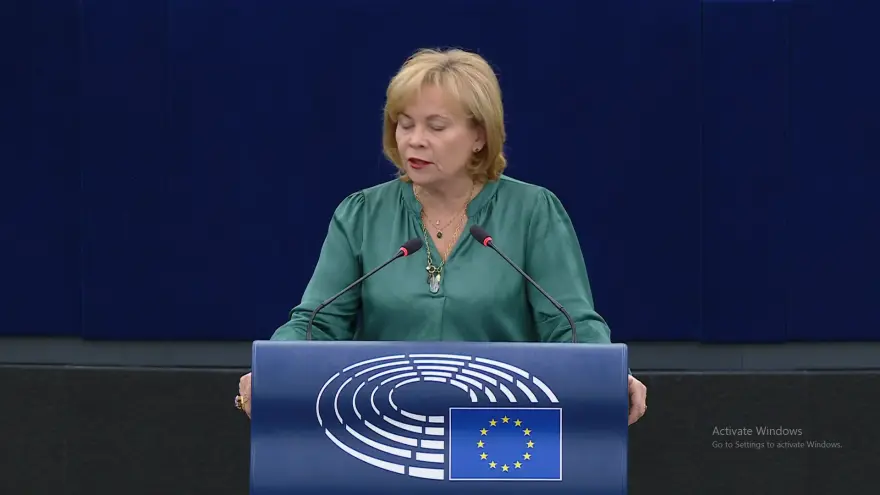
Rasa Juknevičienė, Lithuania’s former defence minister and a Member of the European Parliament from the European People’s Party, was the rapporteur for a European Parliament report on hybrid warfare and the protection of the EU’s territorial integrity and critical security and defence infrastructure. The report was debated in plenary on September 15 and approved the following day by a large majority.
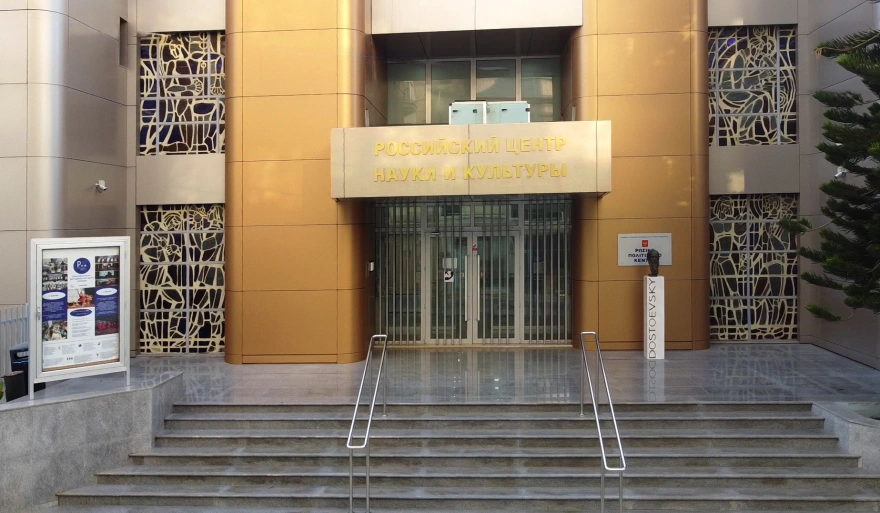
This is significant because her warning concerning the Russian House, or Russian Cultural Centre, in Cyprus goes beyond an individual assessment and reflects concerns addressed by a report backed by a large majority of the European Parliament.
Her warning about the activities of Russian services in Cyprus came just two weeks after the European Parliament adopted a resolution identifying Russia, either directly or through allies and proxies such as Belarus, as the most serious source of hybrid threats against the European Union and its member states.
Speaking to the Cyprus News Agency, Juknevičienė specifically referred to the Russian Cultural Centre in Cyprus and similar centres that continue to operate across Europe. Citing public assessments by Estonia’s intelligence services, she questioned whether EU member states are taking the potential risks associated with such organisations seriously enough.
Her warning was clear: hybrid threats do not concern only Poland, Lithuania, Latvia or Estonia because of their proximity to Russia, but Europe as a whole. According to her, the message from NATO military officials is that no European capital today can consider itself completely safe.
Warfare in the grey zone
Juknevičienė’s report describes hybrid warfare as a combination of activities that may include cyberattacks, sabotage, interference with critical infrastructure, disinformation, influence operations, electoral interference, disruption of communications and the use of drones, among other actions deliberately kept within a grey zone and below the threshold of conventional military attack.
A key feature of such operations is that individual incidents can initially appear unrelated—a damaged cable, an airport closed because of drones, a cyberattack or an organised social media campaign. Examined separately, they may appear coincidental. If coordinated, however, they form a very different picture.
The article points to several examples of disinformation circulated in Cyprus, including false claims that the Ukrainian President had purchased a casino and hotel in the occupied areas, that the Cypriot government had sent weapons to Ukraine, and that a former commander of Ukraine’s armed forces had bought a villa in Paphos. It also refers to forged Land Registry documents circulated on social media.
The European Parliament resolution argues that hybrid operations are deliberately designed to remain below the level of armed conflict while potentially producing effects comparable to those of a military attack. Their objectives can include destabilisation, division, weakening public trust in institutions and undermining European societies’ ability to respond.
The report was approved by 470 MEPs.
Political groups divided over Russia
The final vote on September 16 saw the resolution approved by 470 votes to 129, with 62 abstentions and 58 MEPs absent.
The European People’s Party overwhelmingly supported it, with 171 votes in favour and one abstention. The Socialists and Democrats recorded 122 votes in favour, two against and four abstentions, while Renew Europe had 70 votes in favour and two abstentions. Among the Greens, 37 voted in favour and 11 abstained.
Within the European Conservatives and Reformists (ECR), to which Cyprus’ ELAM belongs, 54 voted in favour, six against and 15 abstained.
The picture was different among Patriots for Europe, where 54 MEPs voted against, three in favour and 20 abstained. In Europe of Sovereign Nations, 24 voted against and one in favour.
Among The Left, 23 MEPs voted against the resolution, nine supported it and five abstained.
How Greek MEPs voted
Among Greek MEPs, 14 voted in favour and six against, while Elena Kountoura was absent.
The seven participating New Democracy MEPs—Giorgos Aftias, Fredi Beleri, Manolis Kefalogiannis, Vangelis Meimarakis, Eleonora Meleti, Dimitris Tsiodras and Eliza Vozemberg—supported the resolution.
Sakis Arnaoutoglou, Nikolas Farantouris, Yannis Maniatis and Nikos Papandreou of the Socialists and Democrats also voted in favour.
Kostas Arvanitis and Nikos Pappas supported the resolution despite belonging to The Left, whose majority voted against it. Afroditi Latinopoulou also voted in favour, departing from the position taken by most members of Patriots for Europe.
Galato Alexandraki and Emmanouil Fragkos of the ECR voted against, as did Nikos Anadiotis, Lefteris Nikolaou-Alavanos, Kostas Papadakis and Maria Zacharia.
How Cypriot MEPs voted
The Cypriot vote is particularly relevant following Juknevičienė’s public reference to the Russian House in Nicosia.
Loucas Fourlas and Michalis Hadjipantela of the EPP, Costas Mavrides of the Socialists and Democrats and Geadis Geadi of the ECR voted in favour.
AKEL MEP Giorgos Georgiou voted against, in line with the majority of The Left, while independent MEP Fidias Panayiotou was absent.
Four of Cyprus’ six MEPs therefore supported the resolution, one voted against it and one was absent.
Under EU sanctions
Against this backdrop, Juknevičienė’s reference to Russian activity in Nicosia carries particular political significance.
The Russian House is not a private cultural association. It belongs to the international network of Rossotrudnichestvo, a Russian federal state agency whose official mission includes promoting Russia’s cultural presence abroad, maintaining links with so-called Russian “compatriots” overseas and promoting educational and cultural programmes.
Rossotrudnichestvo has been under European Union sanctions since July 2022. The article questions how these sanctions are being applied in Cyprus and calls for clarification from the Cypriot authorities.
Warnings from Estonia
Estonia’s Foreign Intelligence Service specifically referred to Rossotrudnichestvo and its overseas Russian research and cultural centres in its 2023 report.
According to the Estonian service, Rossotrudnichestvo and its centres abroad are regularly used by Russia’s FSB and SVR intelligence agencies as cover for their officers.
Juknevičienė cited this assessment when discussing Cyprus, questioning whether other EU member states have sufficiently assessed structures operating on their own territory.
Prague went beyond suspicions
In the Czech Republic, authorities have taken further action. According to a public record by the Czech Interior Ministry cited in the article, the BIS security service identified the Russian Centre of Science and Culture in Prague as one of the structures that contributed to the dissemination of disinformation.
The centre was part of Rossotrudnichestvo, with Czech authorities also examining its role in Russian influence activities and the dissemination of Kremlin material.
Slovenia took a different approach. Following Russia’s invasion of Ukraine, its government terminated the agreement governing Russian scientific and cultural centres in March 2022, and the corresponding centre in Ljubljana closed.
The fire initially labelled ‘terrorism’
Cyprus has already experienced an incident involving the Russian Cultural Centre that acquired wider political significance.
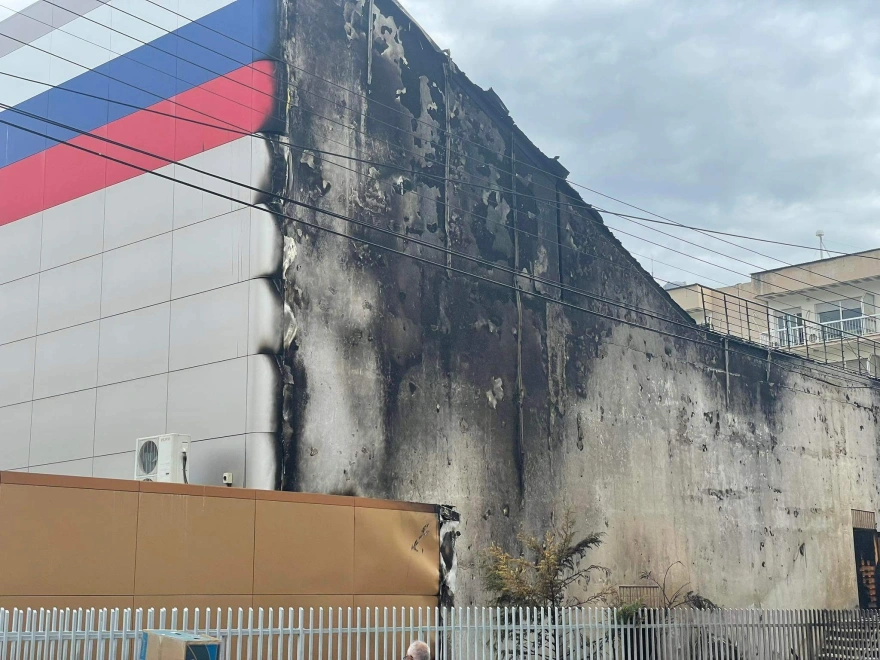
In April 2023, a major fire broke out at the centre in Nicosia. Before the investigation had been completed, Rossotrudnichestvo head Yevgeny Primakov described the incident as a “terrorist attack”, while the Russian side promoted the possibility of criminal activity.
However, once Cypriot authorities completed their investigation, police said no scientific evidence or testimony had emerged proving arson and that the fire may have started accidentally.
The incident illustrates how an event can acquire a political interpretation before the underlying facts have been fully established.
Questions for Nicosia
The debate over Russian influence in Cyprus does not require exaggeration or conspiracy theories, the article argues, but says there is sufficient information to raise questions requiring answers.
The Russian House is part of Rossotrudnichestvo, a Russian state organisation under EU sanctions. Estonia’s foreign intelligence service has publicly stated that centres within this network are regularly used as cover by the FSB and SVR. Czech authorities have documented concerns involving the corresponding centre in Prague, while Slovenia closed its centre.
Juknevičienė has now publicly raised the issue of Cyprus and called for the operation of the Russian Cultural Centre to be considered within the broader context of Russian hybrid activity.
The central question is whether Cypriot authorities have conducted their own assessment: under what framework the centre currently operates, how EU sanctions against its parent organisation are being implemented, what status its personnel hold and whether warnings issued by security services in other EU member states have been examined.
Juknevičienė has raised the issue. The article concludes that the answers must now come from Nicosia.
Also read: Banking is changing… The challenges facing traditional banks, regulators and consumers
