

The death of Iran’s Supreme Leader Ayatollah Ali Khamenei has triggered a formal succession process that may carry major consequences for the country’s political stability, sanctions trajectory, and already fragile economy.
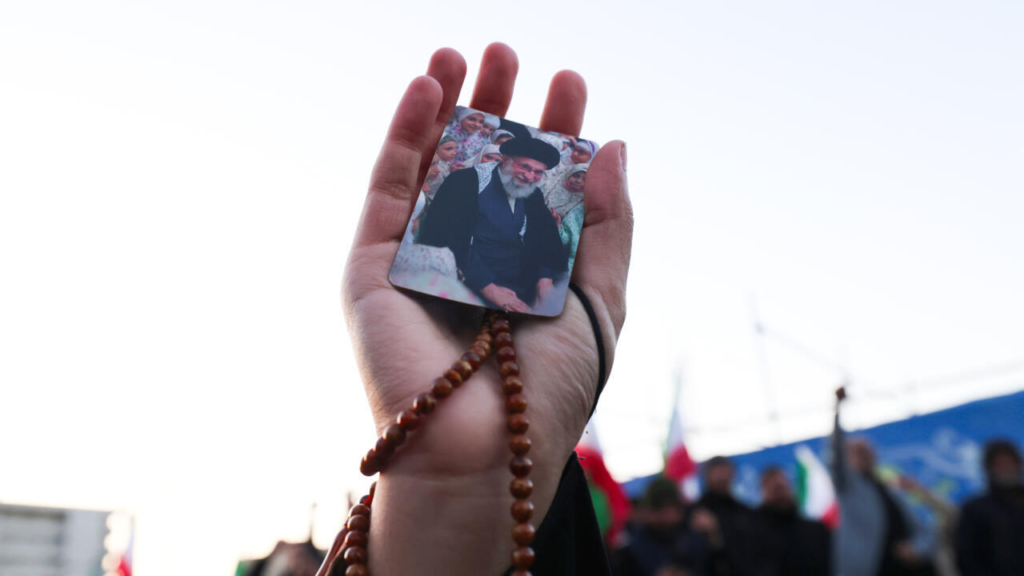
Khamenei was killed in a joint military strike carried out by Israel and the United States, Iranian state media confirmed. At the time of the attack, the 86 year old leader was in his office within his residential compound, according to Iran’s Fars News Agency on Telegram.
He came to power in 1989 after the death of Ayatollah Ruhollah Khomeini, inheriting a revolutionary system still consolidating itself in the aftermath of the Iran Iraq war.
Khamenei was not widely regarded as the natural successor. He did not possess the religious qualifications required under the constitution at the time, as noted by Karim Sadjadpour, a policy analyst at the Carnegie Endowment for International Peace, in his research on Khamenei.
Only months before Khomeini’s death, the constitution was amended to stipulate that the Leader needed only to be an expert in Islamic jurisprudence with political and managerial capability, a revision that ultimately allowed Khamenei to assume the position.
Over the years, the office of the Supreme Leader expanded its authority over Iran’s central institutions. While presidents rotated through elections, Khamenei maintained control over the military, judiciary, state broadcasting, and major strategic decisions under Article 110.
He promoted a “resistance economy” aimed at strengthening self reliance in the face of Western sanctions, remained skeptical of engagement with the West, and suppressed critics who argued that his security focused governance hindered reform.
His leadership was repeatedly challenged. In 2009, widespread protests over alleged electoral fraud were met with severe repression. In 2022, demonstrations erupted over women’s rights. A further major test arose in late December 2025 when economic grievances escalated into nationwide unrest, with some demonstrators openly calling for the overthrow of the Islamic Republic.
What’s next for Iran?
“Khamenei is dead. This is the best day of my life. This is a glorious day for Iran,” said Masoud Ghodrat Abadi, an Iranian engineer now based in the United States who left Iran at age 27.
“I believe his death could mark the beginning of a new chapter in our nation’s history … In the long run, I hope this moment will prove transformative,” he told CNBC.
Similar reactions emerged across social media following his death, where reports showed Iranians taking to the streets in celebration, according to the New York Times.
However, analysts cautioned that celebration should not be mistaken for systemic change.
“Taking out Iranian Supreme Leader Ayatollah Ali Khamenei is not the same as regime change. The Islamic Revolutionary Guard Corps is the regime,” the Council on Foreign Relations noted following his passing, limiting the prospects for immediate political or economic transformation.
Khamenei’s death marks only the second leadership transition since the 1979 Islamic Revolution, a moment the CFR described as historically significant yet uncertain in its implications.
While some Iranians have voiced hope that new leadership could reduce repression and economic isolation, the CFR stated that the most likely succession scenarios do not indicate meaningful political or economic liberalization in the near term.
“Leadership change in Iran could take three primary trajectories—regime continuity, military takeover, or regime collapse,” the CFR reported. However, the think tank warned that none of these short term paths foresee a positive transformation within roughly a year of transition.
Under a continuity scenario, essentially “Khamenei-ism without Khamenei,” both investors and households could continue to face uncertainty as a new leader would need to adjust while attempting to steer economic policy with constrained resources and growing pressures. Even a shift toward stronger military influence would not necessarily produce reform. CFR suggests that a security driven model might emphasize stability and economic oversight, yet would still contend with what it described as a “deeply distorted economy” marked by “persistent inflation and a collapsing currency.”
Marko Papic, chief strategist of Clocktower Group, expressed a similar view: “The Iranian economy is soon to be a parking lot unless the next Supreme Leader is more amenable to negotiating with the U.S.”
If a successor emerges who is similarly hardline, unwilling to negotiate with Washington and committed to continuing regional attacks, then U.S. military operations would become punitive and “Iran will return to the Medieval Age,” he said.
Keith Fitzgerald, managing director at Sea Change Partners, put it more bluntly.
“Killing Khamenei is not, in itself, ‘regime change.’ Think of it as changing a light bulb: To change it, you must first remove the broken bulb that was there. But doing so is not changing the bulb. That requires replacing it with a new one,” he wrote in a note.
Meanwhile, Iran’s opposition in exile remains fragmented and lacks unified leadership, said Ali J.S., a former strategic intelligence analyst at the NATO Joint Warfare Center.
Importing a political figurehead from abroad, whether a restored monarchy or another alternative “has limited credibility on the ground and risks repeating past experiments with parachuted elites that ended badly elsewhere,” she said.
Iran’s exiled opposition remains diverse yet divided. It includes monarchists aligned with Reza Pahlavi, the U.S. based son of the late Shah who was exiled after the 1979 revolution, republican and secular democratic activists spread across Europe and North America, Kurdish opposition groups active along Iran’s western borders, and the People’s Mojahedin Organization of Iran MEK, which maintains an organized political network abroad but holds limited credibility inside Iran.
Source: CNBC
Also Read:“Ali Khamenei is dead” —The revolutionary guards vow revenge
