

Long before Finikoudes became the vibrant seafront promenade known to visitors today, long before concerts, food stalls and thousands of holidaymakers filled the waterfront each June, Larnaca’s Kataklysmos had already captured the imagination of Europe.
By Christopher Pitsillides
One of the most remarkable pieces of evidence is a rare 19th-century French illustration entitled “Au Cataclysmos à Larnaka” (“At the Cataclysmos in Larnaca”), depicting a very different city from the one we know today. Wooden piers stretch into the sea, sailing vessels crowd the bay, and large gatherings of people line the shore to witness what was already one of Cyprus’ most important public celebrations.
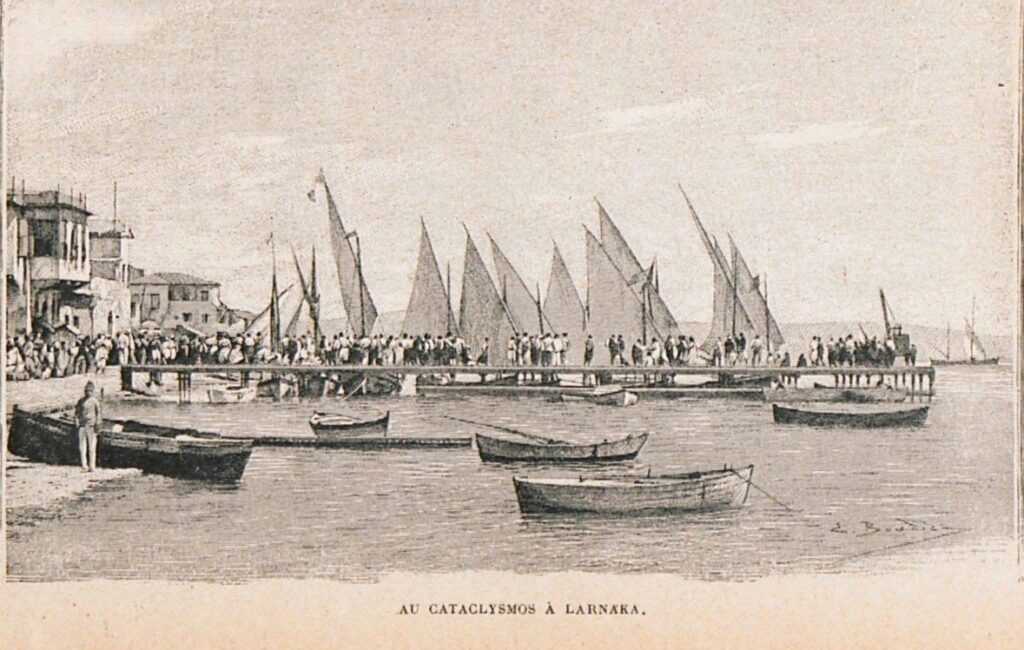
For modern Cypriots, the image offers something more than nostalgia. It provides a rare glimpse into a tradition that has survived the Ottoman era, British rule, independence, war, displacement and modernisation while remaining one of the island’s most beloved cultural celebrations.
For foreign readers, it raises a simple question:
What exactly is Kataklysmos?
Kataklysmos, literally meaning “The Flood,” is Cyprus’ annual Festival of the Flood, celebrated during Pentecost and Holy Spirit Day. It combines Christian symbolism, ancient water rituals, folklore and seaside festivities into a celebration found nowhere else in quite the same form.
Although often associated with the Biblical Flood of Noah, the festival’s origins are more complex. Over centuries, ancient seasonal customs connected to water, purification and renewal merged with Christian observances surrounding Pentecost, creating a uniquely Cypriot tradition centred on the sea.
The illustration itself originates from the travel account of French writer Émile Deschamps, whose book Au Pays d’Aphrodite: Chypre, Carnet d’un Voyageur was published in Paris in 1898. Deschamps lived in Cyprus during the 1890s and recorded detailed observations of the island’s landscapes, customs and people. Among the traditions that impressed him most was Kataklysmos, which he encountered in Larnaca.
Yet the story reaches even further back.
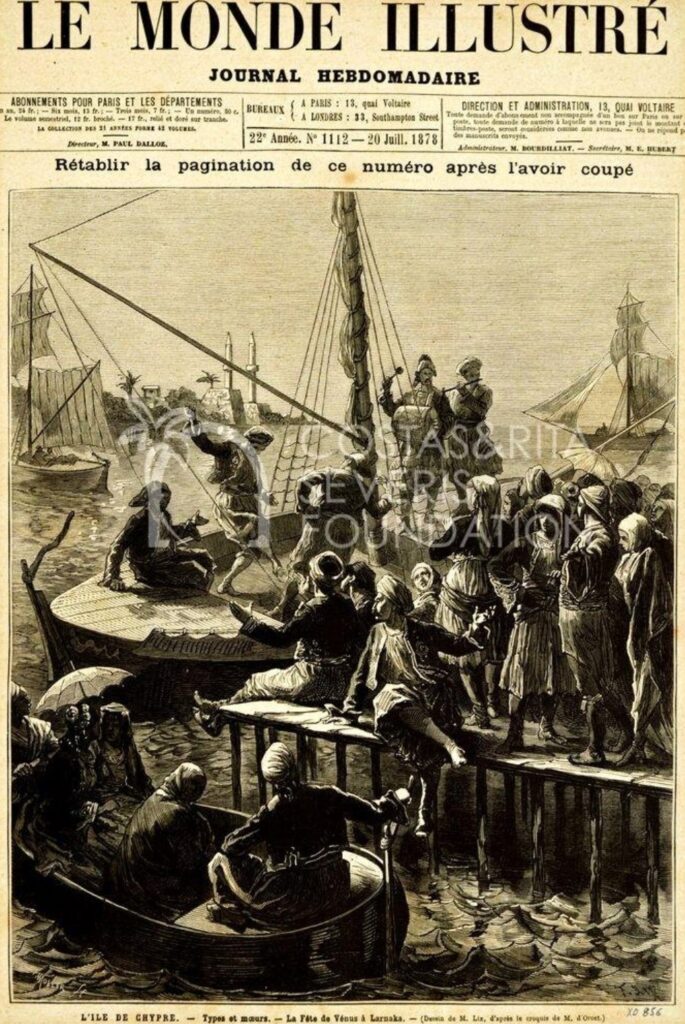
Twenty years earlier, on 20 July 1878, shortly after Cyprus passed from Ottoman to British administration, the prestigious French illustrated magazine Le Monde Illustré published an engraving entitled L’Île de Chypre – Types et Moeurs – La Fête de Vénus à Larnaka. Although the title reflected the romantic language often employed by European writers describing the Eastern Mediterranean, the engraving depicts the festivities associated with Kataklysmos and represents one of the earliest known visual portrayals of the celebration.
The fact that French artists and publishers chose to illustrate the festival is significant.
It demonstrates that Kataklysmos was already regarded as one of Cyprus’ defining cultural spectacles during the nineteenth century. Long before mass tourism, long before guidebooks marketed Cyprus as a Mediterranean destination, foreign visitors considered the celebration sufficiently distinctive to introduce it to European audiences.
This should perhaps come as no surprise.
During much of the nineteenth century, Larnaca served as Cyprus’ principal port and gateway to the outside world. Consuls, merchants, pilgrims and travellers from across Europe passed through the city. The sea shaped its economy, identity and daily life. It was therefore natural that Cyprus’ greatest water festival would flourish here.
Historical accounts confirm that the tradition was already deeply rooted.
Writing in the nineteenth century, pioneering Cypriot folklorist Athanasios Sakellarios described crowds gathering by the coast on Holy Spirit Day. People bathed in the sea, sailed along the shoreline in boats, played music and splashed water on one another in a spirit of celebration. Similar customs were observed even in inland villages, where residents gathered around rivers, springs and wells to participate in the rituals of water and renewal.
The modern festival, however, owes much to the Municipality of Larnaca.
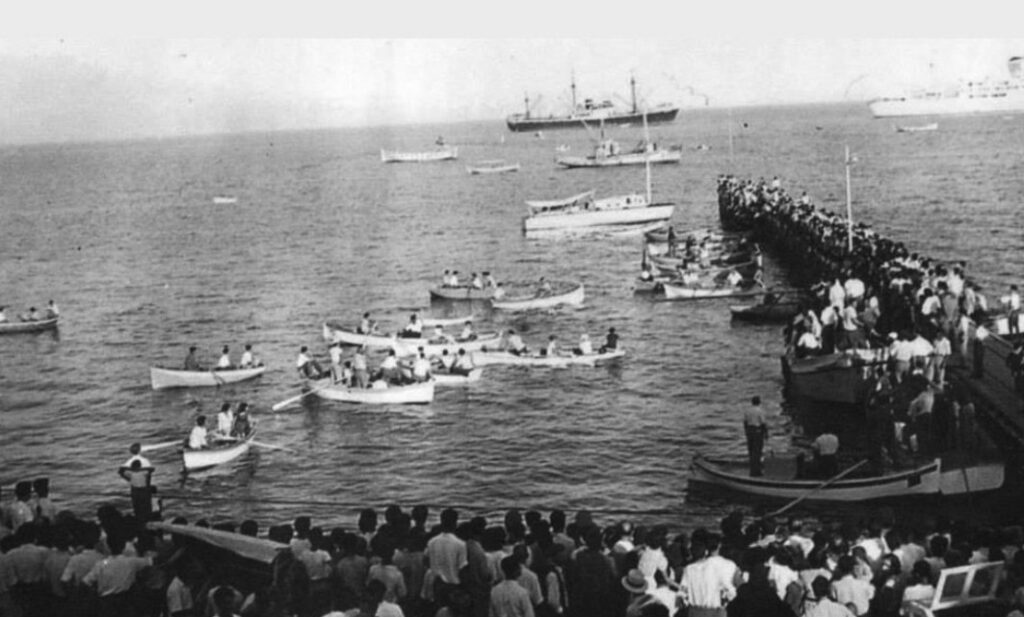
On 10 June 1918, following an initiative by local historian and scholar Neoklis Kyriazis, the municipality formally established Kataklysmos as an organised civic celebration. The programme included poetry competitions, folk performances, handicraft exhibitions, swimming contests, boat races and cultural events that transformed an ancient folk custom into a structured public festival.
Importantly, 1918 was not the birth of Kataklysmos.
Rather, it marked the moment when an already centuries-old tradition received official municipal recognition.
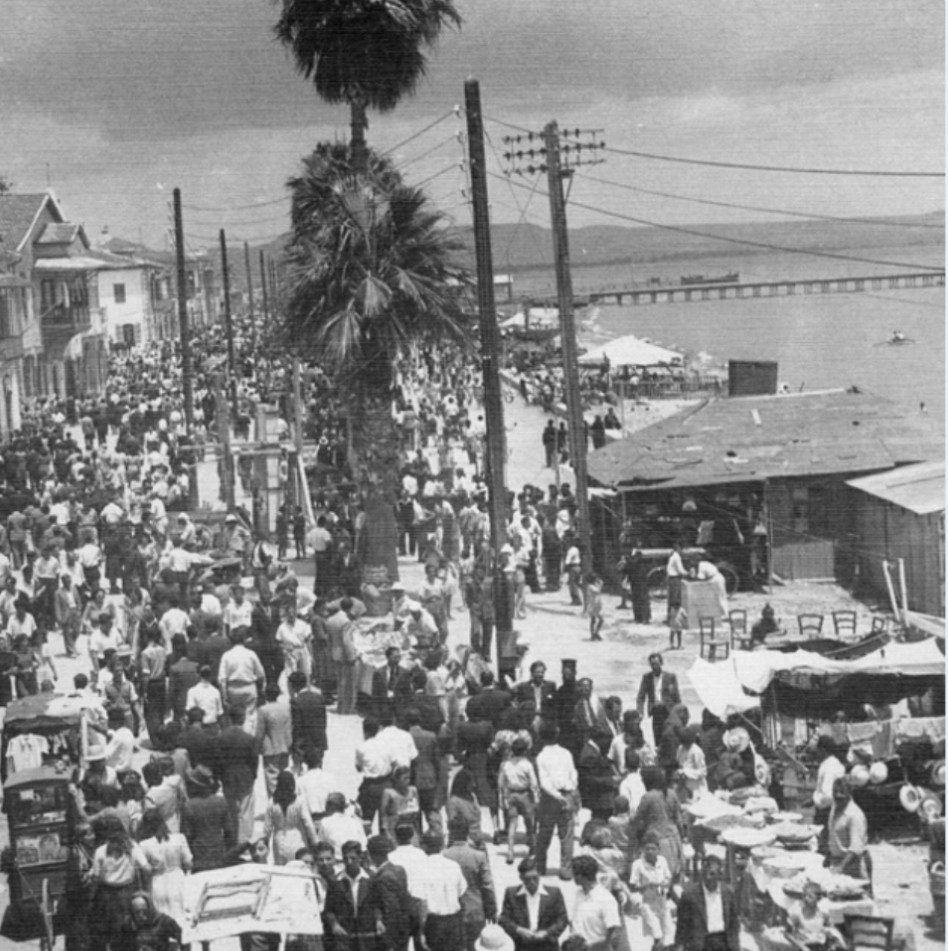
Throughout the twentieth century, photographs captured the evolution of both the city and the festival. The wooden jetties and sailing boats of old Larnaca gradually gave way to the palm-lined Finikoudes promenade. The crowds grew larger. The programme expanded. What had once been a local waterfront celebration evolved into one of Cyprus’ largest annual cultural events.
Yet despite all these changes, the essence of Kataklysmos remains remarkably unchanged.
More than a century after those French illustrations were published, thousands still gather by the sea each year. Water is still thrown in playful ritual. Families still return to the waterfront. Music still fills the air. And Larnaca continues to host a celebration that connects the island’s ancient past, its Christian heritage and its enduring relationship with the sea.
The artists who sketched Kataklysmos in 1878 and 1898 could never have imagined the modern skyline of Finikoudes or the crowds that now line the promenade.
Yet they would instantly recognise the festival itself.
Because beneath the stages, the concerts and the modern celebrations, the spirit of Kataklysmos remains exactly what it was nearly 150 years ago: a people’s festival of water, renewal and community.
Editor’s Note: The frequently reproduced engraving Au Cataclysmos à Larnaka originates from Émile Deschamps’ Au Pays d’Aphrodite (Paris, 1898).
An even earlier known European depiction of the festival appeared in Le Monde Illustré on 20 July 1878.
Christopher Pitsillides
Historian of Collective Press Memory
Sources
- Émile Deschamps, Au Pays d’Aphrodite: Chypre, Carnet d’un Voyageur (Paris, 1898).
- Le Monde Illustré, 20 July 1878, L’Île de Chypre – Types et Moeurs – La Fête de Vénus à Larnaka.
- Athanasios Sakellarios, Ta Kypriaka (Athens, 1890).
- Polignosi Great Cypriot Encyclopedia, entry: “Kataklysmos”.
Also read: British couple named “Tourism Ambassadors” after 50 visits to Ayia Napa
For more videos and updates, check out our YouTube channel
