

About this Summary
This summary was created with the help of artificial intelligence (AI) to help readers quickly understand the key points of the article.
It has been reviewed by our editorial team before publication. For complete information and full details, please read the full article.
- Turkey announced the parks by presidential decrees signed by President Recep Tayyip Erdoğan and dated 15 August.
- One park lies between Fethiye and Kaş, near Kastellorizo, effectively surrounding the wider maritime area around the Greek island.
- The second park is near Tekirdağ and Çanakkale and extends into an area between the Greek islands of Samothrace and Lemnos.
- Athens said Turkey cannot unilaterally create marine protected areas in international waters and warned the move could worsen bilateral tensions.
Greece has rejected Turkey’s declaration of two new “national marine parks” in the northeastern Aegean and Eastern Mediterranean, saying the move has no legal effect where the designated areas extend beyond Turkish territorial waters.
Turkey announced the creation of the two parks through presidential decrees signed by President Recep Tayyip Erdoğan and dated 15 August.
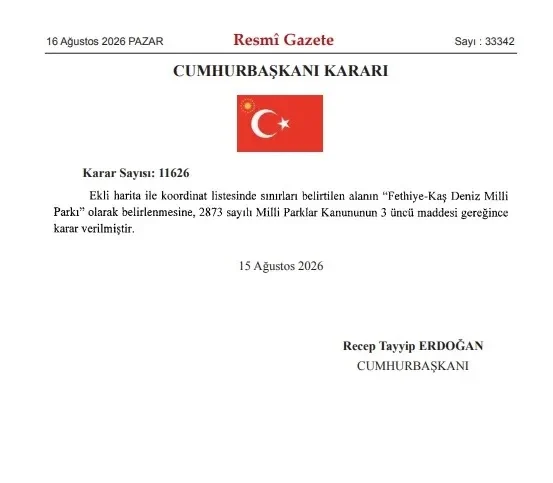
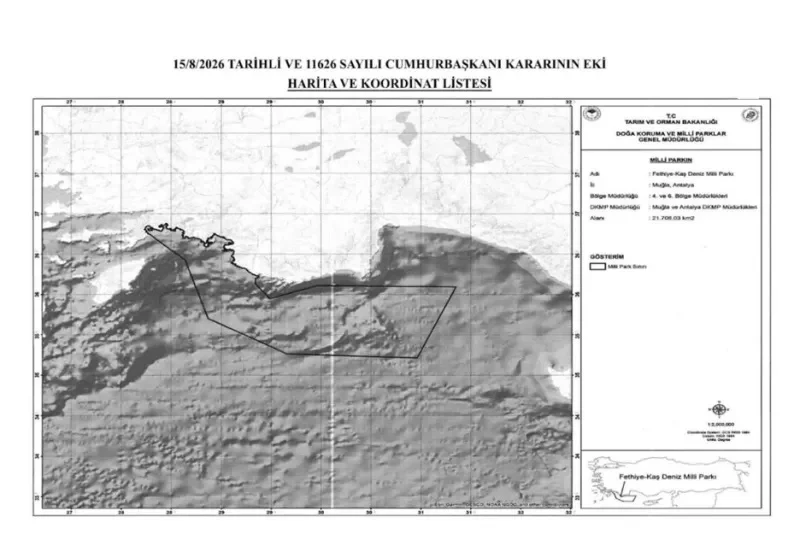
One of the parks covers a maritime area between Fethiye, in Muğla province, and Kaş, in Antalya province, close to the Greek island of Kastellorizo. The boundaries effectively surround the wider maritime area around the island.
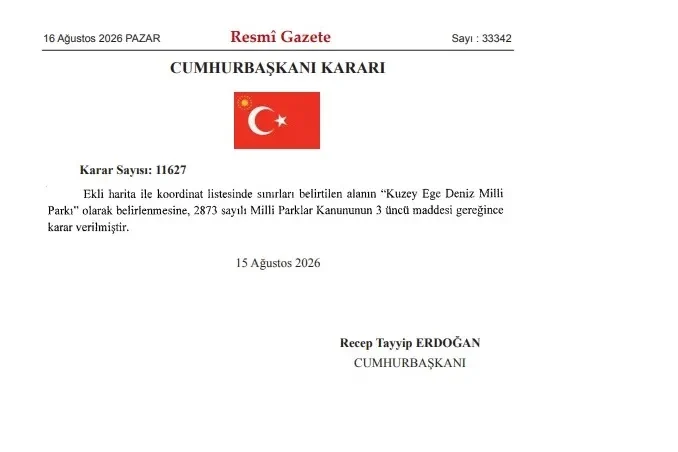
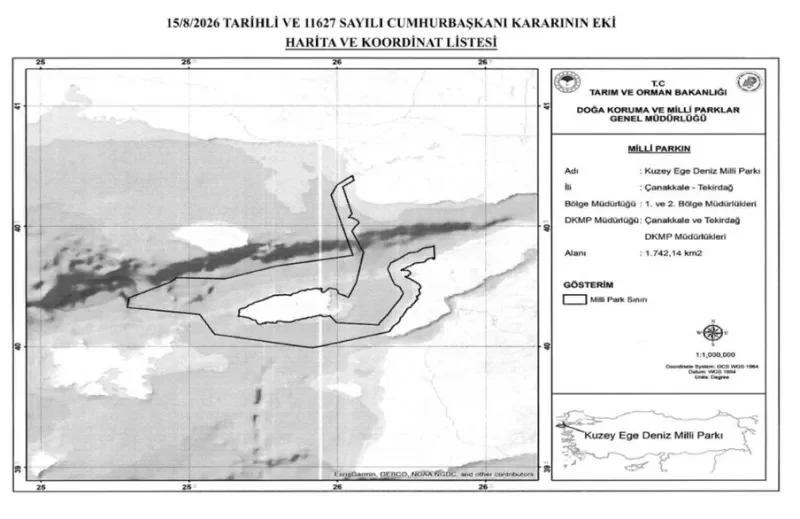
The second is located near Turkey’s Tekirdağ and Çanakkale coasts and extends into an area geographically situated between the Greek islands of Samothrace and Lemnos.
See HERE the presidential decree on the marine park in the area between Fethiye and Kaş.
See HERE the presidential decree on the marine park near the Turkish coasts of Tekirdağ and Çanakkale.
The move comes amid heightened rhetoric in the Turkish press over what it describes as “Greek military activity” in the Aegean, with particular attention recently focused on the small Greek island of Ro.
It is also widely seen as Ankara’s response to Greece’s establishment of marine parks in the southern Aegean and Ionian Sea in July 2025.
Athens: Turkish move has no legal effect
Athens responded swiftly, arguing that Turkey cannot unilaterally establish national marine protected areas beyond waters under its jurisdiction.
In a statement, the Greek Foreign Ministry said the Turkish parks extend in part beyond Turkey’s territorial waters and stressed that, under the Law of the Sea, no state has the right to unilaterally establish marine protected areas in international waters.
Greece also considers the Turkish declarations unlawful to the extent that they encompass areas of the Greek continental shelf.
As a result, Athens said Ankara’s move “produces absolutely no legal effect”, either with regard to international waters or Greece’s sovereign rights over its continental shelf.
The ministry stressed that Turkey’s unilateral designation of “national” marine parks outside its jurisdiction cannot create faits accomplis or affect rights arising under international law.
Athens contrasted Ankara’s decision with Greece’s own marine parks in the Ionian and Aegean seas, saying the Greek protected areas were established in full compliance with the Law of the Sea and exclusively within Greek territorial waters.
New friction in Greek-Turkish relations
The Greek Foreign Ministry warned that attempts to unilaterally alter or influence the status of maritime zones in the Aegean and Eastern Mediterranean violate international law and risk adding further strain to relations between Athens and Ankara.
Such actions, it said, “do not contribute to consolidating a climate of good neighbourly relations and seriously undermine efforts to maintain relations of mutual understanding between the two countries”.
Greece said it would continue to act “consistently and decisively” to safeguard its sovereign rights, protect the freedoms of the high seas under the Law of the Sea and preserve the marine environment in accordance with international law.
Sources: ERT, ANA-MPA, SKAI
