

A wave of unrest is sweeping across Greece as the agriculture protests intensify, driven by long-building anger over delayed EU subsidies, distrust in state institutions and the fallout of the OPEKEPE corruption scandal. The fraud case- involving fake farmland claims, forged contracts and misallocated EU funds- has shaken the agricultural sector and contributed to widespread frustration among farmers, who say legitimate claims are delayed while millions were siphoned off for years. Several senior officials have resigned and the European Public Prosecutor’s Office continues to investigate, while the European Commission is assessing Greece’s updated action plan for the system that manages agricultural payments.
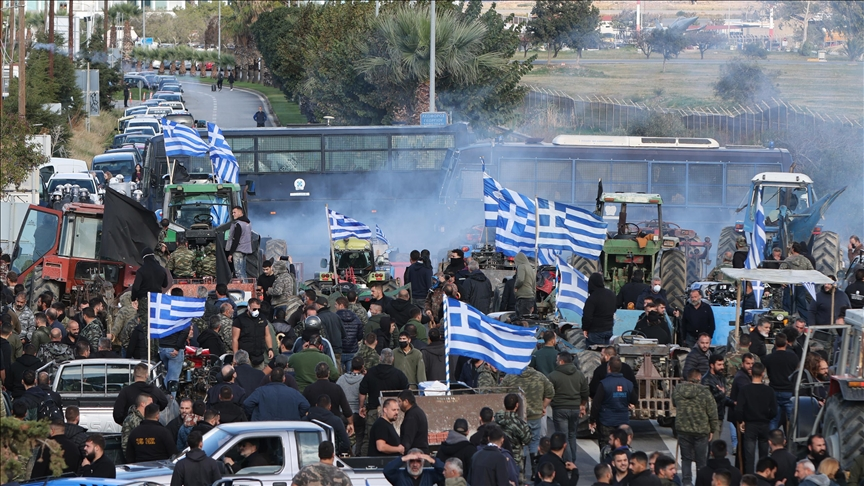
Against this backdrop, the agriculture protests in Greece have entered a new and volatile phase, with farmers in Crete launching some of the most disruptive actions seen so far. In both Heraklion and Chania, farmers and livestock breeders attempted to reach and blockade the airports, leading to violent clashes with police and the temporary suspension of operations. More than twenty participants have been identified in connection with the riots, facing charges ranging from grievous bodily harm and weapons offences to serial property damage and obstruction of transport.
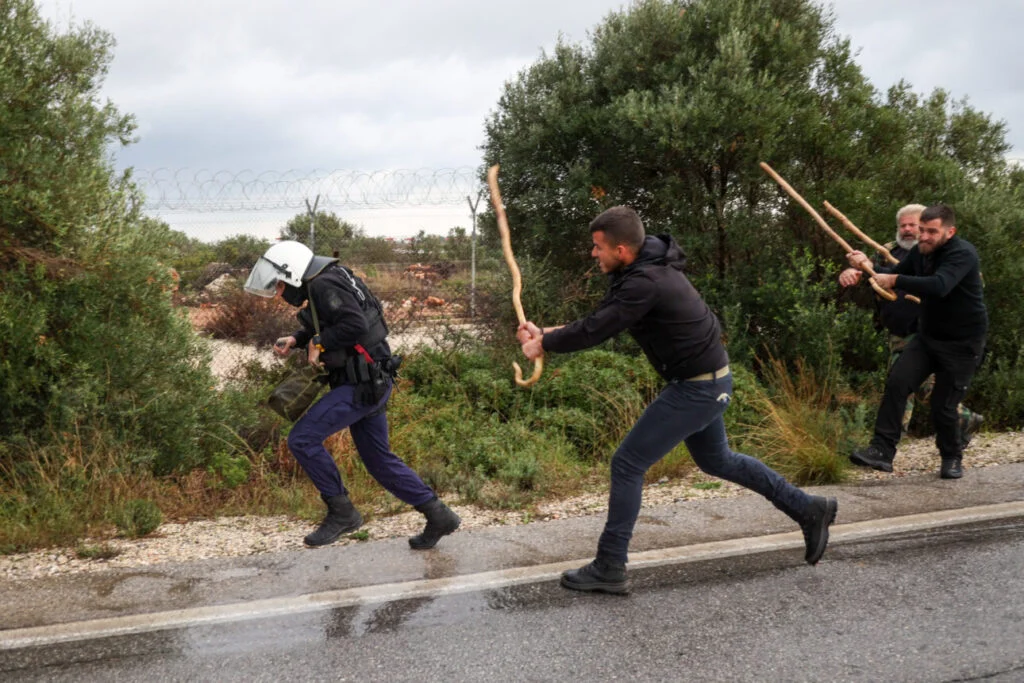
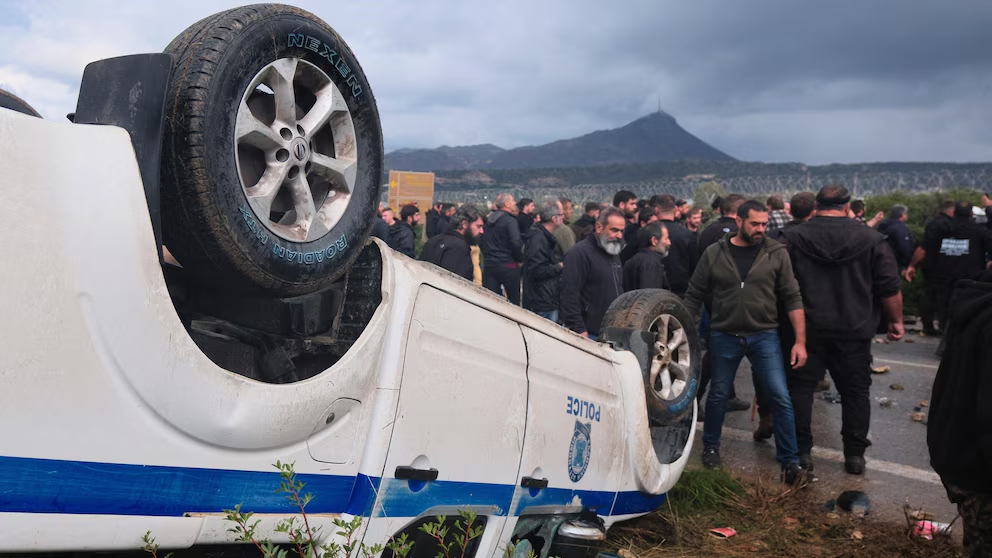
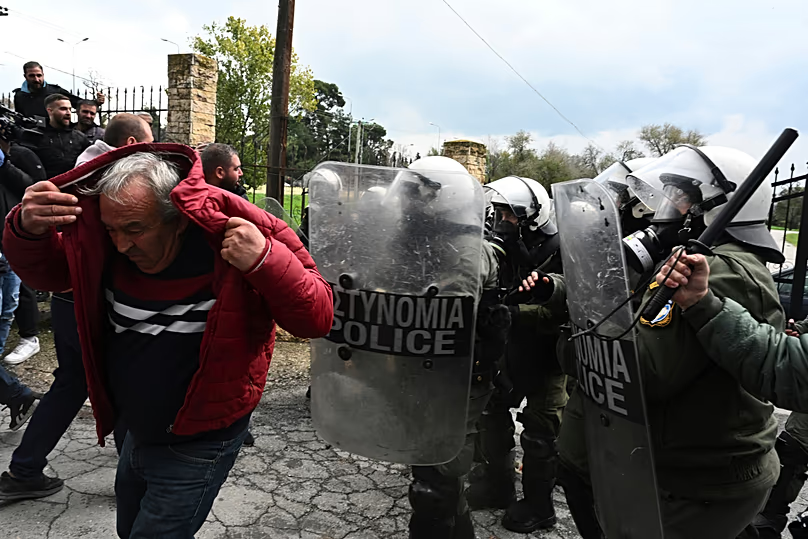
In Heraklion, protesters tore down perimeter fencing at the airport and overturned a police car stationed at a roadblock. Several patrol vehicles were vandalised during the clashes, while nine police officers were injured by stone-throwing. Video footage reportedly helped authorities identify individuals with prior criminal convictions, including cases involving weapons, extortion and theft.
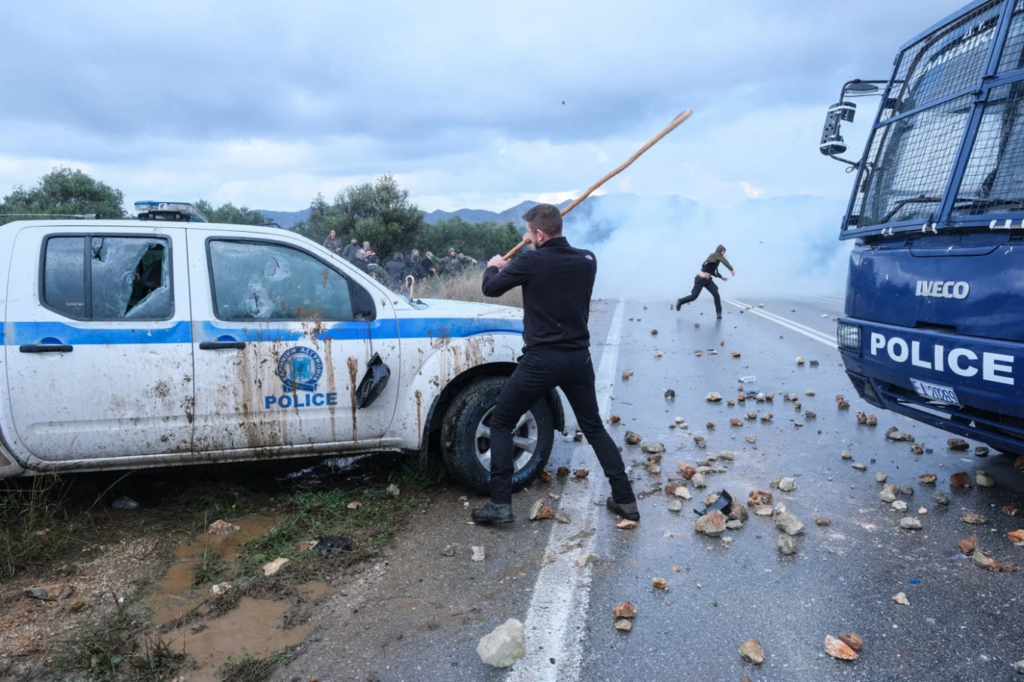
Similar scenes unfolded in Chania, where tensions initially appeared controlled before descending into a sudden eruption of stone-throwing and tear gas. Riot police retreated under pressure, and farmers damaged police vehicles including an MAT transport van. The force of the unrest prompted authorities to halt airport operations as a precaution.
The mobilisation in Crete is part of a wider network of tractor blockades spreading across the country. Farmers in Eastern Crete set out in motorcades from Sitia, Ierapetra and Agios Nikolaos to join demonstrations in Heraklion, while reinforcements arrived from eastern Rethymno. Organisers say their goal is to maintain pressure until the government provides concrete solutions to falling product prices, mounting climate-related losses and the backlog in subsidy payments.
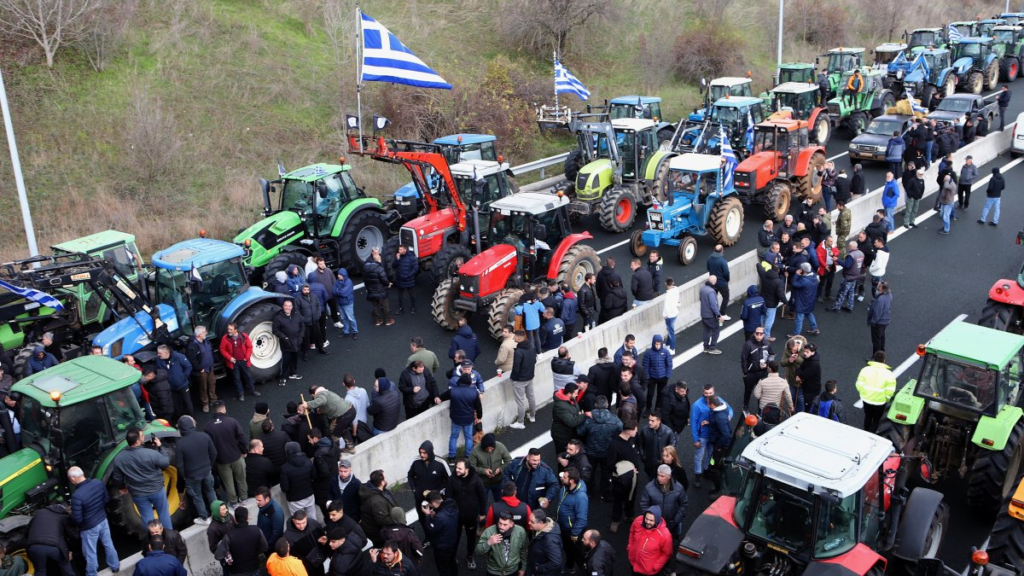
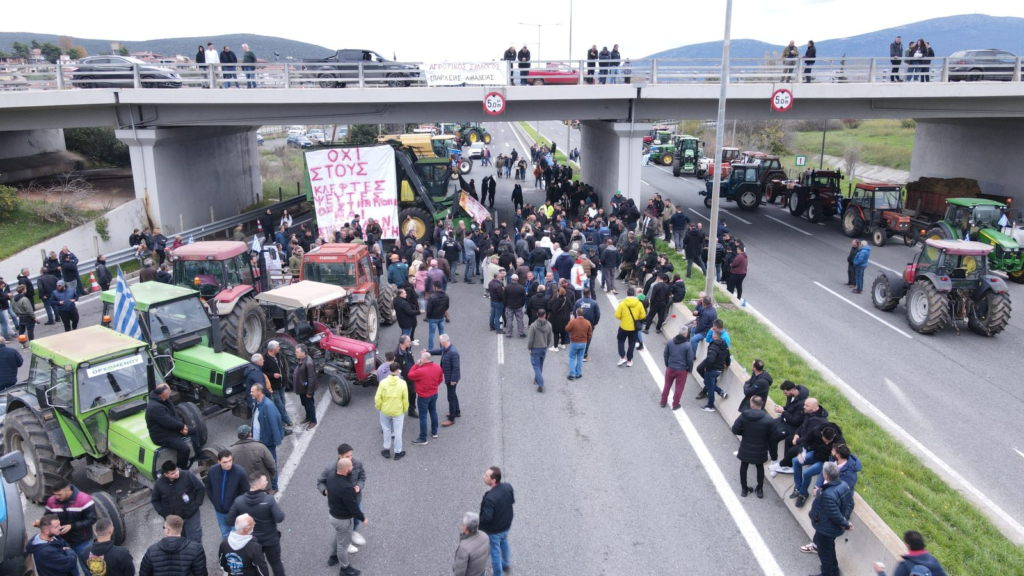
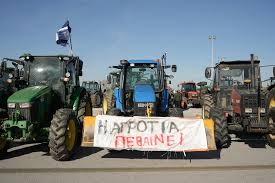
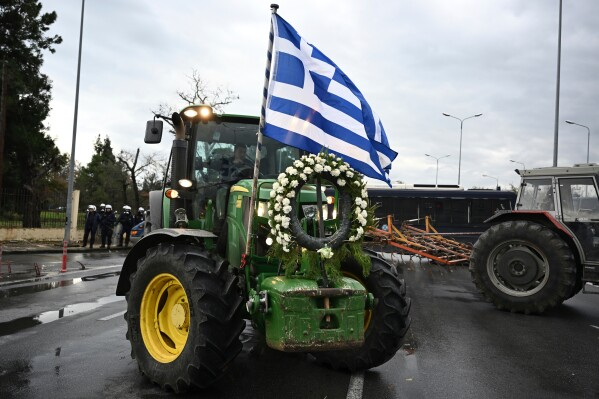
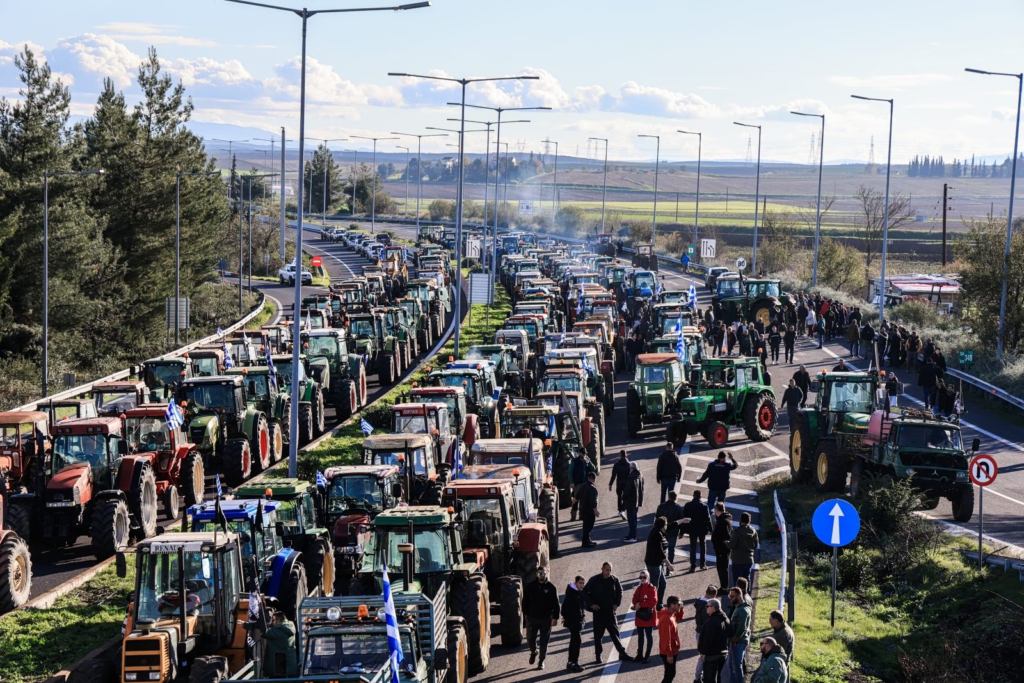
On the mainland, the greece agriculture protests have created significant transport disruption. In Thessaly, the Nikaia junction remains blocked by long lines of tractors, with farmers planning further escalation, including a coordinated attempt with regional fishing groups to close the port of Volos. Police have warned they will not allow such action, but farmers remain defiant.
Blockades have also been reported at border crossings with North Macedonia- including Evzoni and Niki- and with Bulgaria, at Promachonas and Exochi, affecting both inbound and outbound movement. In Epirus, protesters have intermittently closed the airport of Ioannina and established new blockades at Kalpaki and along the Louros river. Further south, access to the port of Igoumenitsa is expected to be restricted later this week.
In Western Greece, farmers have blocked sections of major motorways, including the Antirrion–Ioannina corridor and points on the Patras–Pyrgos highway. Symbolic closures have taken place on key bridges in Achaia, Aigio and Mesolongi, while other groups in Nafpaktia and Dorida have stationed tractors at additional rural chokepoints.
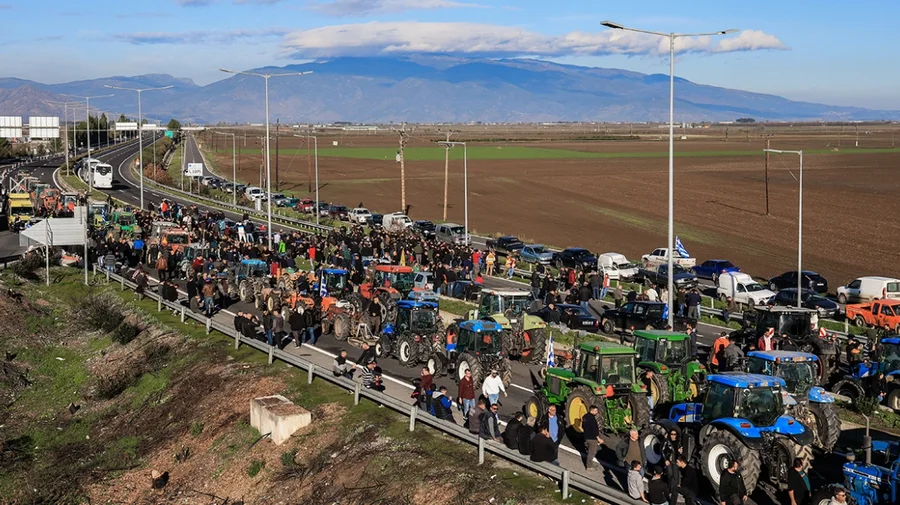
Central Greece is also experiencing mounting pressure. Farmers at Bralos, Atalanti and Kastro have been reinforcing their positions and periodically closing the Athens–Lamia corridor, forcing drivers onto narrow local routes. In Thiva, local authorities and civic organisations have openly backed the demonstrations, adding political weight to the unrest.
The Ministry of Rural Development has appealed for de-escalation, with Minister Kostas Tsiaras warning that “certain red lines must not be crossed” and urging farmers to continue dialogue. However, with widespread economic hardship, the OPEKEPE scandal eroding trust, and the Commission still reviewing Greece’s revised plan for agricultural payments, tensions show no sign of easing.
The Greece agriculture protests now represent one of the most extensive and disruptive mobilisation waves in recent years- and unless rapid progress is made on subsidies and institutional reform, nationwide disruption is likely to continue.
Also read: Clashes at Heraklion airport as farmers attempt blockade
For more videos and updates, check out our YouTube channel
