

Global push for human-made certification grows

Date:

Rise of “AI-free” labels

Companies and non-profits worldwide are developing labels to indicate human-made products and services amid growing concern over AI disruption. Labels such as “Proudly Human”, “Human-made”, “No AI”, and “AI-free” are appearing on films, books, marketing materials, and websites as consumers seek reassurance about human authorship.

The surge follows fears that AI-driven automation could replace jobs and creativity in sectors from publishing to advertising, music, and film. BBC News reports at least eight initiatives are attempting to create a globally recognised certification similar to the “Fair Trade” logo.
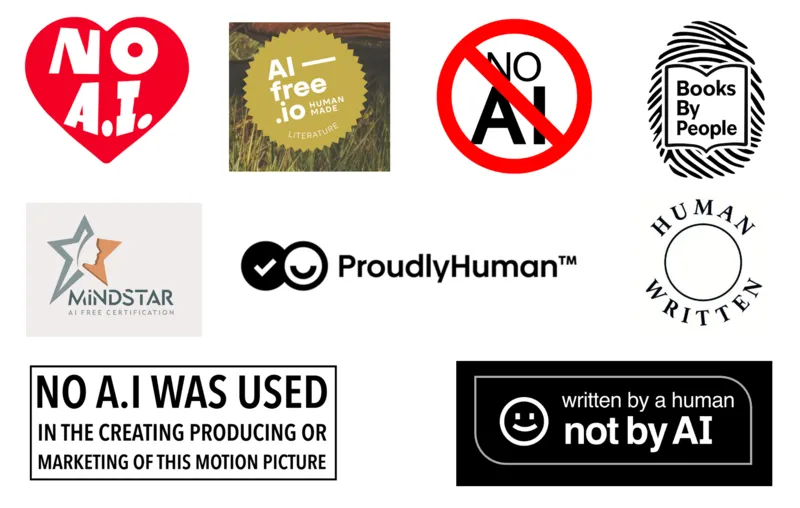
Challenges in defining “human-made”

Experts warn that competing definitions could confuse consumers. Dr Amna Khan, consumer expert at Manchester Metropolitan University, said:“AI is creating significant disruption and competing definitions of what is ‘human made’ are confusing consumers. A universal definition is essential to build trust, clarification and confidence.”

Some labels, like no-ai-icon.com, ai-free.io, and notbyai.fyi, allow free or paid downloads without auditing. Others, such as aifreecert, require strict vetting with professional auditors and AI-detection software. Experts note that defining AI-free content is increasingly difficult as AI tools are integrated into everyday processes.

AI researcher Sasha Luccioni explains:“AI is now so ubiquitous that it’s complicated to establish what ‘AI free’ means. AI is a spectrum, and we need comprehensive certification systems rather than a binary approach.”

Focus on generative AI

Many initiatives target generative AI – tools that produce text, music, code, or video from human prompts. The 2024 film Heretic included a disclaimer stating no generative AI was used. Film distributor The Mise en scène Company recently added a similar “No AI was used” stamp to its latest film, promoting an economic premium for human-made content. CEO Paul Yates said:“We support the AI industry, but human-made content carries value, and we want to highlight that.”

Auditing and certification in publishing

The publishing sector is also adopting human-made verification. UK company Books by People audits authors and publishers before awarding stamps, while Australia’s Proudly Human carries out rigorous checks at every stage of publication. Faber and Faber have added “Human Written” stamps to some books, though auditing details remain unclear.

Alan Finkel, Proudly Human CEO, stresses the importance of verified certification:“A certification of ‘human origin’ is needed. Self-certification is not sufficient, so we have a full verification process to ensure material is truly human originated.”

As AI becomes further integrated across industries, experts argue a standardised human-made certification is essential to maintain consumer trust and protect the value of human creativity.


Also read: Whistleblowers warn of social media algorithm risks
For more videos and updates, check out our YouTube channel

Share post:

Popular

More like this
Related

Molchanov sets world record with 137-metre dive in Limassol

Alexey Molchanov has set a new freediving world record...

Cyprus TV switches to DVB-T2 on 10 October: What viewers need to know

Cyprus is entering the next phase of its transition...

EU Parliament backs resolution against Muslim Brotherhood

The European Parliament reportedly approved a resolution targeting the Muslim Brotherhood on Thursday, 8 October 2026, calling for a European strategy to address what the EU describes as "Islamist entryism" and the influence of networks linked to the organisation. According to the voting figures provided, the resolution passed with 381 votes in favour, 167 against and 15 abstentions. Of Cyprus's six MEPs, only Geadis Geadi of ELAM was recorded as participating in the roll-call vote. He voted in favour, while the other five Cypriot representatives were not recorded as having voted. The distinction is important, as not participating in a vote is not the same as formally abstaining. What the resolution proposes The resolution calls for a common European approach to identifying practices described as "Islamist entryism", with particular emphasis on transparency in organisational funding, institutional partnerships and the potential use of EU programmes to gain political influence. The term "entryism" refers to a strategy whereby individuals or organised groups seek to influence established political institutions, organisations or social structures from within to advance their ideological objectives. The concept has its roots in political history, particularly the tactics employed by certain Trotskyist organisations during the 20th century. In this context, "Islamist entryism" is used to describe similar tactics allegedly employed by certain political Islamist networks. The European Parliament also calls on the Council of the EU to examine whether specific individuals and organisations associated with the Muslim Brotherhood meet the legal criteria for inclusion on the EU's terrorist list. The resolution does not automatically ban the Muslim Brotherhood and is not legally binding legislation. Controversy over Muslim youth organisations The resolution makes particular reference to FEMYSO, a federation of Muslim youth and student organisations in Europe that has faced questions concerning its funding and relationships with European institutions. The European Network Against Racism (ENAR), meanwhile, has rejected allegations of links to the Muslim Brotherhood. ENAR criticised the resolution as targeting Muslim organisations and groups working to combat discrimination. How the European political groups voted According to the figures provided, the Muslim Brotherhood resolution received most of its support from the European People's Party (EPP), the European Conservatives and Reformists (ECR), Patriots for Europe, Europe of Sovereign Nations (ESN) and a significant proportion of Renew Europe. The Socialists, Greens and the Left opposed the resolution. How Cyprus's six MEPs voted Geadis Geadi of ELAM was the only Cypriot MEP recorded as voting in favour of the resolution. The remaining five Cypriot MEPs did not participate in the roll-call vote: Loucas Fourlas Michalis Hadjipantela Costas Mavrides Giorgos Georgiou Fidias Panayiotou None of the five was recorded as formally abstaining. Six Greek MEPs voted in favour, three against Of Greece's 21 MEPs, nine participated in the roll-call vote. Six voted in favour: Vangelis Meimarakis, New Democracy Manolis Kefalogiannis, New Democracy Dimitris Tsiodras, New Democracy Galato Alexandraki, Greek Solution Emmanouil Fragkos, Greek Solution Nikolaos Anadiotis, Niki Three voted against: Lefteris Nikolaou-Alavanos, Communist Party of Greece (KKE) Kostas Papadakis, Communist Party of Greece (KKE) Maria Zacharia, Course of Freedom The remaining 12 Greek MEPs, including representatives of PASOK and SYRIZA, did not participate in the vote. No Greek MEP was recorded as formally abstaining. The European Parliament...

Cyprus Airways launches multilingual Website, making travel more accessible

Cyprus Airways has launched a multilingual version of its...