

Eighty years ago, Britain was celebrating its first peacetime Christmas after six long years of war.
They called it “Victory Christmas” and for the first time since the blackout began in 1939, people could hang festive lights and celebrate free from the fear of bombing and losing loved ones in the fighting.
While rations were modest and decorations had to be made from newspaper, the return of peace was met with widespread celebration, especially in the city of Hull.
The east coast port had been one of the hardest-hit places outside London, with 1,200 people killed in more than 60 raids.
‘That Christmas was very special’
“That Christmas was very special because there were no more bombs dropping,” said Jean Waddy, who was a child in the city in 1945.
“We just got a little stocking with an apple and an orange and a little book.
“But that didn’t matter. People accepted that and were happy that they were still alive.”
Despite swathes of the city lying in ruins, people found joy in celebrating the festive season, decorating for Christmas and spending time with loved ones.
Relief after years of fear
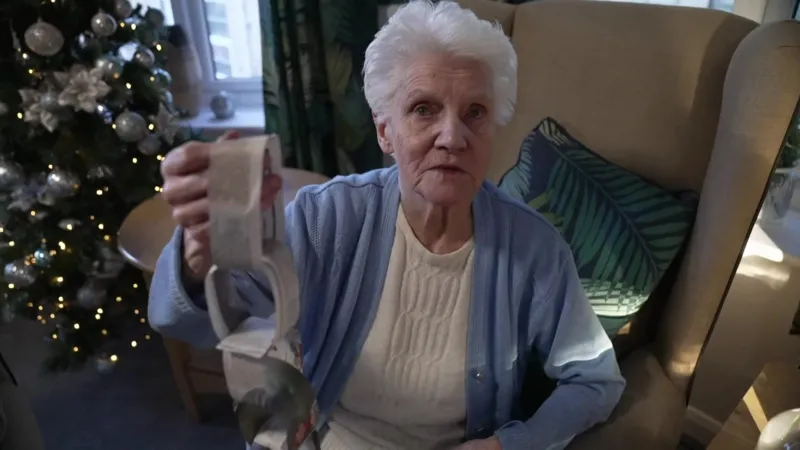
Residents of the Hesslewood House Care Home in Hessle, just to the west of Hull, recalled the relief of that time.
Shirley Medd, 90, remembered her family being bombed out of their home twice. The first time, their entire terrace was destroyed.
“The war had been so frightening,” Shirley recalled.
“My father had made a shelter under the stairs where I slept with my sister and two brothers, but if the sirens went off, we slept in a shelter outside.”
Shirley and her siblings were evacuated to the market town of Driffield – about 20 miles to the north of Hull – for a time.
“That Christmas we were just glad to be back home and safe with each other,” she said.
Her father had spent the war working on the docks and although they had very little, that Christmas he made gifts for his daughter.
“He made a stool with my name on it and a cradle and a rag doll. It had yellow hair to match my favourite dress which my sister had knitted,” Shirley said.
“It was a wonderful time. We were so relieved to alive.”
‘The community was amazing’
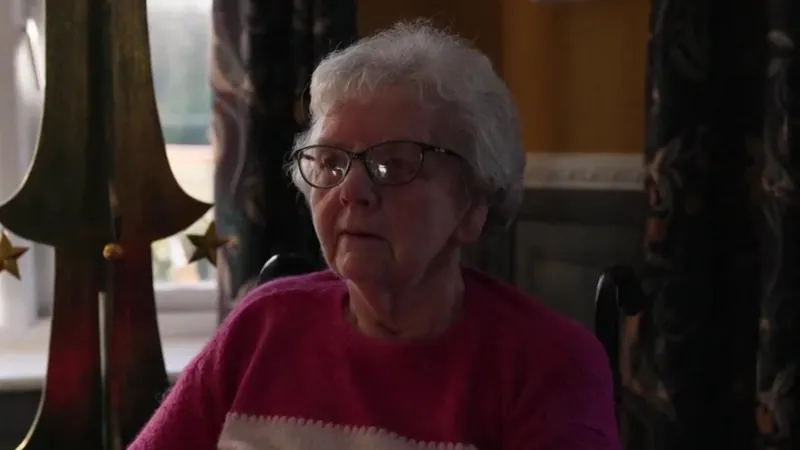
Fred Holmes remembers running along Walcott Street to his grandmother’s house while bombs dropped all around.
“It’s hard to believe now but that was just par for the course back then. The community was amazing. People came together,” Fred recalled.
“That Christmas we were just so relieved war had ended. I was relieved for my mother especially. Finally, she could stop worrying.”
Fred’s mother, Gertrude, had seven children to keep safe and was pregnant with her eighth during that Christmas.
“She wasn’t just a mother, she was a caretaker. They were giants those women. They don’t get enough credit for how they coped during the war,” he said.
An empty chair at the table
While for many families it was a day of joy, for others it was marked by an empty chair at the table.
Jean spent every night of the war sleeping on bunk-beds in a brick-built shelter outside her home.
But the neighbouring terrace had a shelter made only from sandbags. She lost two school friends when it took a direct hit during the Blitz.
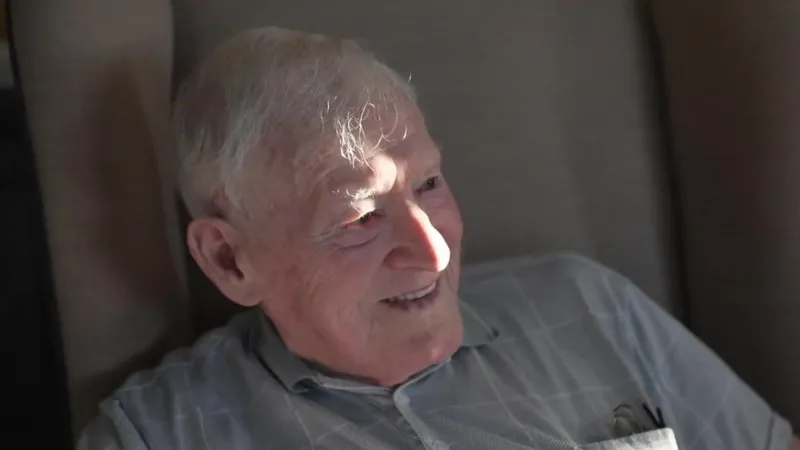
Eric Ramsey was 12 when the war ended. His father was not home for Christmas as he had been injured by a grenade in Burma.
His younger sister would be three years old before she met her father.
“All that mattered was that he was alive. That was everything,” he said.
“So many other children had lost their father. We were the lucky ones.”
Source: BBC News
Also read: ON THIS DAY: Apollo 8 Christmas Eve message from orbit (1968)
For more videos and updates, check out our YouTube channel
