

For many Cypriots, taro (kolokasi) is closely associated with traditional village cooking, Sunday family meals and recipes passed down through generations. Yet this humble root has a history spanning thousands of years and several continents.
Colocasia esculenta is among the oldest cultivated plants known to humans. Its domestication and spread date back to prehistoric times, with origins in tropical Asia and the wider Indo-Pacific region.
Long before Europe encountered potatoes, tomatoes and maize, taro was already an important food for communities across Asia and the Pacific. It later spread towards India and China, the Pacific islands, the Middle East, Egypt and the Mediterranean.
The ancient “kolokasion”
Ancient Greeks knew plants by the name “kolokasion”, a term particularly associated with Egypt. While ancient botanical names do not always correspond exactly to modern plant classifications, the survival of the word itself is striking.
From “kolokasion” in antiquity to “kolokasi” in modern Cyprus, the name has survived for centuries.
At some point during the plant’s long journey towards the Mediterranean, it reached Cyprus.
Taro at Richard the Lionheart’s wedding
The oldest known reference linking taro with Cyprus takes us back to one of the island’s most famous medieval episodes.
In 1191, Richard I of England, known as Richard the Lionheart, married Berengaria of Navarre in Limassol. She was crowned Queen of England in Cyprus.
According to Cypriot historical literature, drawing on George H. Everett Jeffery’s 1926 work Cyprus Under an English King in the Twelfth Century: The Adventures of Richard I. and the Crowning of His Queen in the Island, taro was among the foods served at the wedding feast.
It is not known whether Richard himself or Berengaria ate the dish.
What is recorded is that taro was served at the royal wedding feast.
The detail offers a different perspective on a food often regarded today as particularly rustic or traditional. More than eight centuries ago, it was reportedly served at a banquet associated with one of the best-known monarchs of the Middle Ages.
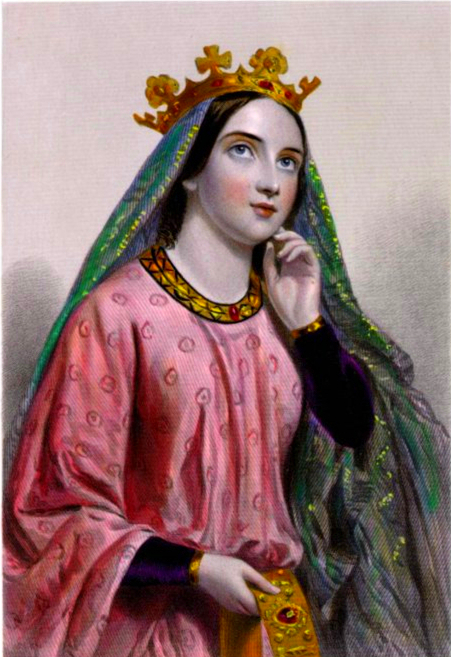

Long before Sotira
Today, taro is strongly associated with Sotira in the Famagusta district. However, the town was not always the island’s main centre of production.
In 1890, Athanasios A. Sakellarios recorded the cultivation of taro in Cyprus in his major work Ta Kypriaka, with particular reference to production in Lapithos and Paphos.
Cultivation was also later recorded in Karpasia and Syrianochori, before Sotira gradually became closely identified with the crop.
Following 1974, the geography of taro cultivation changed significantly. Sotira subsequently developed into the island’s leading production centre, maintaining a tradition that has become part of the gastronomic identity of the Famagusta district under the control of the Republic of Cyprus.
A food with a global history
Taro is much more than an old Cypriot dish.
Its history stretches from early agricultural communities in Asia and ancient Egypt to the Mediterranean and Cyprus. In 1191, it reportedly appeared at a royal wedding feast in Limassol.
The next time a plate of taro appears on the table, its history may be worth remembering.
Behind the humble root lies a story that spans thousands of years, continents and cultures.
Source: George H. Everett Jeffery, Cyprus Under an English King in the Twelfth Century (1926); Athanasios A. Sakellarios, Ta Kypriaka (1890); CVAR – Severis Foundation; Cyprus Food Museum.
Also read: İsmet Güney: The artist behind Cyprus’ flag
For more videos and updates, check out our YouTube channel
