

The 53rd anniversary of the Athens Polytechnic uprising is being commemorated on November 17, remembering the students and civilians who challenged Greece’s military dictatorship in 1973. The revolt was violently suppressed by the army, but became a defining moment in the country’s struggle to restore democracy.
The uprising took place in November 1973, when students occupied the National Technical University of Athens (Polytechnic) to protest against the military dictatorship that had ruled Greece since 1967.
What began as a student protest quickly developed into a wider anti-dictatorship movement, attracting thousands of people who demanded political freedom, democracy and an end to military rule.
The military regime eventually sent tanks and troops to crush the uprising, resulting in deaths, injuries and mass arrests.
Although the revolt did not immediately bring down the dictatorship, it exposed the regime’s brutality, weakened its political position and became a lasting symbol of resistance.
Why did the uprising happen?
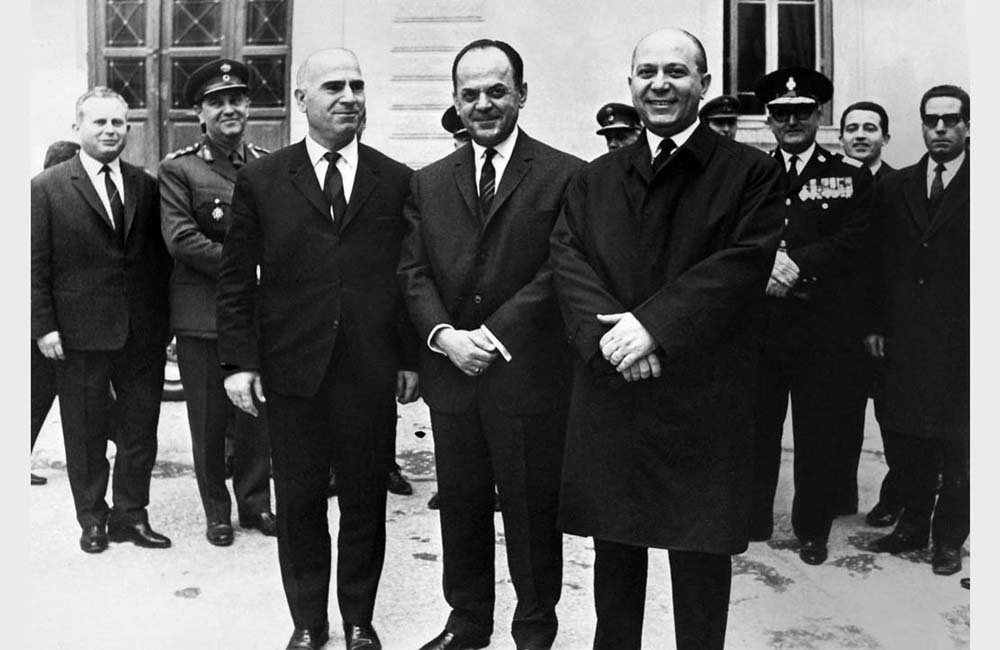
Greece had been under military rule since April 21, 1967, when a group of army officers seized power in a coup, overthrowing the government shortly before scheduled elections.
The regime, commonly known as the Greek Junta or the Rule of the Colonels, suspended democratic institutions, restricted political freedoms, imposed censorship and persecuted its opponents.
Political parties and public gatherings were restricted, while thousands of people were arrested, imprisoned, exiled or subjected to torture because of their political beliefs or opposition to the regime.
Universities were also placed under strict government control. Students faced restrictions on their activities, while elected student representation was undermined and demonstrations were met with police intervention.
Tensions increased in early 1973, particularly after the regime introduced measures allowing authorities to revoke university students’ military-service deferments and force them into the army if they participated in student protests.
Students responded with demonstrations and university occupations, including major mobilisations at the Athens Law School in February and March 1973.
These protests helped establish a broader student resistance movement.
By November, opposition to the dictatorship had grown beyond university campuses, with increasing numbers of citizens expressing dissatisfaction with military rule.
What happened at the Polytechnic?
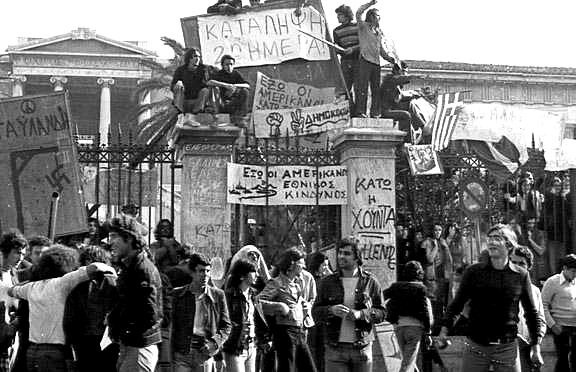
On November 14, 1973, students gathered at the Athens Polytechnic to protest against the dictatorship and the restrictions imposed on universities.
They decided to occupy the university, turning it into a centre of resistance.
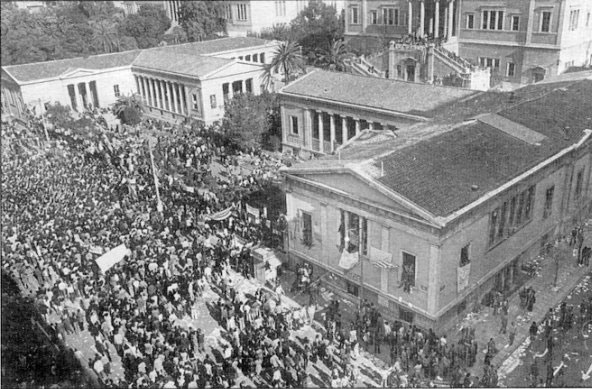
As news of the occupation spread, more students, school pupils and members of the public joined the demonstrations outside the building on Patission Street.
The movement quickly developed into a wider political protest. The students were no longer focusing exclusively on university reforms but were openly challenging the military regime.
They established a makeshift radio station inside the university, using it to communicate with the public and encourage people to join their struggle.
The station’s broadcasts, particularly the message “Here is the Polytechnic”, became closely associated with the uprising.
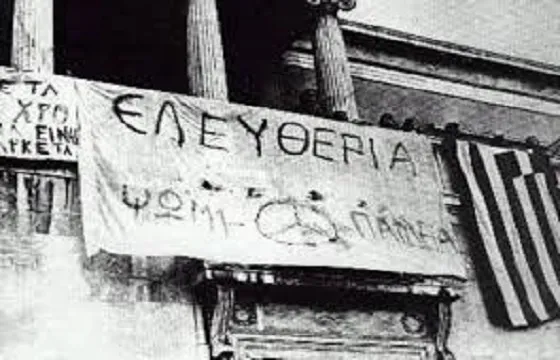
Among the most recognisable slogans were “Bread, Education, Freedom” and “Down with the Junta”.
The demands reflected the wider problems facing Greek society: economic and social difficulties, restrictions on education, the absence of democratic representation and the suppression of basic civil liberties.
Thousands of people gathered around the university, bringing food and medical supplies to support the students.
The night the army intervened
The military regime viewed the growing demonstrations as a direct threat to its authority and decided to intervene.
On November 16, clashes broke out between demonstrators and security forces around the Polytechnic. Police used tear gas and violence to disperse crowds, while the authorities imposed emergency measures.
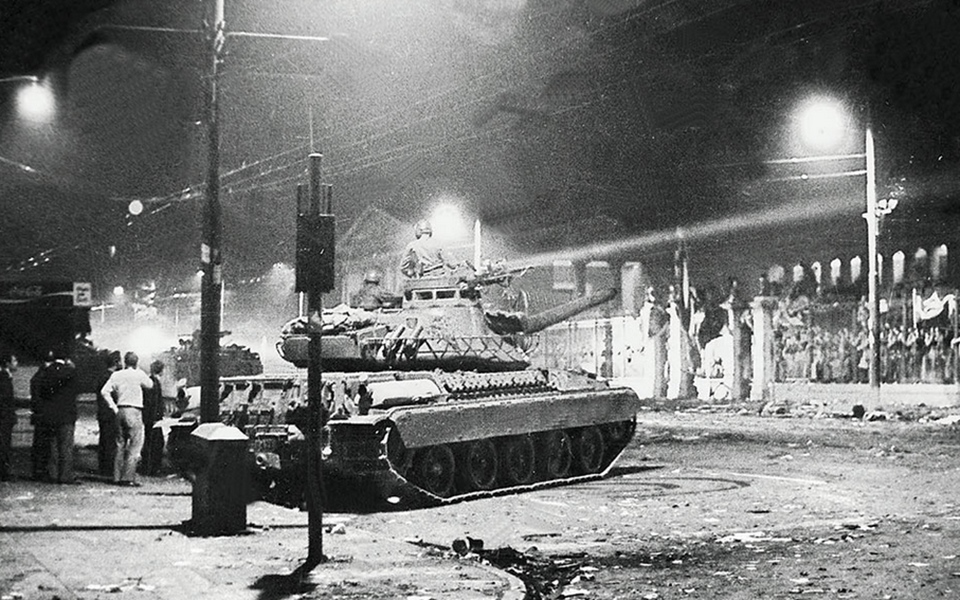
In the early hours of November 17, the military deployed tanks and troops to the area.
At approximately 3am, a tank advanced towards the university’s main entrance and broke through its gates, crushing the entrance as students remained inside.
Soldiers and police subsequently entered the university grounds, forcing the occupants to leave.
The violence was not confined to the university. Security forces attacked demonstrators in the surrounding streets, while civilians were also caught in the crackdown.
People were shot, beaten and arrested. Thousands were detained, with many subsequently subjected to interrogation, abuse and torture.
The Polytechnic radio station continued broadcasting for a short time after the military entered the premises, before its operators were arrested.
The uprising had been violently suppressed, but its impact on Greek society was far from over.
How many people were killed?
The exact number of people killed during the events remains a subject of historical investigation.
A judicial investigation conducted in 1974 documented 18 confirmed deaths and identified a further 16 cases. Subsequent historical research by the National Hellenic Research Foundation documented 24 fully established deaths connected to the crackdown.
The victims included demonstrators and civilians who were not necessarily participating in the occupation itself.
More than 1,000 people were also reported injured.
The violence became one of the darkest episodes of the dictatorship and further damaged the regime’s already declining legitimacy.
What happened after the uprising?
Despite its historical significance, the Polytechnic uprising did not immediately overthrow the military dictatorship.
Instead, the events accelerated divisions within the regime.
On November 25, 1973, just eight days after the crackdown, Brigadier General Dimitrios Ioannidis led another coup within the military establishment, removing Georgios Papadopoulos from power.
Ioannidis established an even more hardline dictatorship, bringing an end to Papadopoulos’s attempt to gradually liberalise the regime.
The final collapse of military rule came in July 1974, following the regime’s involvement in the coup against Cyprus President Archbishop Makarios on July 15.
The coup was organised by the Greek-backed National Guard and aimed to unite Cyprus with Greece.
Five days later, on July 20, Turkey launched its military invasion of Cyprus.
The crisis exposed the inability of the Greek military regime to manage the situation and defend its position. Amid the collapse of its authority, the dictatorship fell.
On July 24, 1974, former Greek Prime Minister Konstantinos Karamanlis returned from exile in Paris and formed a government of national unity, marking the restoration of democracy in Greece.
The period that followed became known as Metapolitefsi, referring to the country’s transition from dictatorship to parliamentary democracy.
Political freedoms were restored, political prisoners were released and the Communist Party of Greece, which had been banned under the dictatorship, was legalised in September 1974.
Why is November 17 still commemorated?
The Polytechnic uprising has become a central symbol of Greece’s return to democracy and the resistance of ordinary citizens to authoritarian rule.
Every year, November 17 is marked by commemorations, wreath-laying ceremonies and demonstrations across Greece.
The main events take place at the Athens Polytechnic, where people leave flowers and pay tribute to those who participated in the uprising.
The annual march traditionally ends outside the US Embassy in Athens, reflecting longstanding criticism of Washington’s relationship with the Greek military regime during the Cold War.
Commemorations also take place in Cyprus, where student organisations and other groups honour the uprising and its contribution to the struggle for democracy.
More than five decades later, the anniversary remains a reminder of the consequences of authoritarian rule and the importance of protecting democratic institutions, political freedoms and the right to protest.


Also read: Europe takes to the streets, but where are the Cypriots?
For more videos and updates, check out our YouTube channel
