

Polyendocrine metabolic ovarian syndrome (PMOS), formerly known as polycystic ovary syndrome (PCOS), is a hormonal condition that can affect periods, fertility, hair growth, weight and mood.
There is no cure for PMOS, but treatments and lifestyle changes can help manage symptoms and reduce the risk of associated health problems.
Symptoms of PMOS
Symptoms often begin during puberty and can continue until menopause. PMOS can affect anyone who has ovaries.
Symptoms vary from person to person and can be mild or severe. Some people may have no obvious symptoms, while others may experience several at the same time. Symptoms can also change after menopause.
Common symptoms include:
- irregular periods or long gaps between periods
- excessive hair growth, known as hirsutism, or hair loss
- weight gain or difficulty losing weight
- difficulty becoming pregnant
- depression, anxiety and other mental health problems
- oily skin and acne
- persistent tiredness
- thick, dark patches of skin around the neck or armpits, known as acanthosis nigricans
What does PMOS stand for?
The name PMOS reflects several aspects of the condition:
- P (Polyendocrine): Refers to the involvement of multiple hormones and biological pathways.
- M (Metabolic): Highlights the links with insulin resistance and metabolic health.
- O (Ovarian): Refers to the effects on the ovaries and ovulation.
- S (Syndrome): Describes a collection of symptoms and health effects that can occur together.
When to seek medical help
Many symptoms associated with PMOS are common and can also be caused by other conditions. Having these symptoms does not necessarily mean that you have PMOS.
However, you should speak to a GP if you are concerned about your symptoms or if they are affecting your everyday life, work or relationships.
Tests for PMOS
If a GP suspects PMOS, they may refer you to a gynaecologist or endocrinologist for further assessment.
Tests can include blood tests to check hormone levels and assess insulin resistance. An ultrasound scan may also be carried out to examine the ovaries.
Treatment for PMOS
There is no cure for PMOS, but treatment can help control symptoms and improve quality of life.
Depending on your symptoms and circumstances, medicines may include the combined contraceptive pill, the progestogen-only pill or an intrauterine system (IUS) to help manage irregular periods.
Clomifene may be used to improve fertility, while medicines such as spironolactone or eflornithine can help reduce unwanted hair growth on the face and body.
Weight-loss medicines may be considered for people who are overweight. Metformin, which is commonly used to treat type 2 diabetes, may also help with some metabolic and weight-related problems.
Acne can be treated with creams or, in some cases, tablets.
PMOS and fertility
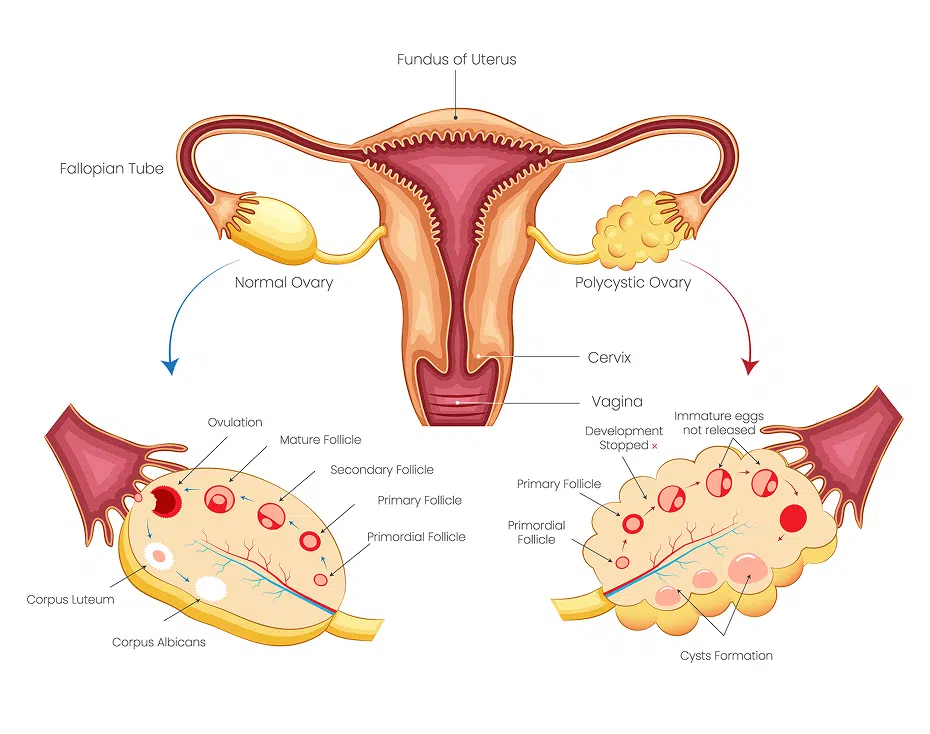
PMOS can make it more difficult to become pregnant because the ovaries may not release an egg regularly.
If lifestyle changes and other treatments have not helped, a doctor may recommend a procedure known as laparoscopic ovarian drilling.
The procedure uses heat or a laser to treat areas of the ovarian tissue. This may help restore ovulation and improve the chances of becoming pregnant.
Managing PMOS
There are several steps people with PMOS can take to help manage their symptoms, including:
- eating a healthy, balanced diet
- exercising regularly and choosing activities that suit you
- losing weight if you are overweight
- considering talking therapy if symptoms are contributing to depression or anxiety
- removing unwanted hair through shaving, waxing, hair-removal creams, electrolysis or laser treatment
What causes PMOS?
The exact cause of PMOS is not known. However, it is thought to be linked to hormonal and metabolic factors, including the way the body responds to insulin and levels of hormones such as testosterone.
Genetics may also play a role. People with a close relative who has the condition may have a higher risk of developing it.
Possible complications
PMOS can increase the risk of developing several health conditions, including:
- type 2 diabetes
- high blood pressure
- cardiovascular disease
- non-alcoholic fatty liver disease
- endometrial cancer
Regular medical check-ups can help monitor these risks and identify potential problems early. Anyone concerned about PMOS or its complications should speak to their doctor.
Living with PMOS
PMOS can affect people both physically and emotionally, and living with the condition can sometimes be challenging.
Alongside medical care, people with PMOS may benefit from support provided by charities, organisations, support groups and others living with the condition.
Also read: Childhood cancer: A family’s fight for hope
For more videos and updates, check out our YouTube channel
