

The 72-hour emergency bag is attracting renewed attention as several European countries strengthen their civil protection guidance and urge citizens to prepare for possible crises.
The idea is to ensure that, in the event of armed conflict, a cyberattack, a widespread power cut, a natural disaster or another major emergency, people can meet their basic needs for the first three days without relying immediately on government assistance.
The issue is not limited to Cyprus. In early November, the European Commission presented new population preparedness guidelines, calling on households to be able to cover their essential needs for at least 72 hours during an emergency.
The UK is promoting its “Be Ready” campaign, Sweden has updated its guidance for times of crisis or war, while Japan has also announced similar initiatives.
In France, citizens are advised to prepare a bag containing food, water, medicines and essential documents. Germany, Finland and Norway recommend keeping household supplies that can last from three days to a week or longer.
These measures reflect growing concerns about geopolitical tensions, cyberattacks, disruption to critical services and extreme weather events.
Authorities across Europe are seeking to strengthen public resilience and ensure people can cope during the first critical hours of an emergency. The guidance is intended as a precaution and does not indicate that a specific threat is imminent.
What are the instructions in Cyprus?
The Ministry of Interior has issued guidance aimed at helping citizens prepare for and respond to potential risks arising from hostile action.
The Civil Defence instructions cover the measures people should take in urban areas, how to receive information during an emergency, how to locate shelters and what to do if no designated shelter is available.
The guidance is intended to help the public take preventive measures, stay informed and protect themselves in the event of an emergency.
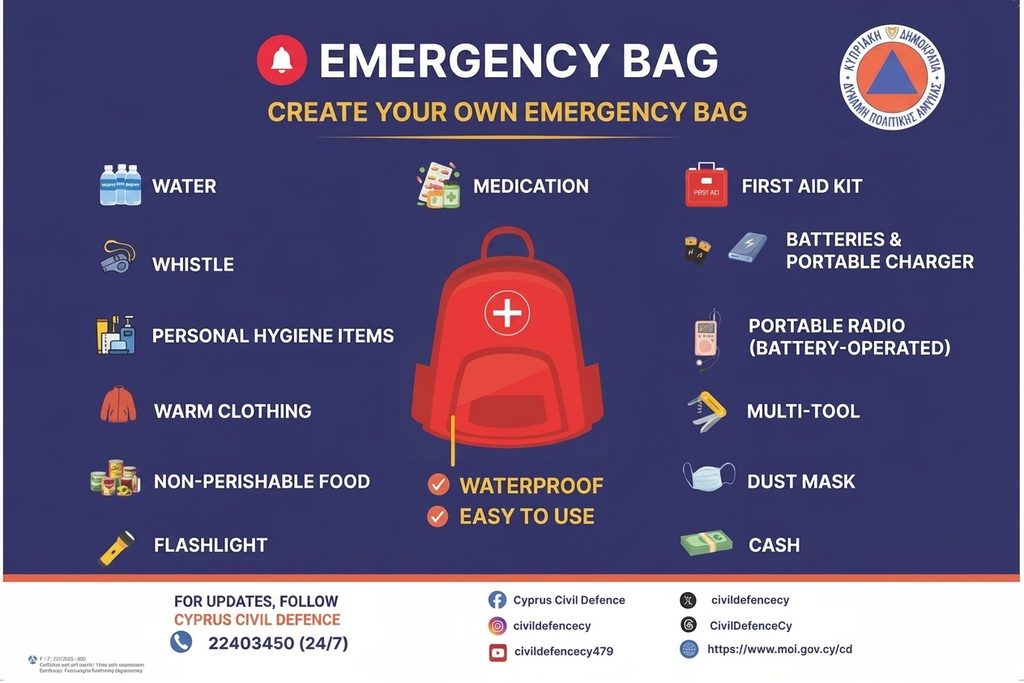
What should a 72-hour emergency bag contain?
According to the Civil Defence recommendations, anyone who may need to move to a shelter should take the following essentials:
- Identity card or other essential documents.
- Some cash.
- Drinking water, dry food and baby food, if there are children in the household.
- First-aid supplies.
- Essential medicines, including any medication needed as part of an ongoing treatment.
- A torch, a small portable radio and batteries.
Also read: Cyprus to link new AI centre with Greek supercomputer
For more videos and updates, check out our YouTube channel
