

Global push for human-made certification grows

Date:

Rise of “AI-free” labels

Companies and non-profits worldwide are developing labels to indicate human-made products and services amid growing concern over AI disruption. Labels such as “Proudly Human”, “Human-made”, “No AI”, and “AI-free” are appearing on films, books, marketing materials, and websites as consumers seek reassurance about human authorship.

The surge follows fears that AI-driven automation could replace jobs and creativity in sectors from publishing to advertising, music, and film. BBC News reports at least eight initiatives are attempting to create a globally recognised certification similar to the “Fair Trade” logo.
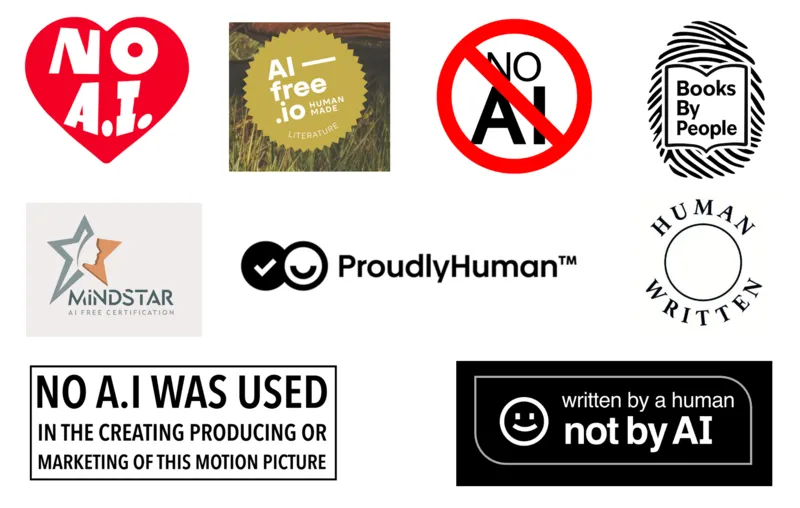
Challenges in defining “human-made”

Experts warn that competing definitions could confuse consumers. Dr Amna Khan, consumer expert at Manchester Metropolitan University, said:“AI is creating significant disruption and competing definitions of what is ‘human made’ are confusing consumers. A universal definition is essential to build trust, clarification and confidence.”

Some labels, like no-ai-icon.com, ai-free.io, and notbyai.fyi, allow free or paid downloads without auditing. Others, such as aifreecert, require strict vetting with professional auditors and AI-detection software. Experts note that defining AI-free content is increasingly difficult as AI tools are integrated into everyday processes.

AI researcher Sasha Luccioni explains:“AI is now so ubiquitous that it’s complicated to establish what ‘AI free’ means. AI is a spectrum, and we need comprehensive certification systems rather than a binary approach.”

Focus on generative AI

Many initiatives target generative AI – tools that produce text, music, code, or video from human prompts. The 2024 film Heretic included a disclaimer stating no generative AI was used. Film distributor The Mise en scène Company recently added a similar “No AI was used” stamp to its latest film, promoting an economic premium for human-made content. CEO Paul Yates said:“We support the AI industry, but human-made content carries value, and we want to highlight that.”

Auditing and certification in publishing

The publishing sector is also adopting human-made verification. UK company Books by People audits authors and publishers before awarding stamps, while Australia’s Proudly Human carries out rigorous checks at every stage of publication. Faber and Faber have added “Human Written” stamps to some books, though auditing details remain unclear.

Alan Finkel, Proudly Human CEO, stresses the importance of verified certification:“A certification of ‘human origin’ is needed. Self-certification is not sufficient, so we have a full verification process to ensure material is truly human originated.”

As AI becomes further integrated across industries, experts argue a standardised human-made certification is essential to maintain consumer trust and protect the value of human creativity.


Also read: Whistleblowers warn of social media algorithm risks
For more videos and updates, check out our YouTube channel

Share post:

Popular

More like this
Related

ON THIS DAY: The Phantom of the Opera premieres (1986)

On 9 October 1986, the Phantom of the Opera premiere took place at Her Majesty's Theatre in London's West End, marking the beginning of one of the most successful productions in musical theatre history. Created by Andrew Lloyd Webber and starring Michael Crawford as the mysterious Phantom and Sarah Brightman as Christine Daaé, the musical would go on to captivate audiences around the world with its haunting melodies, elaborate staging and dramatic love story. From Gothic novel to West End sensation Based on Gaston Leroux's 1910 novel, The Phantom of the Opera tells the story of a disfigured musical genius who lives beneath the Paris Opera House and develops an obsessive love for a young soprano. Andrew Lloyd Webber transformed the Gothic tale into a lavish stage production, combining romance, mystery and tragedy with a powerful orchestral score. The musical introduced songs that would become theatre classics, including "The Music of the Night", "All I Ask of You", "Think of Me" and the dramatic title number. Directed by Harold Prince, with musical staging and choreography by Gillian Lynne, the original London production featured elaborate costumes, atmospheric sets and a spectacular falling chandelier that became one of the show's most recognisable moments. Michael Crawford and Sarah Brightman's defining roles Michael Crawford's performance as the Phantom became one of the defining roles of his career, earning him widespread acclaim for his portrayal of the troubled character. Sarah Brightman, who was married to Lloyd Webber at the time, originated the role of Christine Daaé, bringing her distinctive soprano voice to the production. Their performances helped establish the musical's international reputation and set the standard for generations of actors who would later take on the roles. A record-breaking theatrical phenomenon The Phantom of the Opera premiere began an extraordinary run in London's West End. The original London production reached 13,629 performances before being interrupted by the Covid-19 pandemic in March 2020. The musical returned to the West End in 2021 and has continued its run. Its success also crossed the Atlantic, with the Broadway production opening in New York in January 1988. The show went on to become Broadway's longest-running musical, closing in April 2023 after 13,981 performances. Over the decades, The Phantom of the Opera has been performed internationally, translated into numerous languages and seen by millions of theatregoers. Forty years of The Phantom of the Opera On 9...

Three killed in Houthi attacks on Riyadh airport

Three Saudi nationals, including a Saudia airline pilot, have been killed in Houthi attacks on Riyadh's international airport.

France promises 3,000 extra teachers in student protests

The French government has made its first sign of...

Eurostat: Cyprus residents made 3.8 million trips in 2025

Residents of Cyprus made 3,815,322 trips in 2025, up...