

On 12 March 1945, in the final months of the Second World War, the young German-Jewish girl Anne Frank died in the Bergen-Belsen concentration camp in northern Germany. She was only fifteen years old. Today, her name is recognised across the world as one of the most powerful human stories connected to the Holocaust, not because she was a political figure or a soldier, but because she wrote honestly about her life, her fears and her hopes while hiding from Nazi persecution.
Anne Frank was born on 12 June 1929 in Frankfurt, Germany, into a liberal Jewish family. Her father, Otto Frank, was a businessman and a veteran of the First World War, while her mother, Edith Frank, cared for Anne and her older sister, Margot Frank. Anne was known as lively, curious and outspoken, with a strong imagination and a love for reading and writing. However, her childhood was soon overshadowed by political developments in Germany. After Adolf Hitler and the Nazi Party rose to power in 1933, anti-Jewish laws and discrimination rapidly intensified. Fearing for their safety, the Frank family left Germany and moved to Amsterdam in the Netherlands, hoping to start a new life in a more tolerant country.
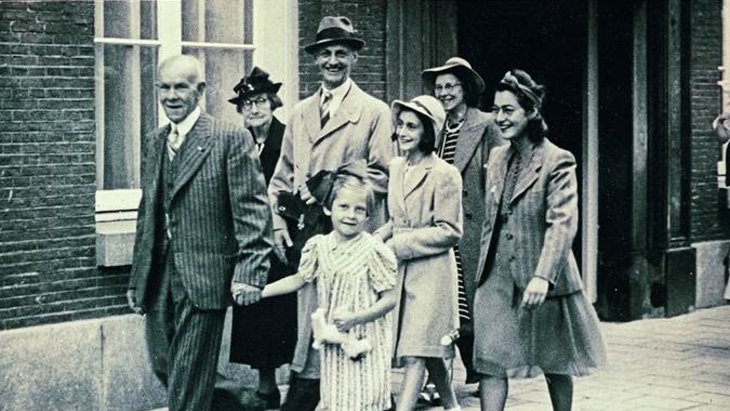
For several years the family lived relatively peacefully in Amsterdam. Anne attended school, learned Dutch quickly and made friends. But the outbreak of the Second World War changed everything. In 1940 Nazi Germany invaded and occupied the Netherlands, and restrictions against Jewish people were introduced one after another. Jews were forced to wear identifying stars, attend separate schools and were gradually excluded from everyday public life. By 1942, deportations of Jews to concentration camps had begun.
In July of that year, when Margot received a summons to report for deportation to a labour camp, Otto Frank made the decision to hide the family. They moved into a concealed set of rooms behind his office building, later known as the Secret Annex. The hiding place was carefully concealed behind a movable bookcase and was shared with four other Jewish refugees, including the teenage boy Peter van Pels. Life inside the hidden rooms was tense and restrictive. The occupants had to remain silent during working hours in order not to be discovered by employees in the building below, and they lived in constant fear of betrayal or discovery.
Just before going into hiding, Anne had received a red-checked diary for her thirteenth birthday. During the more than two years spent in hiding, she wrote regularly in it, addressing many entries to an imaginary friend she called “Kitty”. Her writing reveals a remarkably perceptive young mind. She described the daily tensions inside the cramped rooms, her complicated relationship with her mother, her growing friendship with Peter, and her dreams of becoming a writer or journalist. Beyond the immediate circumstances of war, her diary also reflects the universal struggles of adolescence: identity, independence and hope for the future.
On 4 August 1944, after more than two years in hiding, the Secret Annex was discovered during a police raid. The group was arrested and deported. Anne and her sister Margot were eventually transported from the Auschwitz concentration camp to Bergen-Belsen, where conditions were catastrophic. Food was scarce, sanitation was poor and disease spread rapidly. Both sisters contracted typhus during the winter of 1944–1945. Margot died first, and Anne followed shortly afterwards in March 1945, only weeks before British troops liberated the camp.
Of the eight people who had hidden in the Annex, only Otto Frank survived the war. When he returned to Amsterdam, he was given Anne’s preserved diary by one of the helpers who had assisted the family during their time in hiding. Recognising the significance of his daughter’s writing, he arranged for its publication in 1947 under the title The Diary of a Young Girl. The book soon gained international attention. Readers were deeply moved by the honesty, intelligence and emotional depth of a young girl writing in the face of fear and uncertainty.
Over the decades, Anne Frank’s diary has been translated into dozens of languages and has sold tens of millions of copies worldwide. Her story has also inspired numerous adaptations, including the Academy Award-winning film The Diary of Anne Frank, television productions such as Anne Frank: The Whole Story, as well as countless documentaries, plays and educational works. The building where the family hid is today preserved as the Anne Frank House, a museum visited by more than a million people each year.
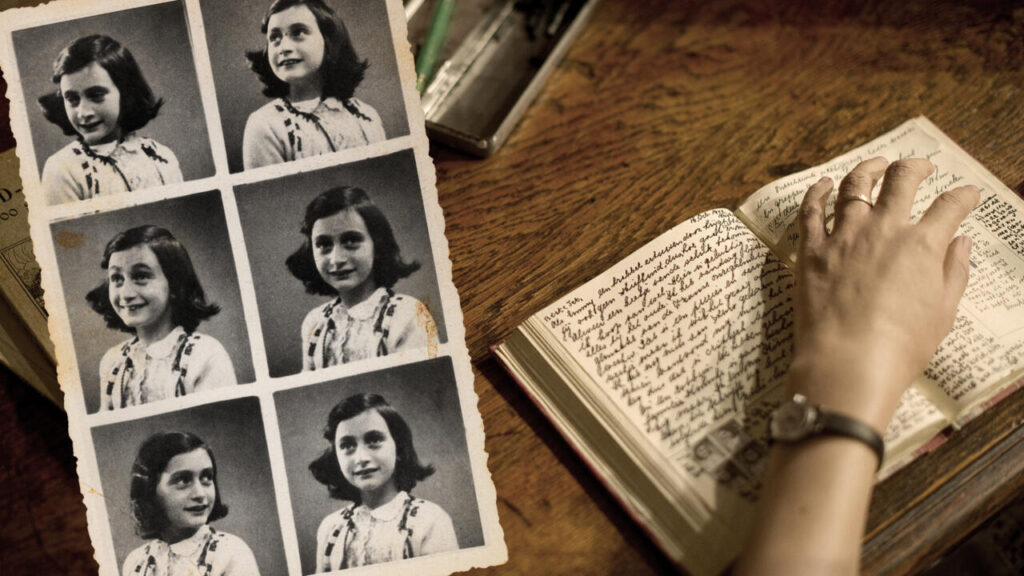
Anne Frank’s legacy lies not only in the historical record of persecution but also in the universal voice captured in her diary. Through the thoughts of a teenage girl, readers gain an intimate understanding of the human cost of war and intolerance. Her writing reminds us that behind the statistics of the Holocaust were millions of individual lives, dreams and futures that were cut short.
More than eighty years later, Anne Frank’s words continue to resonate across generations. Her diary remains one of the most widely read personal testimonies of the twentieth century, offering both a warning about the dangers of hatred and a powerful message about resilience, humanity and hope.
Also read: ON THIS DAY: The diary of Anne Frank first published (1947)
