

Strong wind warning in force until tonight
A Cyprus yellow warning has been issued by the Cyprus Department of Meteorology for very strong to gale-force winds across the island on Friday.
The yellow warning is in effect from 08:00 until 22:00, with south-westerly to north-westerly winds expected to reach force 6 to 7 Beaufort, locally up to 7 Beaufort. Wind gusts may reach gale force, up to 8 Beaufort, particularly in exposed areas.
Unstable weather with rain, storms and hail
Low pressure, a cold air mass and a significantly strengthened wind field are affecting Cyprus. Conditions today are mainly cloudy, with local rain and isolated thunderstorms expected. Hail is possible during storms, while snowfall is forecast for higher mountain areas.
Sea conditions will be rough to very rough in most coastal areas, becoming temporarily stormy along the west and north coasts. Temperatures will drop to around 15°C inland and in western and northern coastal areas, about 17°C in the south and east, and close to 3°C in the highest mountains.
Dangerous conditions in Troodos
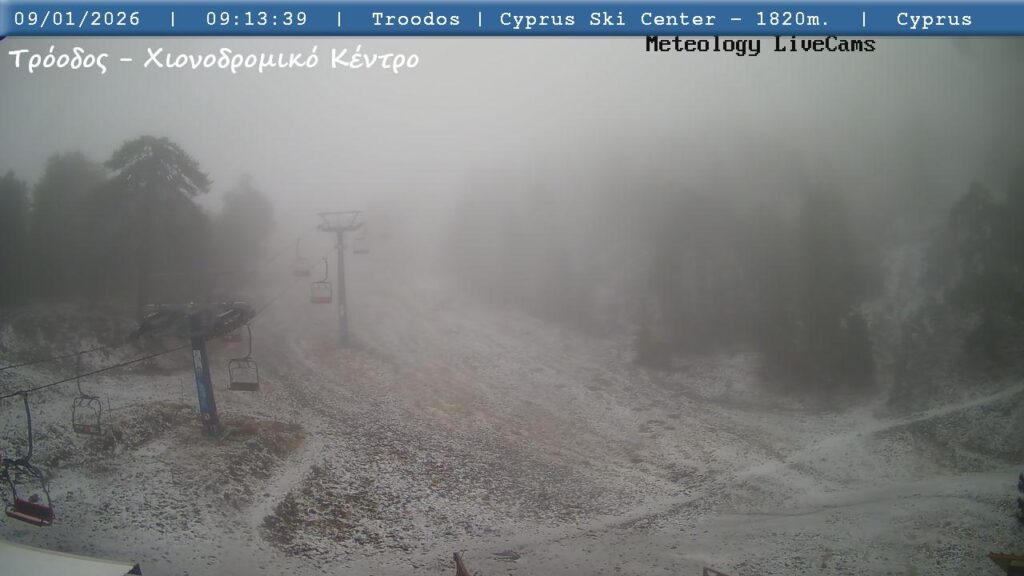
Snowfall overnight in the Troodos Mountains has led to rockfalls on mountain roads, while dense fog is currently reducing visibility in higher areas. Roads are slippery and dangerous due to moisture and ice.
Police are urging drivers travelling in the Troodos region to exercise extreme caution, reduce speed, maintain a safe distance from other vehicles and keep headlights switched on at all times.
Snowfall continues at higher elevations
Weather observers report ongoing snowfall with accumulation in the Troodos area, with periods of dense snow expected throughout the day. Frost is also likely overnight, with temperatures in the highest mountains dropping to around -2°C.
Weekend outlook
Unstable weather is expected to continue on Saturday, Sunday and Monday, with periods of cloud, local rain and isolated thunderstorms. Hail remains possible, while snow will persist in the higher mountains. Winds will remain locally strong, particularly in coastal areas.
Temperatures will rise slightly on Saturday, remain largely unchanged on Sunday, and then fall again on Monday, returning to near or slightly below seasonal averages.
Also read: EU Presidency Opening Ceremony sends sovereignty messages
For more videos and updates, check out our YouTube channel