

Greenland represents more than a large island in the Arctic Circle for the US; it forms a critical nexus of national security involving missile defense and control over emerging Arctic sea routes. Its geographic position makes it a focal point of contention in any strategic exchange between Washington and Moscow.
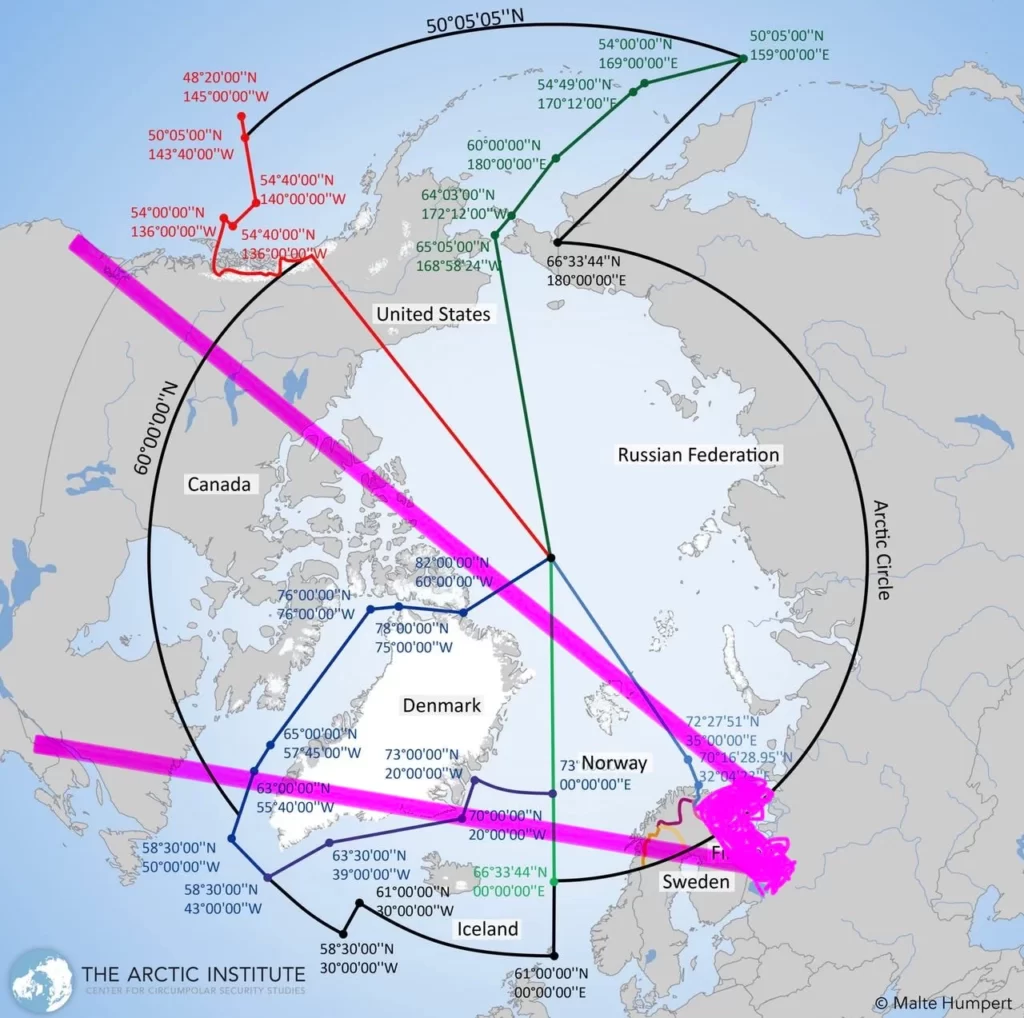
The Kola Peninsula near Finland hosts Russia’s core strategic forces: ICBM silos, nuclear submarine bases, and strategic bombers. Ballistic or cruise missile paths from Kola toward mainland US pass over Greenland, positioning it ideally for surveillance and potential interception.
The apogee – the missile’s highest, slowest, and most predictable point – occurs directly above Greenland for Kola-launched threats targeting America. This location enables rapid interceptor launches, minimizing response time and boosting interception success rates.
Arctic routes and Chinese threat
Melting ice opens the Northern Sea Route to Europe, allowing Chinese commercial ships to reach Rotterdam without Suez Canal size limits. This accelerates China-EU trade while expanding Beijing’s military presence in the North Atlantic.
Increased Chinese naval activity likely includes submarine operations under Arctic ice toward the North Atlantic, heightening the strategic value of Greenland’s northeastern coasts for US surveillance and deterrence.
Greenland’s position above the Arctic Circle makes it central to global security debates amid rising tensions, climate change, and economic shifts. President Donald Trump seeks control over the island’s vast mineral wealth and dominance of Arctic and North Atlantic approaches to North America.
Dual security and acquisition plans
Greenland’s northeastern coastline serves dual roles: countering Russian missiles and monitoring Chinese naval movements into the North Atlantic. This explains the Trump administration’s prioritization of Greenland for national security.
The White House states President Trump considers various acquisition options, including military power, though no specific model is confirmed. Scenarios include direct purchase or a Compact of Free Association like those in other US-influenced areas.
Washington emphasizes building trade relations while noting military power remains available to the commander-in-chief.
European and Danish response
Seven European nations – UK, France, Germany, Italy, Poland, Spain, and Denmark – issued a joint statement affirming “Greenland belongs to its people.” Only Copenhagen and Nuuk can decide their future relations, invoking UN Charter principles on sovereignty and territorial integrity, and calling for NATO collective action.
Greenland’s Prime Minister Jens-Frederik Nielsen welcomed the stance, urging “dialogue respecting international law and territorial integrity.”
Joint Statement on Greenlandhttps://t.co/ORMWHpKEJt pic.twitter.com/wu1SdF1INN
— Statsministeriet (@Statsmin) January 6, 2026
Historical context
Trump floated Greenland acquisition in 2019 as a “real estate deal.” Russia and China show growing interest due to sea passage geostrategy and untapped rare earth reserves.
Greenland has had self-government since 1979, with many favoring future independence from Denmark. Polls show overwhelming opposition to US annexation despite the existing American military base.
Also read: Trump repeats Greenland annexation threat
For more videos and updates, check out our YouTube channel.
