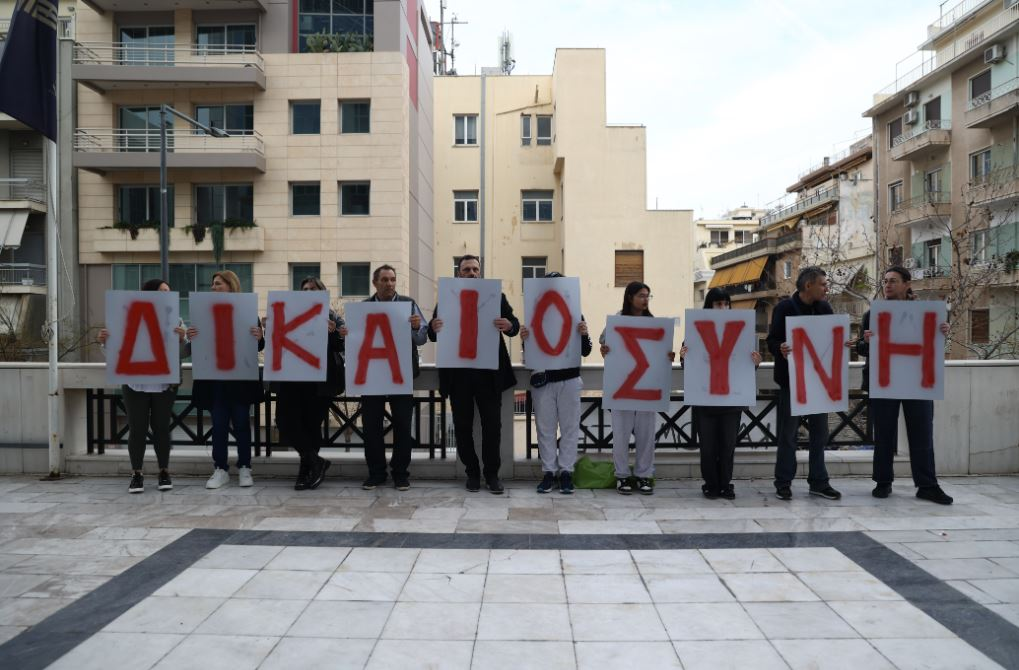

The Athens Court of Appeal will today announce its decision on whether to grant mitigating circumstances to the 10 individuals found guilty over the Mati fire, one of the deadliest disasters in modern Greek history.
Following yesterday’s verdict, which held ten people responsible for the tragedy that struck Eastern Attica in July 2018, the court will now determine whether any of the defendants are entitled to leniency- a decision that will heavily influence the length and form of their sentences.
The day’s proceedings will begin with the recommendation of Prosecutor Stamatina Perimeni on whether each of the ten should be granted any mitigating factors.
What the court is deciding
After the prosecutor’s recommendation, the judges will deliberate and announce whether they will recognise any mitigating circumstances. These will affect not only the severity of the penalties, but also whether any portion of the sentences may be suspended or served in alternative ways, depending on the defendant’s role and level of responsibility.
During Tuesday’s hearing, defence lawyers for the ten requested that the court recognise several mitigating factors, including:
- A previously lawful life,
- Absence of base motives,
- Good post-incident conduct,
- And the excessive length of the trial process, which they argue was not the defendants’ fault.
Who has been found guilty?
The following individuals were found guilty of negligent homicide and bodily harm, either through their direct actions or failure to act, leading to the catastrophe that left 104 dead and dozens injured:
- Sotiris Terzoudis – Former Chief of the Fire Service
- Vasilis Matthaiopoulos – Former Deputy Chief
- Ioannis Fostieris – Commander of the Unified Operations Centre
- Christos Golfinos – Director of emergency line 199
- Filippos Panteleakos – Director of Civil Protection Operations
- Damianos Papadopoulos – Nea Makri Fire Chief (designated first on scene)
- Nikolaos Panagiotopoulos – Commander, Athens Fire Service
- Charalambos Chionis – Commander, Eastern Attica Fire Service
- Ioannis Kapakis – Former Secretary General for Civil Protection
- Konstantinos Angelopoulos – Resident of Penteli, whose yard was the fire’s point of origin
The court placed particular emphasis on the operational leadership of the Fire Service, including field commanders and officials responsible for critical decisions. It also held accountable the political appointee in charge of Civil Protection at the time.
Who was acquitted?
The court acquitted all defendants associated with:
- Aerial operations (pilots, controllers, and coordinators),
- The Special Disaster Response Unit (EMAK),
- And local government, including:
- Rena Dourou, former Attica Governor
- Evangelos Bournous, former Mayor of Rafina–Pikermi
- Ilias Psinakis, former Mayor of Marathon
- Other deputy mayors and aviation officials
This represented a partial divergence from Prosecutor Perimeni’s original recommendation, who had sought convictions for Dourou and Bournous.
Also read: UPDATE: Mati fire verdict delivered