

ON THIS DAY: Sylvia Pankhurst, suffragette and socialist, was born

Date:

On 5 May 1882, Sylvia Pankhurst- suffragette, socialist, and staunch anti-fascist- was born in Manchester, England. A daughter of the famed Emmeline Pankhurst, Sylvia carved her own legacy as a fierce advocate not only for women’s suffrage, but for workers’ rights, anti-imperialism, and international peace.

While her early activism aligned closely with the suffrage movement led by her mother and sister, Sylvia soon broke away from the Women’s Social and Political Union (WSPU) due to its increasingly autocratic leadership and its exclusive focus on middle-class women’s voting rights. Sylvia believed the fight for equality must include working-class women and broader social justice reforms- a stance that would define her life’s work.

The East London Federation and a broader vision

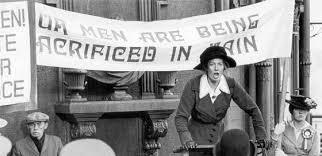
In 1914, Sylvia founded the East London Federation of Suffragettes (ELFS), which offered not only political education but also essential support services like a cost-price milk depot, a free nursery, and a co-operative toy factory for local women. She published The Woman’s Dreadnought, a newspaper amplifying working-class voices, and later renamed it The Workers’ Dreadnought, reflecting her socialist convictions, and turned her pen into a weapon.
Pacifism and anti-imperialism

Sylvia was a vocal opponent of World War I, a position that isolated her from much of the British suffrage leadership at the time and got her branded a traitor. She later became a dedicated anti-colonialist, criticising the British Empire, and campaigning passionately for Ethiopian independence. Her close friendship with Emperor Haile Selassie saw her move to Ethiopia later in life, where she died in 1960 and was given a state funeral- the only foreigner buried with full honours in Addis Ababa.

Legacy and remembrance

Sylvia Pankhurst has often been overshadowed by the more glamorous or militant figures of the suffrage movement. But history is catching up. She was intersectional before the word existed- understanding that class, race, and empire were bound up with the fight for women’s rights.

In recent years, her legacy has been re-evaluated and celebrated as that of a radical trailblazer who refused to compromise her ideals. A statue in her honour is currently being planned in London, a long-overdue tribute to her singular contributions to social justice.

Share post:

Popular

More like this
Related

Molchanov sets world record with 137-metre dive in Limassol

Alexey Molchanov has set a new freediving world record...

Cyprus TV switches to DVB-T2 on 10 October: What viewers need to know

Cyprus is entering the next phase of its transition...

EU Parliament backs resolution against Muslim Brotherhood

The European Parliament reportedly approved a resolution targeting the Muslim Brotherhood on Thursday, 8 October 2026, calling for a European strategy to address what the EU describes as "Islamist entryism" and the influence of networks linked to the organisation. According to the voting figures provided, the resolution passed with 381 votes in favour, 167 against and 15 abstentions. Of Cyprus's six MEPs, only Geadis Geadi of ELAM was recorded as participating in the roll-call vote. He voted in favour, while the other five Cypriot representatives were not recorded as having voted. The distinction is important, as not participating in a vote is not the same as formally abstaining. What the resolution proposes The resolution calls for a common European approach to identifying practices described as "Islamist entryism", with particular emphasis on transparency in organisational funding, institutional partnerships and the potential use of EU programmes to gain political influence. The term "entryism" refers to a strategy whereby individuals or organised groups seek to influence established political institutions, organisations or social structures from within to advance their ideological objectives. The concept has its roots in political history, particularly the tactics employed by certain Trotskyist organisations during the 20th century. In this context, "Islamist entryism" is used to describe similar tactics allegedly employed by certain political Islamist networks. The European Parliament also calls on the Council of the EU to examine whether specific individuals and organisations associated with the Muslim Brotherhood meet the legal criteria for inclusion on the EU's terrorist list. The resolution does not automatically ban the Muslim Brotherhood and is not legally binding legislation. Controversy over Muslim youth organisations The resolution makes particular reference to FEMYSO, a federation of Muslim youth and student organisations in Europe that has faced questions concerning its funding and relationships with European institutions. The European Network Against Racism (ENAR), meanwhile, has rejected allegations of links to the Muslim Brotherhood. ENAR criticised the resolution as targeting Muslim organisations and groups working to combat discrimination. How the European political groups voted According to the figures provided, the Muslim Brotherhood resolution received most of its support from the European People's Party (EPP), the European Conservatives and Reformists (ECR), Patriots for Europe, Europe of Sovereign Nations (ESN) and a significant proportion of Renew Europe. The Socialists, Greens and the Left opposed the resolution. How Cyprus's six MEPs voted Geadis Geadi of ELAM was the only Cypriot MEP recorded as voting in favour of the resolution. The remaining five Cypriot MEPs did not participate in the roll-call vote: Loucas Fourlas Michalis Hadjipantela Costas Mavrides Giorgos Georgiou Fidias Panayiotou None of the five was recorded as formally abstaining. Six Greek MEPs voted in favour, three against Of Greece's 21 MEPs, nine participated in the roll-call vote. Six voted in favour: Vangelis Meimarakis, New Democracy Manolis Kefalogiannis, New Democracy Dimitris Tsiodras, New Democracy Galato Alexandraki, Greek Solution Emmanouil Fragkos, Greek Solution Nikolaos Anadiotis, Niki Three voted against: Lefteris Nikolaou-Alavanos, Communist Party of Greece (KKE) Kostas Papadakis, Communist Party of Greece (KKE) Maria Zacharia, Course of Freedom The remaining 12 Greek MEPs, including representatives of PASOK and SYRIZA, did not participate in the vote. No Greek MEP was recorded as formally abstaining. The European Parliament...

Cyprus Airways launches multilingual Website, making travel more accessible

Cyprus Airways has launched a multilingual version of its...