

31 August 1995 marked a turning point in the way people in Cyprus would communicate, access information and connect with the wider world.
On this day 31 years ago, internet technology was presented to the public for the first time, introducing a concept that at the time seemed almost like science fiction.
From the following day, the technology moved from presentation to practice, with the internet service becoming available to the public.
Three decades later, the internet is an inseparable part of everyday life. But how did it all begin, and who were the people behind its arrival on the island?
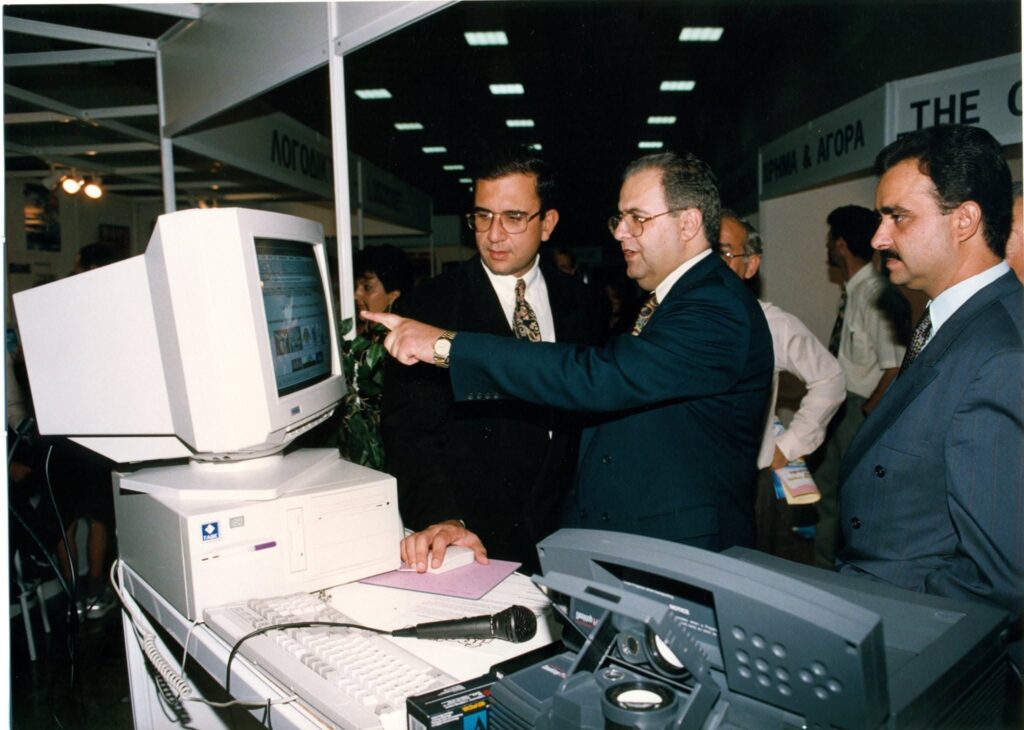
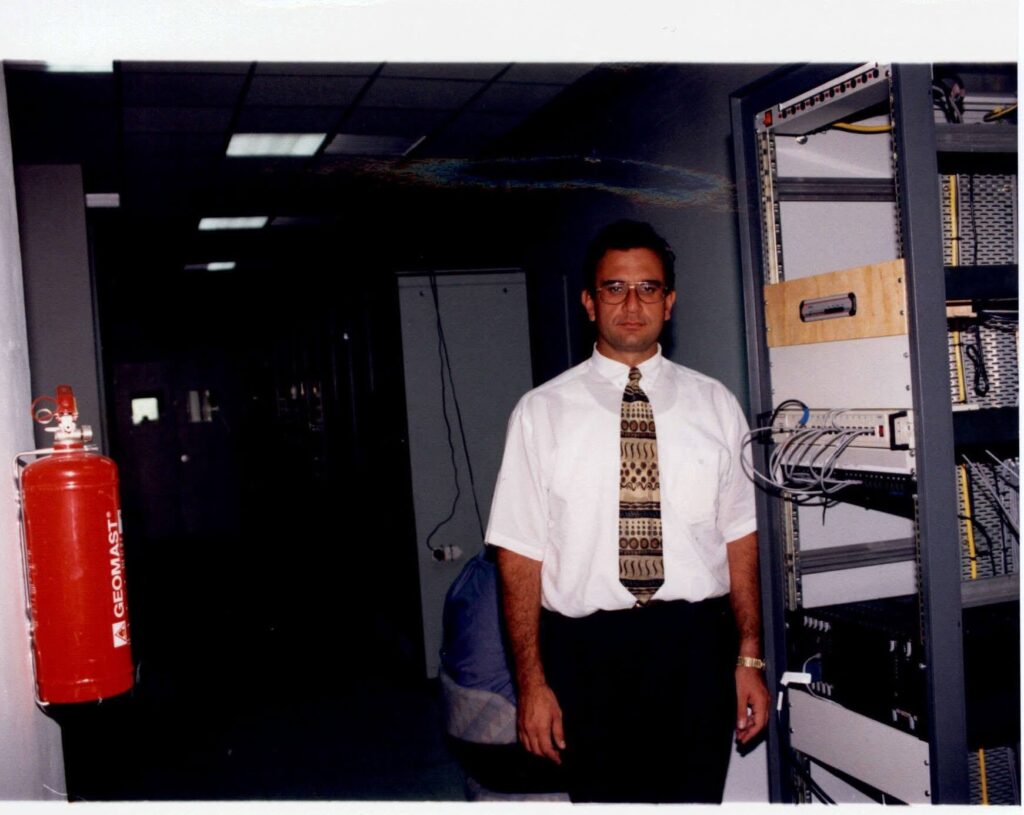
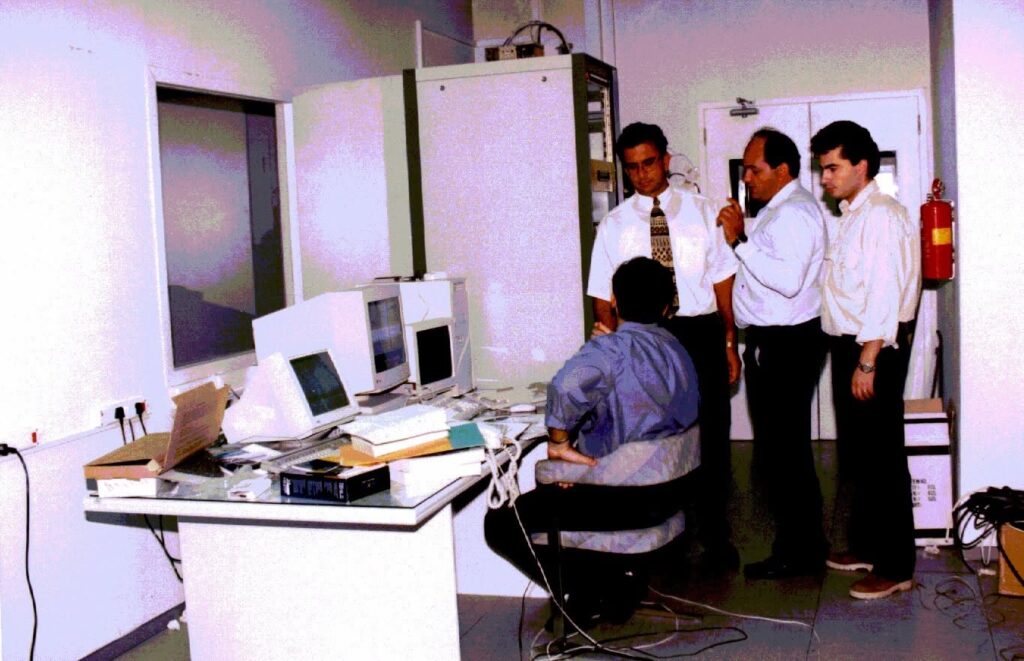
Christodoulos Protopapas and the internet’s arrival
Christodoulos Protopapas, who played a key role in bringing the technology to Cyprus, recalled the milestone in a social media post.
“Today, 31 years ago, on 31 August 1995, we presented internet technology in Cyprus for the first time, and from the following day the service was provided to the public,” he said.
According to Mr Protopapas, the initiative faced opposition from parts of the establishment at the time.
Among the arguments raised, he said, was that introducing the internet could lead to CYTA going bankrupt or being unable to handle vital communications.
There were also concerns that the Post Office could face difficulties because of the emergence of electronic mail, he added.
Those who supported the initiative
Mr Protopapas thanked then Minister Adamos Adamidis and then Government Spokesman Ioannis Kasoulides for supporting the initiative on behalf of the government.
He also shared a video of the first presentation, which was held for journalists in the main hall of Logos.
The internet landscape in Cyprus has since changed dramatically, transforming communication, information and everyday life across the island.
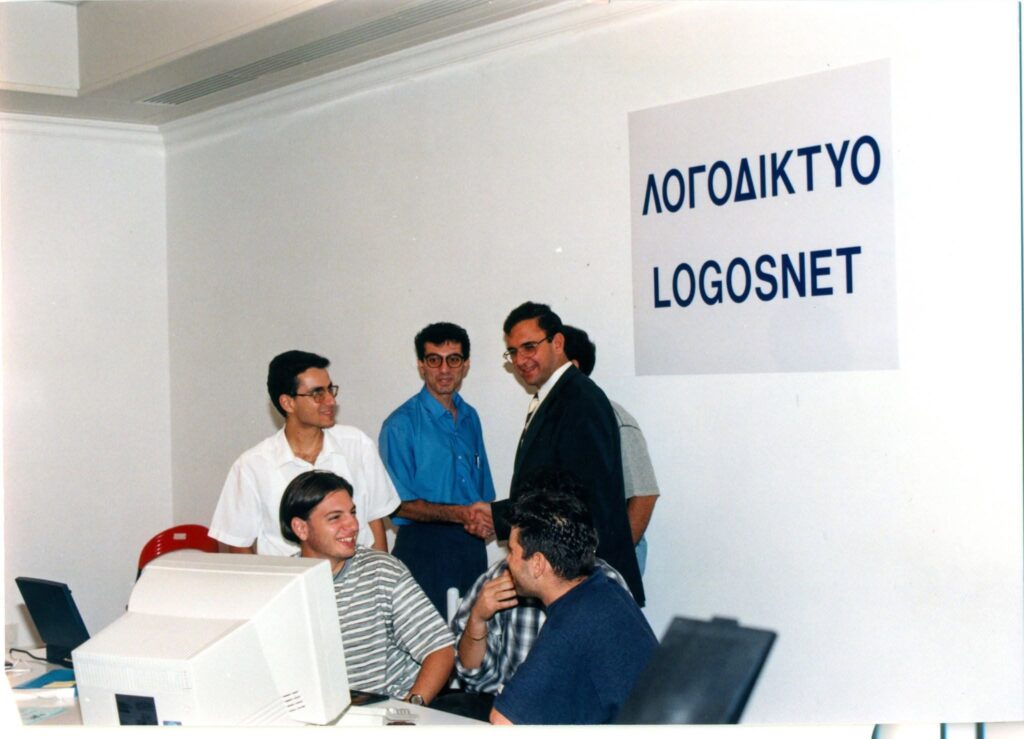
The internet in 1995: A very different online world
In 1995, the Internet was still in the early stages of becoming a mass phenomenon. Connections relied mainly on analogue telephone lines and dial-up technology, with speeds that seem remarkably slow compared with today’s broadband and mobile networks.
For those who went online in the mid-1990s, browsing the web required patience, as every connection came with technical limitations that are almost unimaginable today.
The unmistakable sound of dial-up
Connecting to the Internet meant that your computer effectively had to “call” your Internet service provider (ISP) using a modem.
The telephone line was occupied for the entire time you were online. As a result, nobody could use the home’s landline to make or receive calls while the Internet connection was active.
The modem, short for modulator-demodulator, converted digital data from the computer into analogue signals that could travel through the telephone network.
Pressing “Connect” produced the now-iconic sequence of beeps, crackles and screeches known as the modem handshake.
Internet speeds were also extremely limited. A typical connection in 1995 was around 28.8 Kbps. Even downloading a relatively small image could take seconds or minutes, with the picture gradually appearing on the screen line by line.
What did the web look like?
The browser landscape was very different from today. Netscape Navigator was the dominant browser, while the launch of Windows 95 that year helped introduce Microsoft’s Internet Explorer to a much wider audience.
Websites were generally simple and largely static. Pages consisted mainly of text, blue hyperlinks and a small number of low-resolution images.
There was no YouTube, video streaming or sophisticated web graphics. Many websites were little more than collections of text and links, while downloading larger files could be a lengthy process.
Finding information was also very different. Google did not yet exist – it would not be founded until 1998.
Instead, users relied on early directories and search engines such as Yahoo!, Lycos and AltaVista. Yahoo! began as a manually organised directory of websites, reflecting just how small the web still was compared with today’s vast online world.
Email and early online communities
Email was among the most important uses of the Internet. Having an email address in 1995 was still considered relatively new and technologically impressive.
For those wanting to communicate with others online, IRC (Internet Relay Chat) offered real-time conversations through themed channels.
Usenet newsgroups provided another way to exchange messages and discuss specific subjects, functioning in some ways like the online forums and communities that would become widespread in later years.
From novelty to everyday necessity
The Internet in 1995 was slow, limited and sometimes frustrating, but it marked the beginning of a transformation that would reshape communication, entertainment, commerce and access to information.
What once required a modem, a telephone line and considerable patience would eventually become an always-on connection carried in the pockets of billions of people.
Thirty-one years later, waiting several minutes for a single photograph to load seems almost unimaginable.
Also read: İsmet Güney: The artist behind Cyprus’ flag
For more videos and updates, check out our YouTube channel
