

Recreating Puerto Rico on the Super Bowl field became the biggest challenge behind Bad Bunny’s 2026 halftime performance rather than security or political concerns.
The Puerto Rican artist wanted Levi’s Stadium in Santa Clara to reflect the scenery of his hometown, including palm trees, sugar cane and a traditional house. However, strict NFL rules protecting the natural grass limited how many carts and heavy props could enter the field.
Show producers Bruce and Shelley Rodgers solved the problem creatively by using hundreds of performers dressed as tall grass, allowing the stage to resemble Puerto Rico without damaging the turf. The production ultimately used the maximum number of permitted carts to move stages, lighting and scenery safely on and off the field within minutes.
A complex production under tight deadlines
Super Bowl halftime shows must be installed, performed and removed in roughly 26 minutes, forcing organisers to balance artistic ambition with strict timing and technical limits.
This year’s concept approval arrived later than usual, leaving only weeks to design and build the set. Despite the compressed timeline, producers described the final result as one of the largest halftime productions in recent decades, featuring thousands of pyrotechnic effects and an extensive cast of performers.
The open-air stadium also removed the dramatic lighting advantages seen in previous indoor shows, requiring the creative team to design a spectacle that worked fully in daylight.
Music, symbolism and a surprise wedding
Bad Bunny performed a series of major hits and shared the stage with surprise guests including Lady Gaga, while visual elements highlighted unity across the Americas.
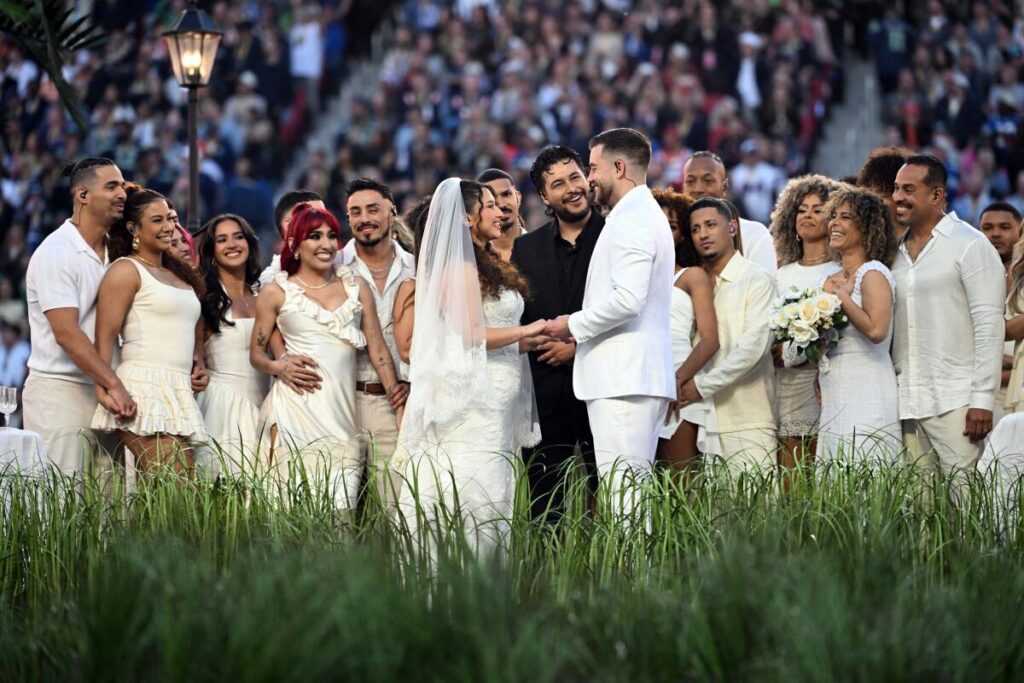
The finale featured flags from across the continent and a message declaring that love is stronger than hate. During the performance, a real couple also married on stage, with the singer serving as a witness in front of tens of thousands of spectators and millions of viewers worldwide.

No payment despite global exposure
Despite the scale of the production, Bad Bunny received no standard performance fee. The NFL traditionally does not pay Super Bowl halftime artists, instead covering travel and production expenses while performers benefit from global exposure during the most-watched television broadcast in the United States.
Production costs alone have reached tens of millions of dollars in past shows, while artists typically receive only minimum union-scale compensation rather than concert-level earnings.
Celebration and controversy surrounding the show
The performance generated strong reactions. Supporters across Puerto Rico and the wider Latino community described the all-Spanish halftime show as a historic cultural moment that united audiences worldwide.
Criticism also emerged from political figures and commentators, highlighting ongoing debates around language, identity and representation in major US cultural events.
Bad Bunny’s 2026 Super Bowl halftime show carried political meaning largely through symbolism and tone rather than explicit statements. While some observers expected a direct critique of U.S. policy – given his past opposition to immigration enforcement and his activism around Puerto Rico – the performance instead foregrounded cultural pride, unity and love.
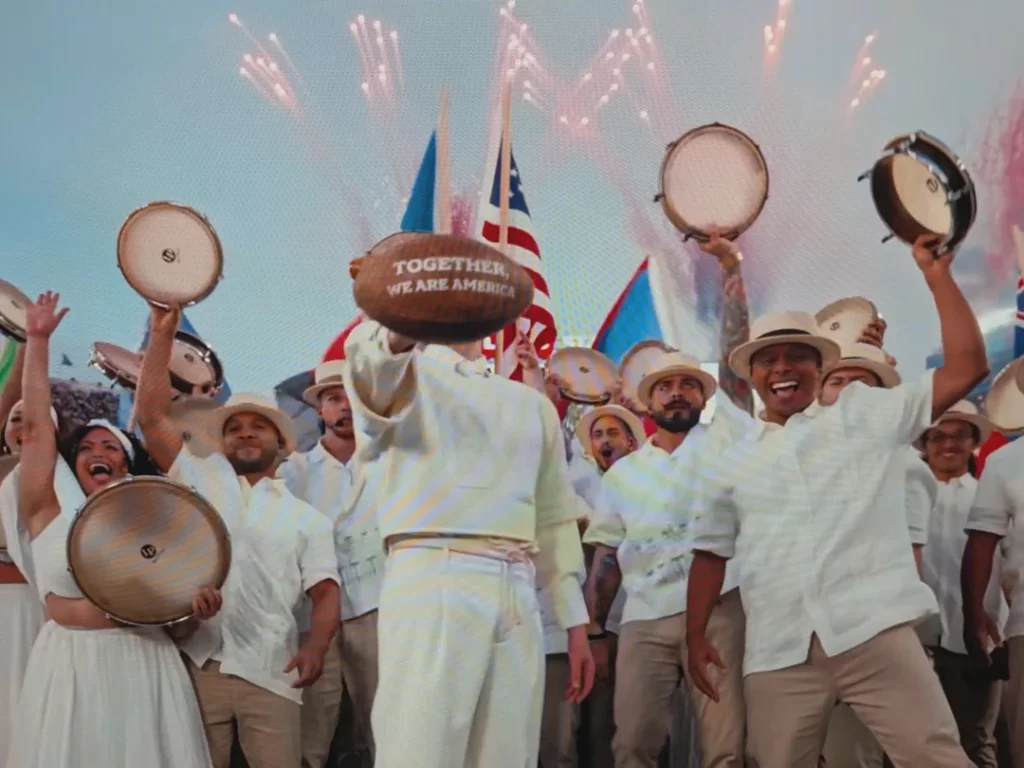
He ended the show by displaying flags from across the Americas, declaring “God bless America” while naming multiple nations, and revealing a football inscribed with the message “Together, we are America,” alongside the phrase “The only thing more powerful than hate is love.” These gestures framed the show as an inclusive, pan-American statement rooted in Latino identity and resilience rather than overt partisan politics.
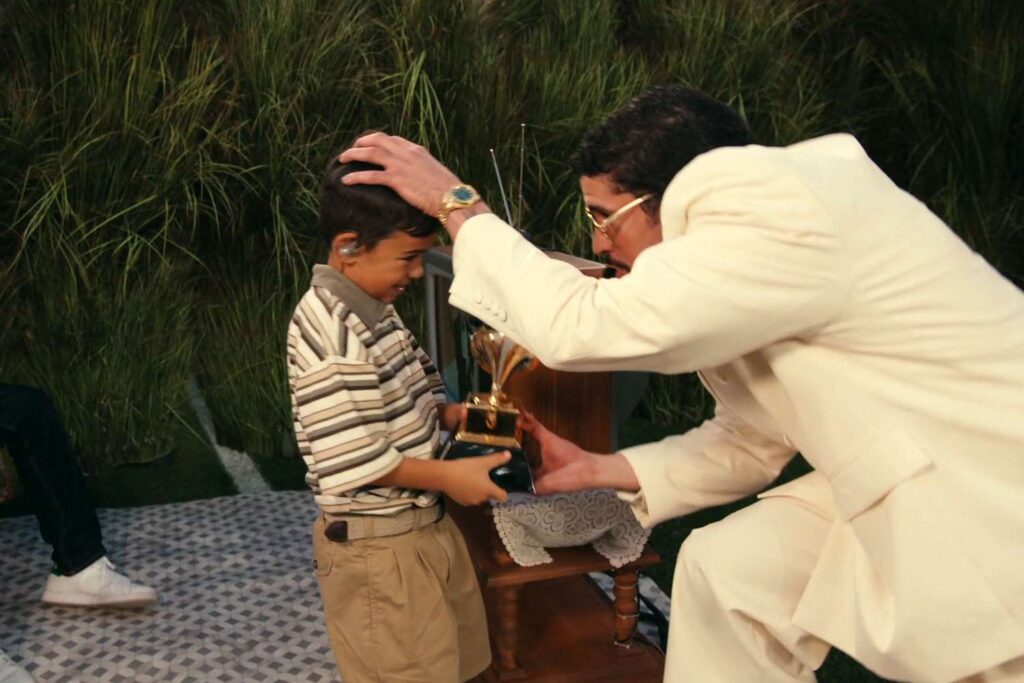
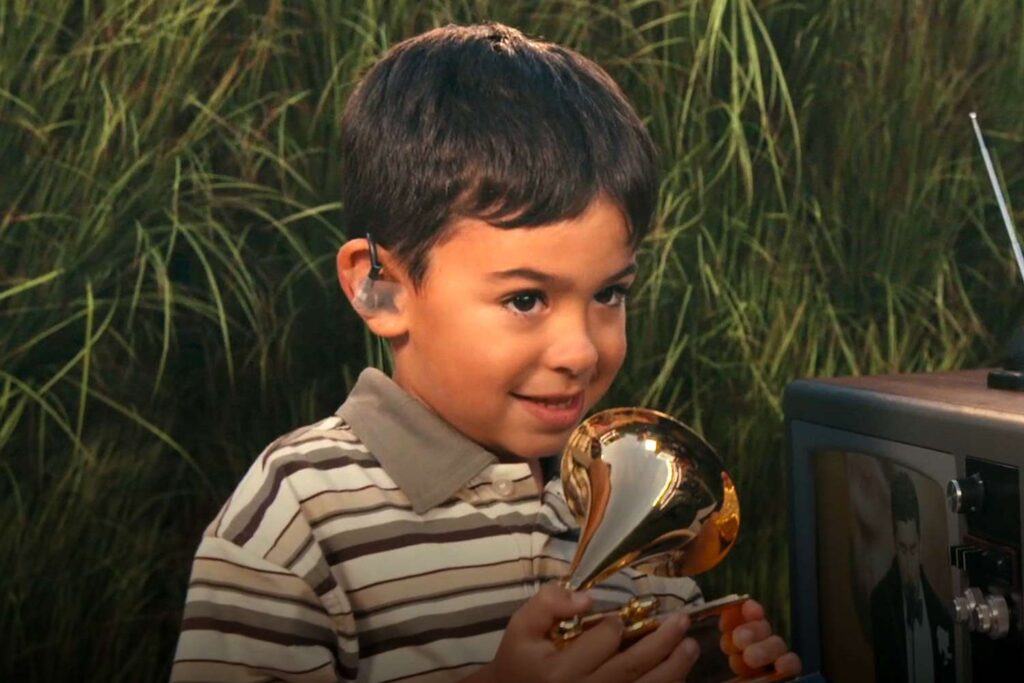
A scene that rapidly spread across social media showed the Puerto Rican star stepping into a living-room set at Levi Stadium and presenting a Grammy award to a young boy.
Only a week earlier, Bad Bunny had secured three Grammys, including album of the year for DeBÍ TiRAR MáS FOToS, marking the first time a Spanish-language record claimed the ceremony’s highest honour. According to a source cited by ABC News, the exchange with the child during the Super Bowl performance was intended to convey that anyone can chase their aspirations and achieve their dreams.
Even so, the performance unfolded within a charged political context. Critics – especially conservative figures – condemned the choice of a Spanish-language headliner who has previously denounced immigration crackdowns and endorsed Democratic politicians, with former President Donald Trump calling the show “absolutely terrible” and an affront to American values.
At the same time, analysts noted that imagery such as Puerto Rican cultural symbols, the recitation of Latin American countries, and the closing unity message functioned as subtle political commentary about identity, migration and belonging in the Americas. Together, these elements made the halftime show less a direct protest than a symbolic appeal for inclusion during a period of intense political division.
Also read: Bad Bunny says he’s losing sleep over the Super Bowl
For more videos and updates, check out our YouTube channel
