

Seven cultural monuments sustained damage from recent wildfires in mountain communities of Limassol, according to Deputy Minister of Culture Vasiliki Kassianidou, who visited the affected areas on Monday.
During a meeting in Omodos with local community leaders, held in the presence of Commissioner for Mountain Communities Charalambos Christofinas and President of the Limassol Communities Union Lefteris Periklis, Kassianidou expressed the ministry’s intent to support villages that had to cancel planned cultural events due to the fires.
She later toured ancient monuments in the region that had been affected by the flames.
Responding to media questions, Kassianidou noted that hidden watermills located within forests and riversides — though not officially registered as monuments — were known to local residents. “We want to enrich the list [of monuments] and assess how we can officially declare them protected,” she said. “We will do whatever we can.”
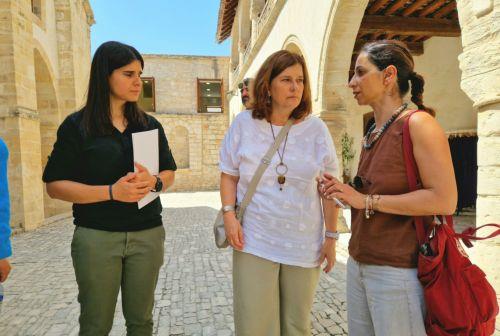
She clarified that the monuments affected were already in a ruined condition, but this “does not diminish their value, nor does it mean they are not deserving of care.” The Department of Antiquities, she added, dispatched a team to assess the damage as soon as it was safe to do so.
The seven damaged monuments include remains of Early Christian churches, Byzantine churches, and two architectural complexes, she confirmed.
Addressing the cancellation of cultural events due to the wildfires, Kassianidou stressed that this also impacts the incomes of artists and performers. “We are concerned with people as well as monuments,” she said. “We are here to support communities that may have already paid for these events.”
She also highlighted that the Ministry’s Department of Contemporary Culture has incorporated a new pillar in its strategic plan titled ‘Culture and Health’, aimed at promoting the benefits of culture on mental health. “We have budgeted for this, and we want to use it to support communities facing this difficult situation. People matter to us,” she said.
“When the basic needs such as power, water and shelter are restored by other ministries, we want to step in and offer support. People need to feel there is a future and a sense of hope. That is the most important thing,” she concluded.
Source: CNA
Feature photo source: Cyprus Mail
Also read: Over 500 applications submitted for reactivation in fire-stricken areas
For more videos and updates, check out our YouTube channel.