

Ramadan 2026 is set to begin on February 18 or 19, depending on the sighting of the crescent moon. The dawn-to-dusk fast lasts between 11.5 and 15.5 hours, varying by location, and continues for 29 or 30 days.
Observing the fast
During Ramadan, Muslims abstain from eating, drinking, smoking, and sexual relations from dawn until dusk to cultivate greater “taqwa,” or consciousness of God. The month commemorates the first revelations of the Quran to the Prophet Muhammad over 1,400 years ago.
Why Ramadan dates change
The Islamic calendar is lunar, with months lasting 29 or 30 days. Ramadan begins 10–12 days earlier each year compared with the Gregorian calendar.
For much of the Northern Hemisphere, fasting hours this year will be slightly shorter, ranging from 12 to 13 hours on the first day. Southern Hemisphere countries, including Chile, New Zealand, and South Africa, will see longer fasts of 14–15 hours.
Because the lunar year is 11 days shorter than the solar year, Ramadan will occur twice in 2030, starting on January 5 and then again on December 26.
Suhoor and iftar
Muslims break the fast at iftar after sunset and start the next day’s fast with suhoor before dawn. The exact timings vary according to local sunrise and sunset, meaning each region experiences a unique fasting schedule.
Ramadan greetings
During the holy month, Muslims exchange greetings in their native languages. “Ramadan Mubarak” and “Ramadan Kareem” are the most common, wishing a blessed or generous month to friends and family.
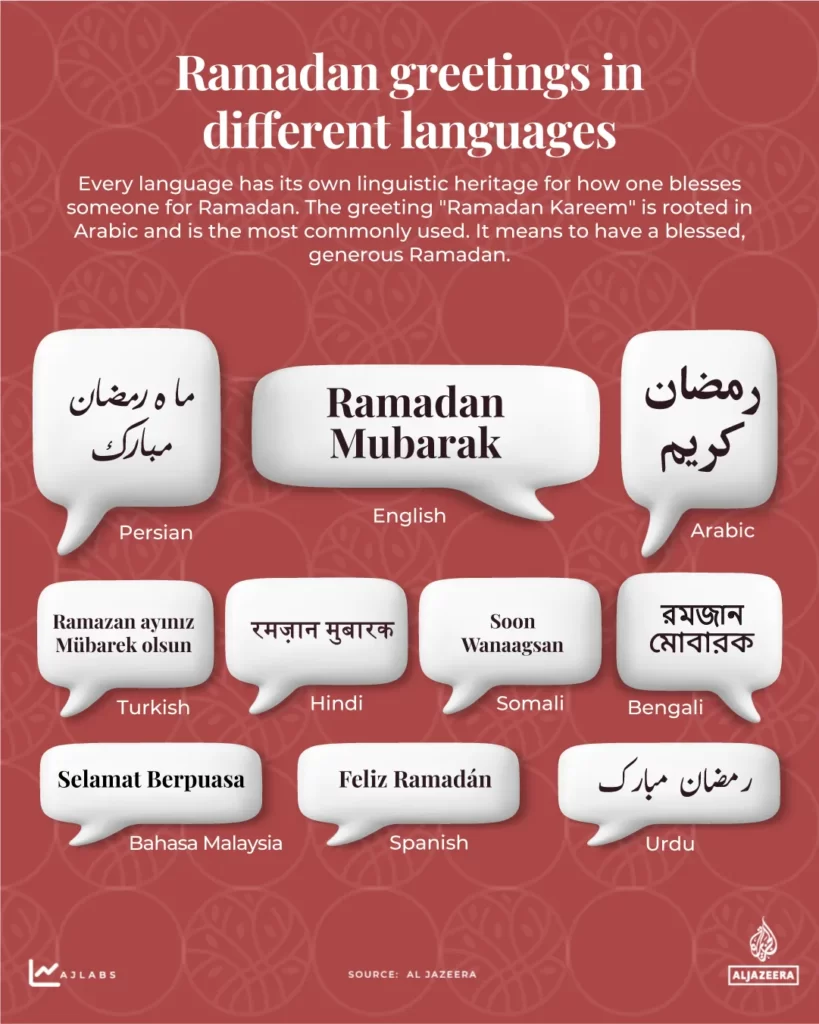
Source: Al Jazeera
Also read: EU investigation into Shein over addictive design and illegal content
For more videos and updates, check out our YouTube channel
