

Senator Ted Cruz of Texas said on social media that, ‘we know there are fatalities’ though he did not say how many. NBC reported that four people had been recovered from the
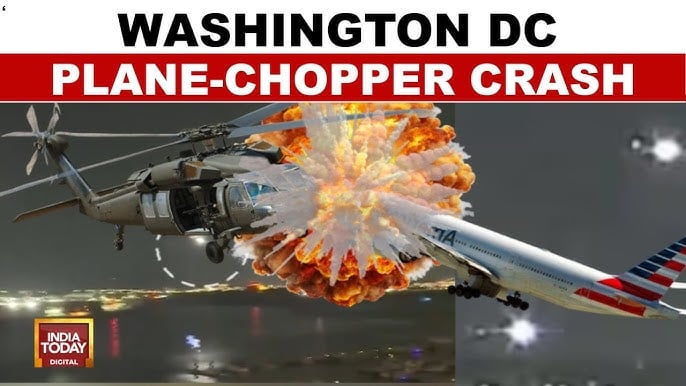
An American Airlines regional passenger jet and a US Army Black Hawk helicopter crashed into the frigid Potomac River after a midair collision near Reagan Washington National Airport on Wednesday night, officials said.
Casualties and rescue efforts
Officials did not provide a death toll from the collision. But US Senator Roger Marshall of Kansas, where the flight originated, suggested that all on board died, saying at a news conference at Reagan airport early Thursday that “it’s really hard when you lose probably over 60 Kansans simultaneously.”
“When one person dies, it’s a tragedy, but when many, many, many people die, it’s an unbearable sorrow,” he said. “It’s a heartbreak beyond measure.”
Jack Potter, the president and CEO of the Metropolitan Washington Airports Authority, emphasized at the same news conference that first responders were in “rescue mode.”
CBS News had reported that at least 18 bodies had been recovered, citing a police official. Two sources told Reuters multiple bodies had been pulled from the water.
American Airlines confirmed that 64 people were aboard the jet: 60 passengers and four crew members. Three soldiers were aboard the helicopter, which was on a training flight, a US official said.
What happened?
The midair collision occurred as the passenger jet en route from Wichita, Kansas was on approach to land at Reagan. Radio communications between the air traffic control tower and the Black Hawk show that the helicopter crew were aware that the plane was nearby vicinity.
Reactions and investigations
The Pentagon said it was launching an immediate investigation into the incident, which President Donald Trump appeared to blame on the helicopter crew and air traffic controllers in a post on Truth Social.
“The helicopter was going straight at the airplane for an extended period of time. It is a CLEAR NIGHT, the lights on the plane were blazing, why didn’t the helicopter go up or down, or turn,” Trump wrote.
“Why didn’t the control tower tell the helicopter what to do instead of asking if they saw the plane. This is a bad situation that looks like it should have been prevented. NOT GOOD!!!”
Air traffic control recordings appear to capture the final attempted communications with the helicopter, callsign PAT25, before it collides with the plane, described as CRJ.
“PAT25, do you have a CRJ in sight? PAT25, pass behind the CRJ,” an air traffic controller says at 8:47 pm. (3:47 am Cyprus time), according to a recording on liveatc.net.
Seconds later, another aircraft calls in to air traffic control, saying, “Tower, did you see that?” – apparently referring to the crash. An air traffic controller then redirects planes heading to runway 33 to go around.

Impact and airport closures
Relatives gathered at the airport said they were getting little to no information from officials about the incident, adding that they were hearing more about the incident from news reports.
One woman told an airport official, “I don’t know if she got on there or not,” in apparent reference to a passenger on the crashed jet. She then collapsed in tears.
Washington, DC, fire chief John Donnelly said at the news conference that at least 300 first responders were continuing to work on the “highly complex” rescue operation.
“Conditions out there are extremely rough for the responders,” Donnelly said. “It’s cold. They’re dealing with windy conditions.”
Asked by reporters whether there were any survivors, he responded that “we don’t know yet.”
Airports authority CEO Potter said the airport would remain closed until at least 11 am (9 pm Cyprus time) on Thursday.

Historical context
In 1982, Air Florida Flight 90 crashed into the 14th Street Bridge over the Potomac River, killing 70 passengers and four crew members. Only four passengers and one crew member survived.
The last deadly major crash involving a commercial airliner in the US was in 2009, when all 49 people aboard a Colgan Air flight died when the plane crashed in New York state. One person also died on the ground.
But a series of near-miss incidents in recent years have raised serious safety concerns.
Safety concerns
A web camera shot from the Kennedy Center in Washington showed an explosion mid-air across the Potomac about 8:47 p.m. (3:47 am Cyprus time) with an aircraft in flames falling rapidly.
PSA was operating Flight 5342 for American Airlines, according to the FAA.
“We’re cooperating with the National Transportation Safety Board in its investigation and will continue to provide all the information we can,” American Airlines CEO Robert Isom said in a video statement.
Dozens of police, ambulance and rescue units, some ferrying boats, staged along the river and raced to positions along the tarmac of Reagan airport. Live TV images showed several boats in the water, flashing blue and red lights.
Also read: Fatalities from LA wildfires rise to 24 as gale-force winds loom
Photos source: Reuters/India Today/Getty images
Source: Reuters/ BBC