

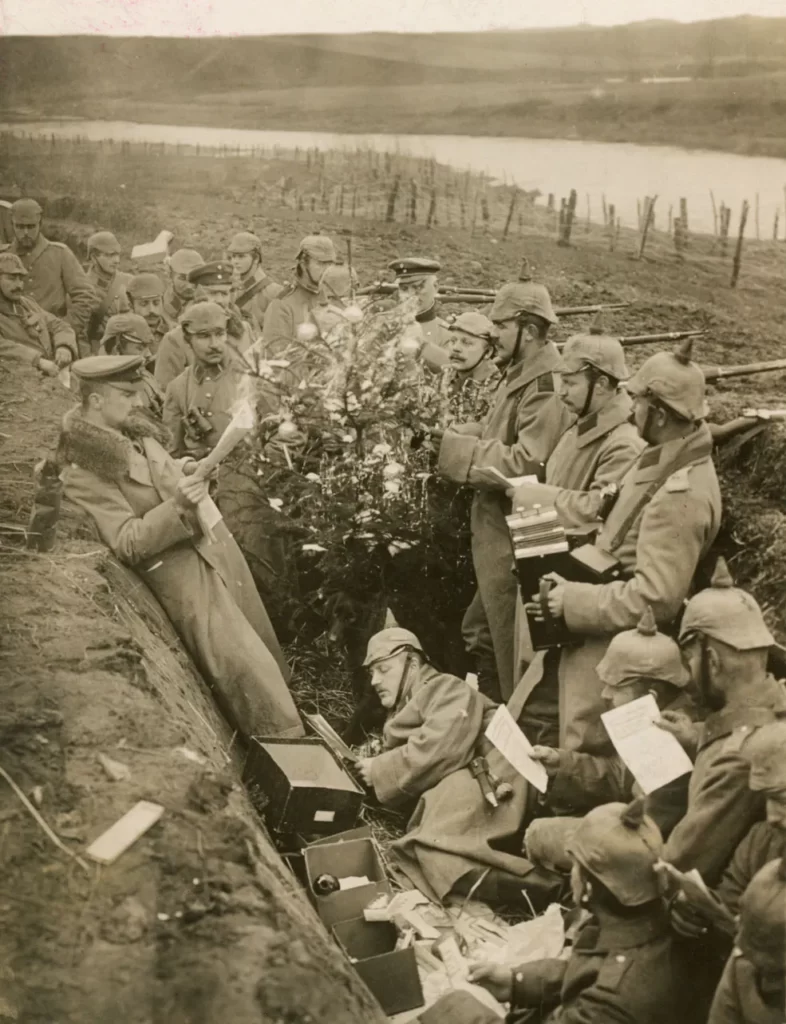
Late Christmas Eve 1914, British Expeditionary Force troops in Flanders trenches heard Germans opposite singing “Stille Nacht” and other carols while illuminating parapets with lanterns and small fir trees sent by Kaiser Wilhelm II. The British and French responded with their own hymns, leading to shouted greetings across no man’s land, just 30-50 meters wide in places.
Saxon Germans, many pre-war British workers, initiated talks regarded as amiable. Lower officers unofficially ordered “live and let live” – no fire unless fired upon – without high command approval.
Christmas Day fraternization
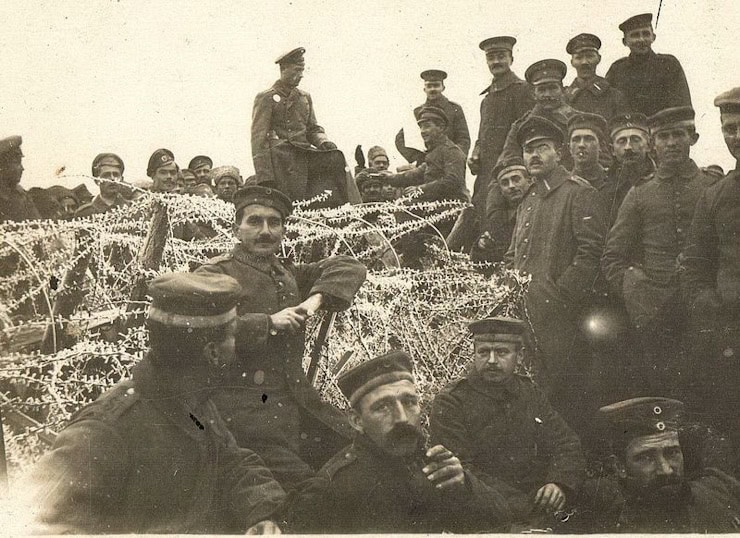
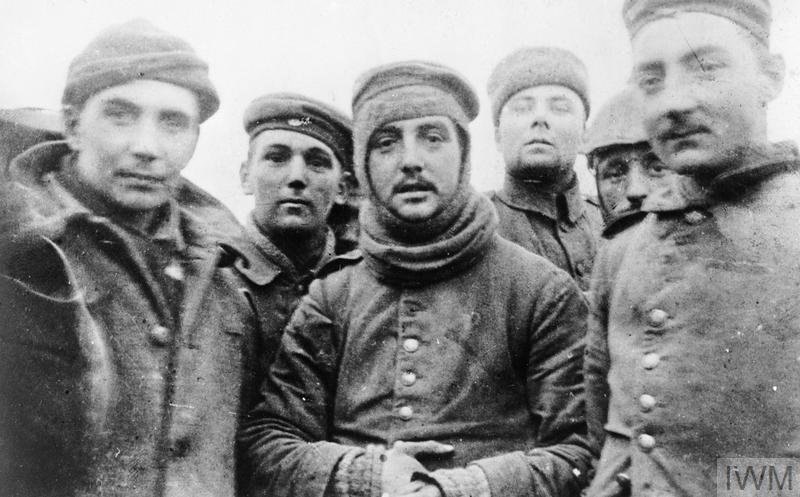
On Christmas Day, unarmed Germans emerged waving white flags; the British followed cautiously. Along two-thirds of the 30-mile (48 km) BEF front from the Ypres region, soldiers met for gifts (cigarettes, food, buttons, hats, alcohol), joint burials of weeks-old dead, photos, and impromptu football matches on frozen ground.
Pvt. Albert Moren recalled a “beautiful moonlit night, frost on the ground”; Graham Williams described Germans holding “You no shoot, we no shoot” signs. Trench repairs occurred, too, but not universally – fighting continued elsewhere with casualties.
Shared misery enables truce
Post-Marne stalemate and Ypres “Race to the Sea” created muddy trench hell, yet pre-Passchendaele horrors remained untouched. Pope Benedict XV’s December 7 appeal for silence was ignored by leaders expecting a quick war victory.
Adolf Hitler, a regimental runner, criticized participants: “Such a thing should not happen in wartime… Have you no German sense of honour?” No French truce due to invasion resentment; Eastern Front absent via the Julian calendar.
“Live and Let Live” legacy
The Christmas Truce of 1914 holds profound historical importance as a spontaneous act of humanity amid the mechanized brutality of World War I, demonstrating soldiers’ capacity for empathy across enemy lines despite months of trench stalemate following battles like the Marne and Ypres. Involving roughly 100,000 troops along two-thirds of the British Expeditionary Force front, it featured carol singing, gift exchanges, football matches, and joint burials that humanized the “other,” challenging the dehumanizing propaganda of national leaders who expected swift victory. Though short-lived and never repeated on that scale due to high command crackdowns fearing eroded morale, the truce’s legacy endures through uncensored letters and photos, symbolizing “Live and Let Live” pauses that persisted quietly, reminding posterity that even in total war, shared misery and festive spirit could foster fleeting peace and underscore the war’s tragic futility.
Also read: Lincoln Waites group preserves the Crying Christmas ritual
Check out more on Youtube.
