

Western Australia, November–December 1932.
The enemy: thousands of emus.
The weapon: two Lewis machine guns.
The result: one of the most bizarre military defeats in history.
The problem that started it all
After the First World War, Australia offered land in the Campion district to returning soldiers to farm wheat. When the Great Depression hit and wheat prices collapsed, the former soldiers stayed on the marginal land – only to face a new invader.
Around 20,000 emus, driven by drought, migrated into the newly cleared farmland and began devouring the crops.
Machine guns vs birds
Farmers begged the government for help. Defence Minister Sir George Pearce agreed to deploy the army, describing the operation as “emu control using machine guns”. Major G.P.W. Meredith of the Seventh Heavy Battery, Royal Australian Artillery, arrived with two soldiers, two Lewis guns and 10,000 rounds of ammunition.
The first “battle” took place on 2 November 1932. Soldiers reported the birds scattered in all directions, making them almost impossible to hit in quantity. “Each emu seemed to have its own personal guardian angel,” one gunner later joked.
Two days later, the troops tried an ambush near a dam where over 1,000 emus had gathered. The birds split into small groups and ran at speeds up to 50 km/h. Only a handful were killed.
The army claimed around 300 emus killed in the first week, but farmers said the birds kept returning in greater numbers.
On 8 November, Meredith’s men mounted a gun on a truck to chase the emus. The vehicle got stuck in the sand and the birds easily outran it.
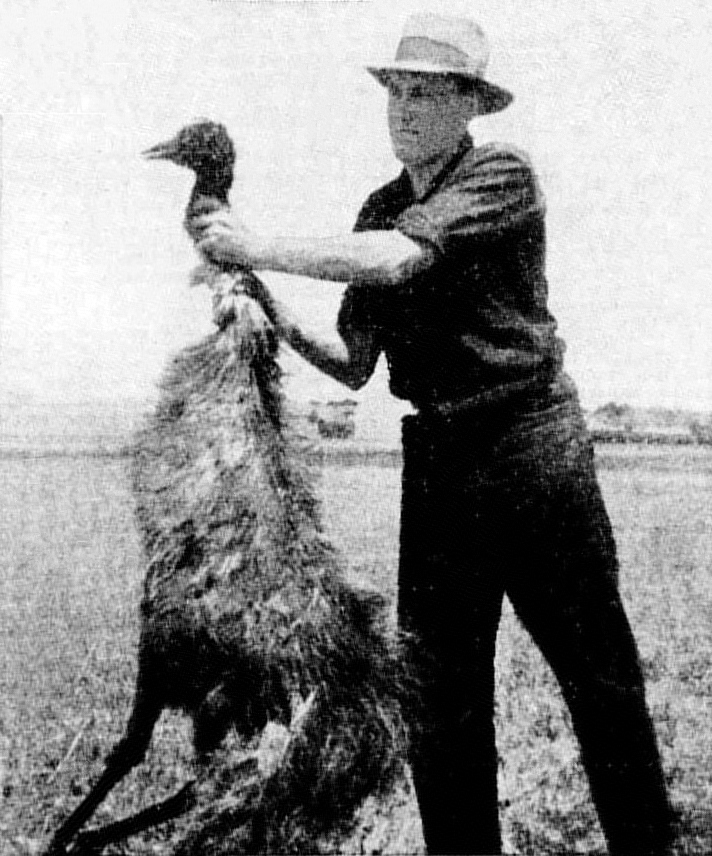
Official score: 986 emus, 9,860 bullets
By early December, official reports admitted only 986 emus killed, with 9,860 rounds fired. Many birds survived multiple hits thanks to their speed and tough feathers.
On 10 December 1932, the government quietly withdrew the soldiers from the field. Emus had won.
Parliament mocked the operation. One MP asked whether medals would be awarded – to the emus.
The army never tried machine guns again. Instead, the government introduced a bounty system. Farmers eventually solved the problem themselves with fences and better water management.
The Great Emu War remains the only recorded conflict in which a nation’s military was defeated by birds.
Also read: ON THIS DAY: First traffic lights installed in London (1868)
For more videos and updates, check out our YouTube channel
