

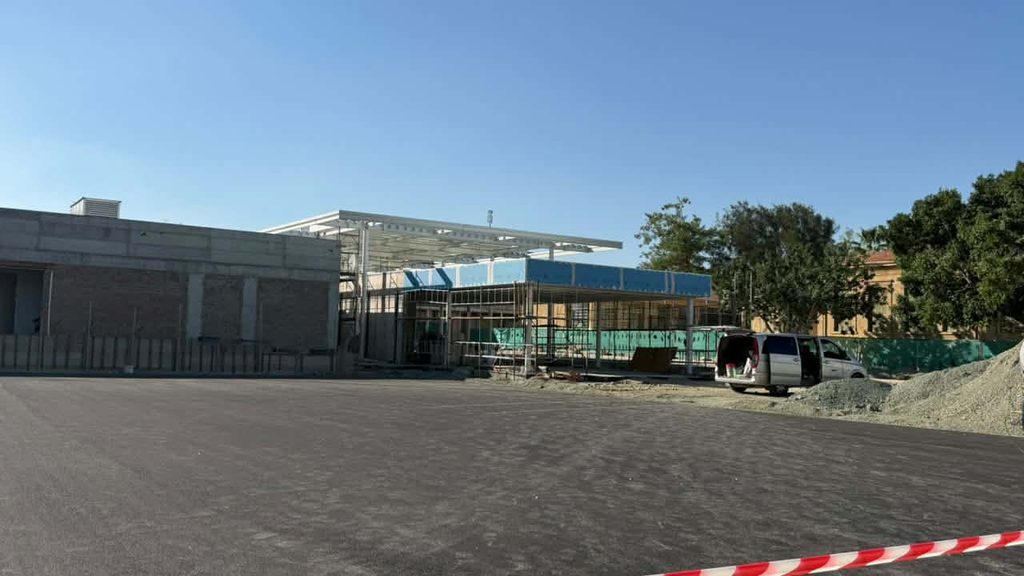
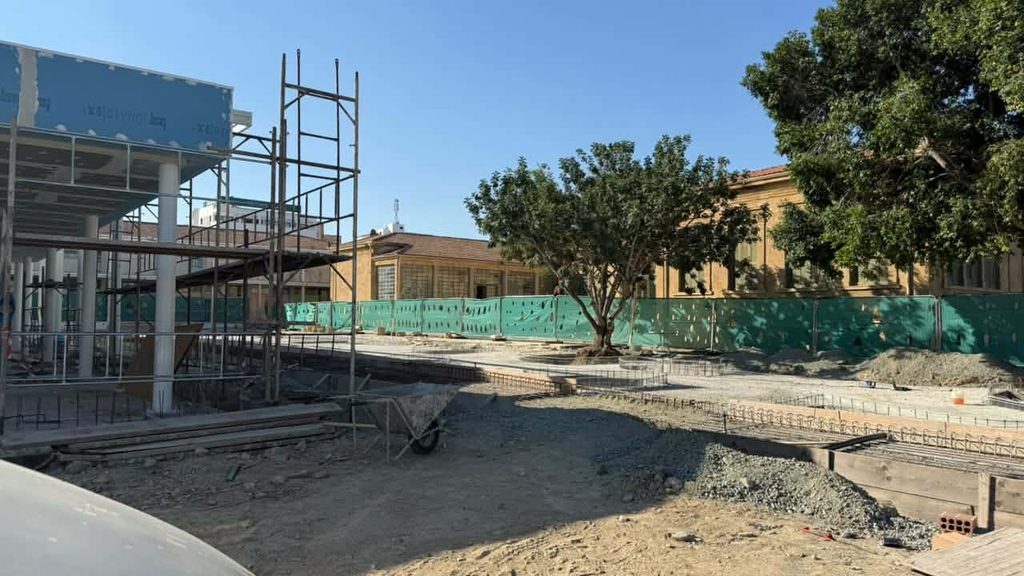
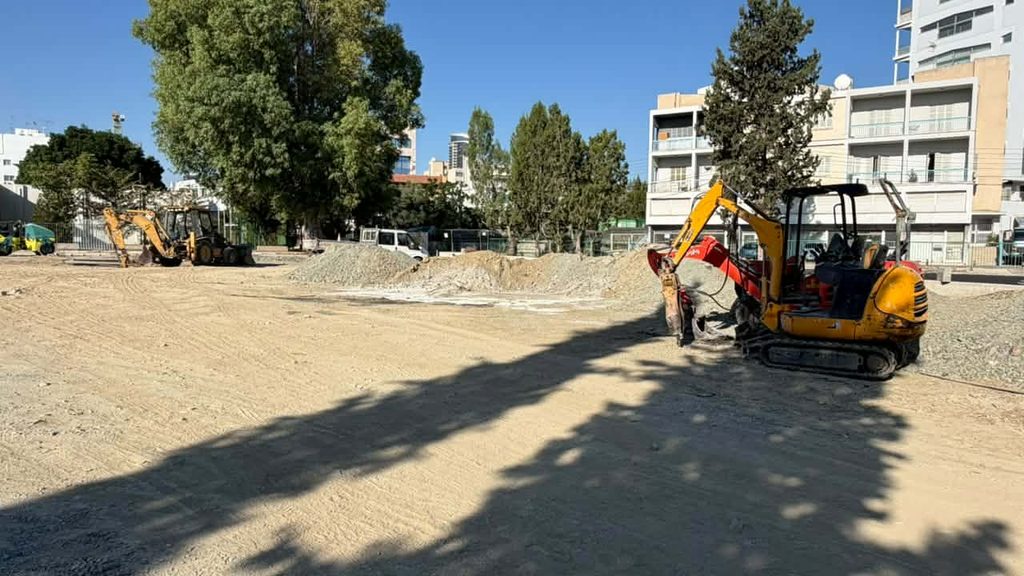
The “Protoselido” programme visited Agios Antonios Primary School in Nicosia, where major school upgrades are currently underway.
Nicosia School Board President Nikos Megalemos outlined the progress of the works, stressing that construction sites are a sign of improvements to school facilities.
The project involves a comprehensive upgrade of the school, including a new indoor gym, a multi-purpose hall and six new classrooms.
New classrooms expected in October
According to Megalemos, the new classrooms are expected to be delivered in early October. They will accommodate classes currently housed in the listed building next to the school.
Once the classes have been relocated, maintenance work on the listed building can begin.
“All the projects will be completed in March,” Megalemos said, adding that the works have been ongoing since last March and are progressing at a satisfactory pace.
He noted that a small delay had affected the completion of the new classrooms because the decision to add them was not taken at the same time as the original project began.
School operations not affected
Megalemos assured that the construction sites would not affect school operations or students’ presence at the school.
“Under no circumstances are the students or the operation of the school affected. All heavy work is carried out outside school hours,” he said.
The construction areas have also been fully secured and clearly demarcated to prevent access by students or other unauthorised people.
Major school projects across Nicosia
Regarding the wider picture in Nicosia, Megalemos said the largest construction projects are currently taking place at Agios Antonios Primary School and Pancyprian Gymnasium.
Works at Elenion Primary School are expected to begin towards the end of September.
Smaller-scale works are also being carried out at schools across Nicosia as part of ongoing maintenance and improvements to school infrastructure.
These include general insulation works covering approximately 15,000 square metres.
Solar panels and energy upgrades
Solar panels have already been installed at Agios Antonios Primary School.
As part of the current works, a covered area will also be created in front of the school canteen. The structure will provide shade and will include solar panel systems.
Megalemos clarified that the solar panels will mainly contribute to electricity savings, while the electrical upgrading of schools is being carried out as a separate part of the projects.
Air conditioning installation faces delays
Regarding air conditioning in schools, the Nicosia School Board President said the project is slightly behind its original schedule because of problems encountered during installation.
He explained that installing air conditioning involves more than increasing the electrical load. Schools also require upgraded electrical installations to meet the increased demand.
In Nicosia, air conditioning units have already been installed in all secondary schools except three gymnasiums.
Works are currently underway at those three schools, meaning the air conditioning systems could not be installed during the same period.
Also read: President wishes students a successful school year
For more videos and updates, check out our YouTube channel
