

Myanmar’s military carried out an air strike on a major hospital in western Rakhine state’s Mrauk-U township late on Wednesday. The attack killed at least 30-34 people and injured dozens more.
Details of the attack
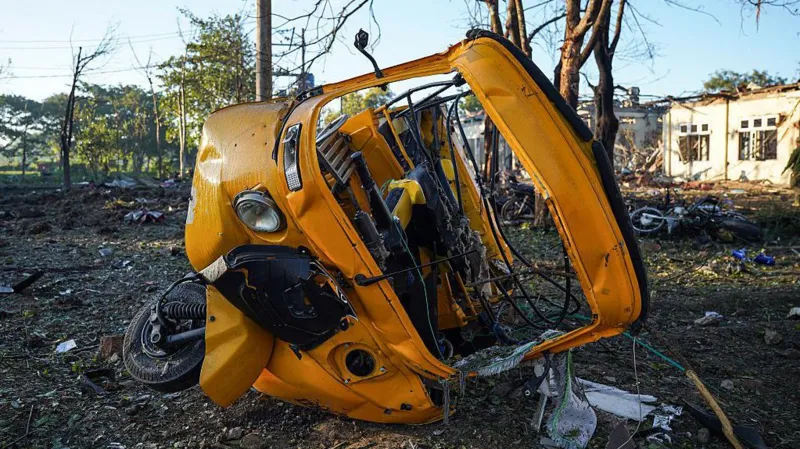
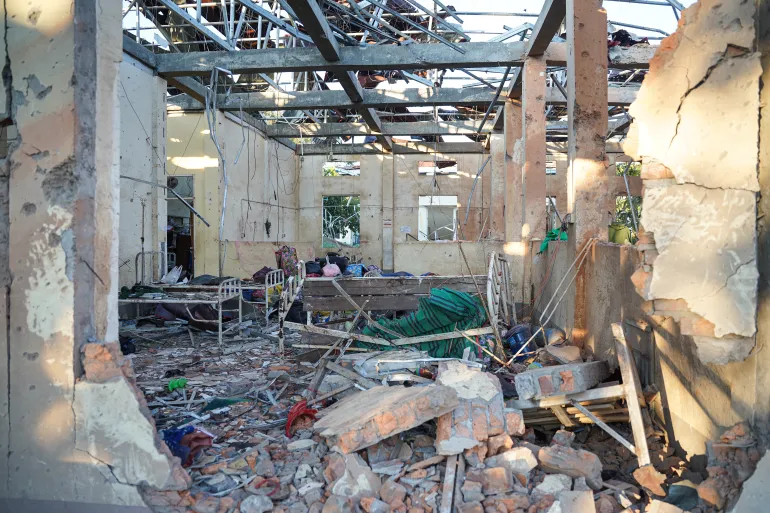
The 300-bed Mrauk-U General Hospital lies in an area controlled by the Arakan Army (AA). Bombs dropped by a military aircraft struck the facility around 21:00 local time (14:30 GMT). The AA reported a direct hit that completely destroyed the hospital, which overflowed with patients as fighting suspended most healthcare services across large parts of Rakhine.
Arakan Army spokesperson Khaing Thukha called the incident the “latest vicious attack” by the “terrorist military” on civilians. He stated that most casualties were patients and demanded the military take responsibility.
Casualties and scene
Aid worker Wai Hun Aung shared images of collapsed roofs, shattered structures, debris and bodies on the ground. He confirmed at least 31 deaths and 68 injuries, warning numbers could rise. A 23-year-old resident rushed to the site after hearing explosions and saw the hospital on fire with many bodies and injured people.
The military has not commented. Pro-military Telegram accounts claim recent strikes avoided civilians.
Broader conflict context
Myanmar has endured escalating violence since the 2021 coup ousted the elected government. Thousands have died and millions have become displaced in the resulting civil war.
The junta has ramped up air bombardments this year to regain territory from ethnic armed groups like the Arakan Army. The AA controls much of Rakhine after a 2023 ceasefire breakdown. Data records 2,165 air strikes from January to late November 2025, compared to 1,716 in all of 2024.
Election amid violence
The attack occurs as the junta prepares a general election on 28 December.
Many major political parties face exclusion, while more than 30,000 political opponents, including members of the democratically elected government, remain detained since the 2021 coup.
Civilians face pressure from the military to vote while armed opposition groups actively discourage participation. The junta claims to have pardoned around 4,000 people for sedition or incitement, but only about 550 have emerged from detention centres, with many rearrested. Authorities have arrested over 100 people under new “election protection rules”, including three young people sentenced to 49 years for posters depicting a ballot box with a bullet.
The electronic-only voting system, combined with expanded AI and biometric surveillance, risks eroding trust further. Humanitarian access deteriorates as civilians must return to insecure villages to vote, while the military blocks aid to conflict zones. Nearly 23,000 political detainees remain held unjustly.
Sources: BBC/Al Jazeera
Also read: Bulgarian government resigns after weeks of street protests
For more videos and updates, check out our YouTube channel.
