

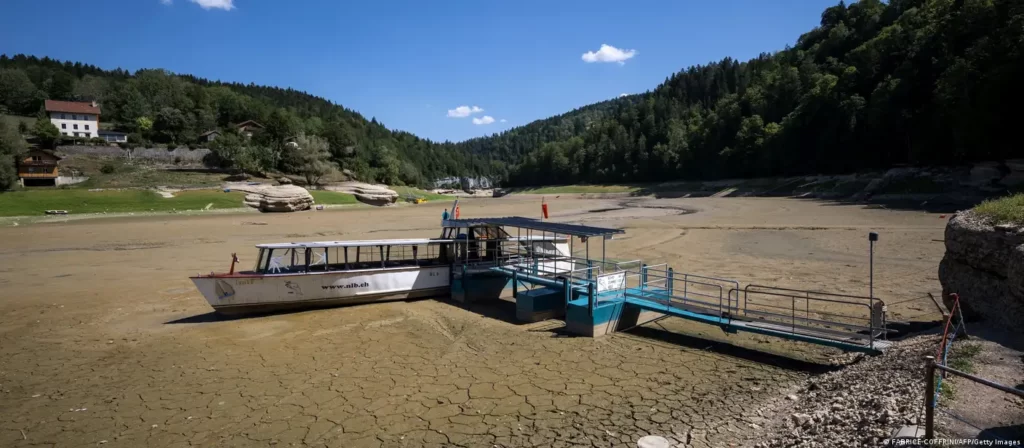
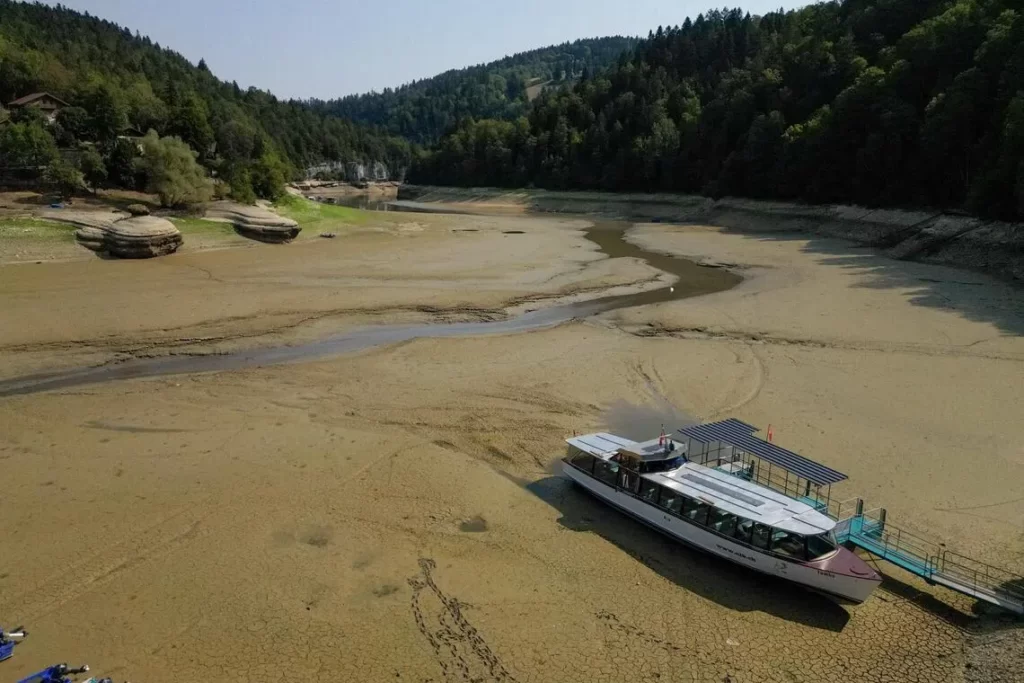
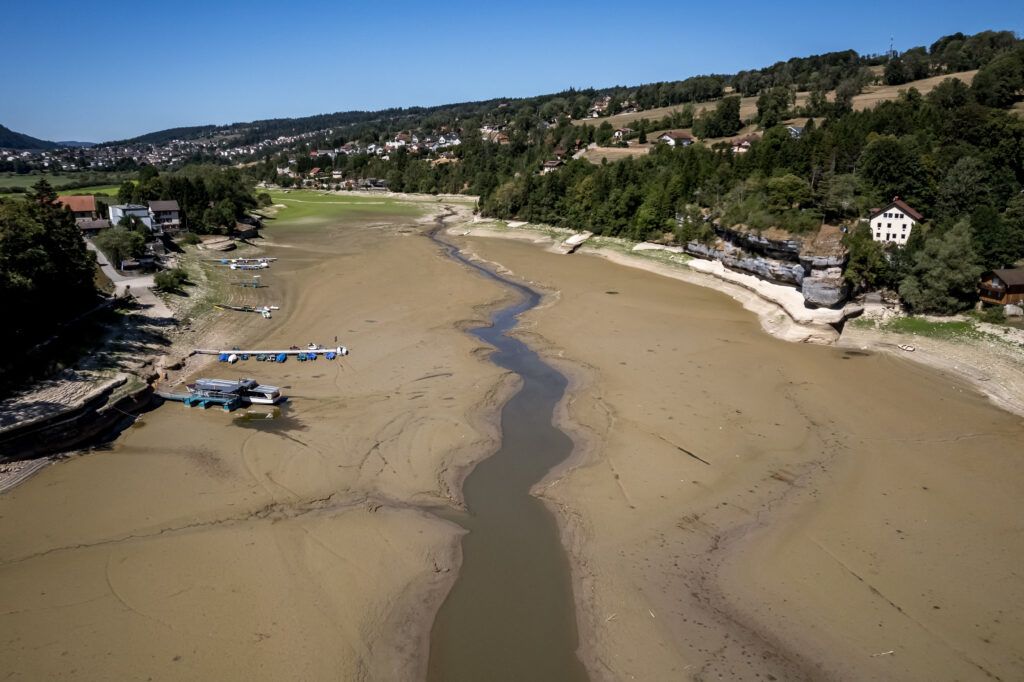
The ongoing drought in Europe has left Lake Brenets, a narrow winding lake on the French-Swiss border, almost completely drained and no longer navigable for the past week.
The lake is normally filled with holidaymakers, campers and swimmers during the summer months. Many visitors use canoes, while three boat companies organise trips for thousands of tourists every season.
This year, however, the area has become almost deserted.
The water level of the Doubs River, which feeds the lake, has fallen sharply after months of limited rainfall and three consecutive heatwaves, with the latest still affecting the region.
Tourism suffers as lake dries up
Dozens of boats are now stranded on the dry shoreline, including the “Jumbo”, a tourist vessel operated by Ivan Dirrig, owner of the Societe de Navigation des Brenets.
“We have been hit hard because we are powerless in the face of this phenomenon,” he told Reuters.
Dirrig has already dismissed his employees and is concerned about his income, as the water level is nine metres below average and continues to drop by around 22 centimetres per day.
Rainfall since April has been half the usual amount.
Switzerland’s MeteoSwiss weather service said this year’s drought is comparable to some of the worst recorded in recent decades, including those of 1976, 2003 and 2018. The dry conditions are expected to continue until mid-August.
Italy raises drought alert
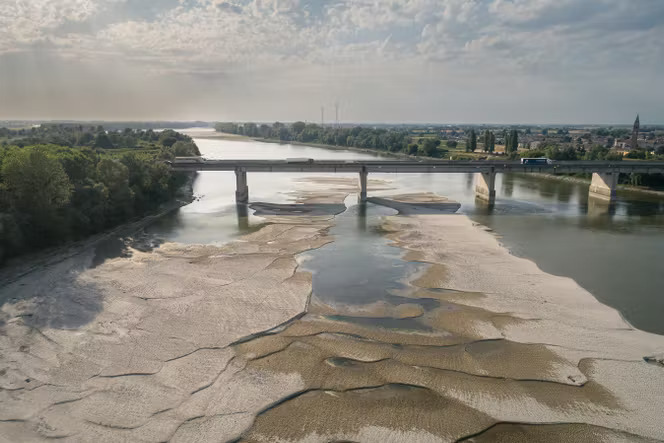
Italy has also raised its drought alert level to “high” in the Po River basin, the country’s main river area, due to worsening conditions and unfavourable weather forecasts.
More than 100 municipalities in Piedmont and Lombardy are already facing water supply difficulties, with some using tanker trucks to fill drinking water reserves, according to the Po River Basin Authority (ADBPO).
At the foot of the Alps, Lake Maggiore and Lake Como saw their water levels fall by 7% and 6% respectively in one week, as water was used for irrigation across the dry valley.
The most affected regions include Piedmont, Lombardy and Veneto.
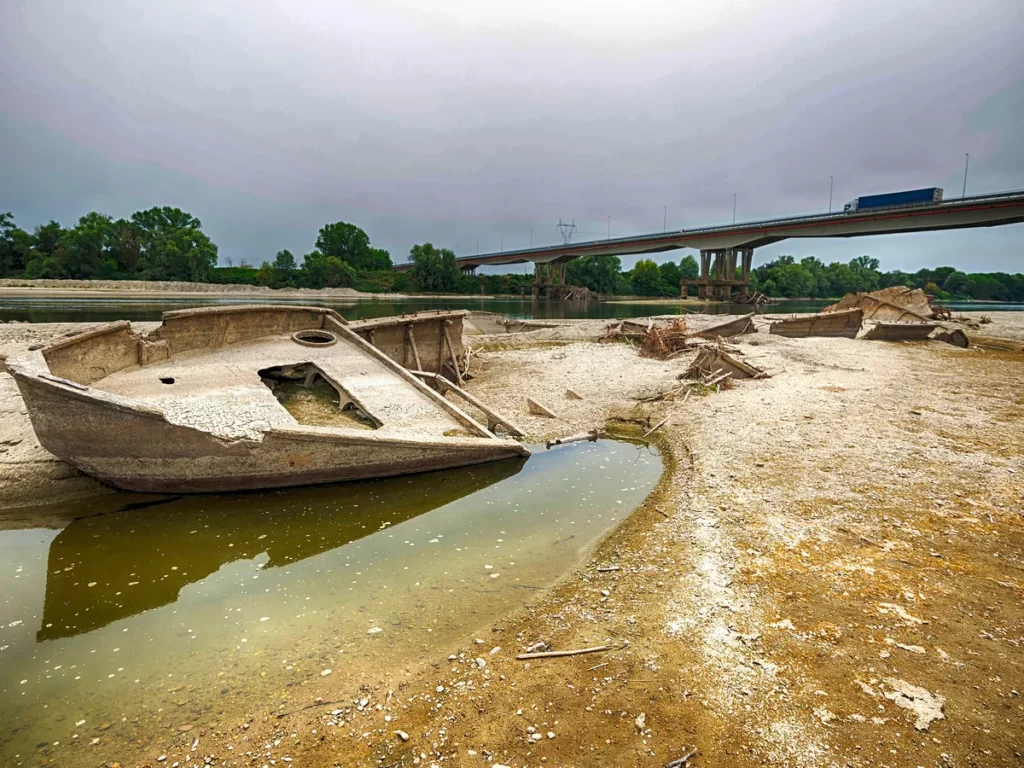
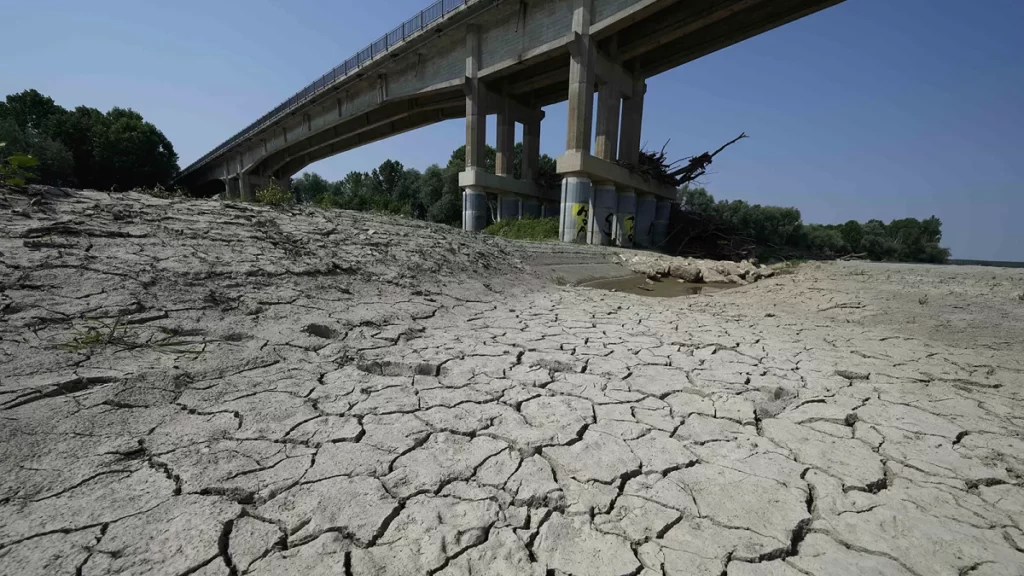
Heatwaves worsen water shortages
Authorities are trying to prevent a repeat of the severe drought experienced in 2022.
After a dry winter and spring, June and July brought record temperatures across northern Italy and much of Europe, reducing snow reserves in the Alps.
ADBPO Secretary General Alessandro Delpiano warned that summer storms alone cannot solve long-term water problems.
“Compared with ten days ago, despite the rainfall recorded, we have less water in lakes and water resources, while irrigation needs remain high for several crops, starting with rice,” he said.
Also read: More than half of England officially in drought
For more videos and updates, check out our YouTube channel
