

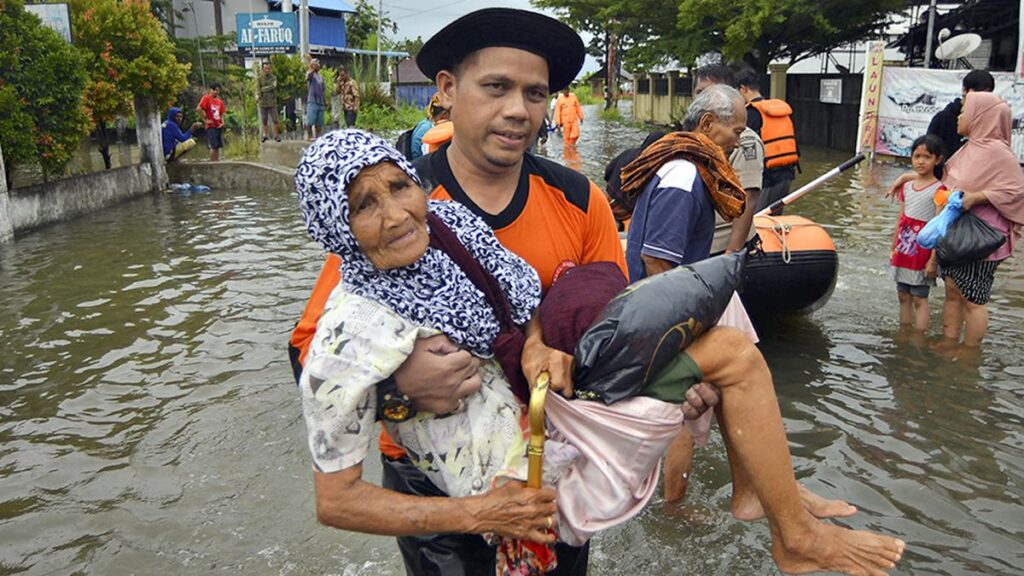
Indonesia’s national disaster agency confirmed Tuesday that floods and landslides on Sumatra island have killed 753 people, with 504 others still unaccounted for – a steep jump from the 604 fatalities reported on Monday.
The disaster has affected 3.2 million people across the region, injured 2,600, and forced authorities to evacuate one million residents from high-risk zones.
A regional catastrophe
Heavy monsoon rains, intensified by a rare tropical cyclone in the Malacca Strait, triggered the catastrophe – part of a broader wave of extreme weather that has claimed more than 1,300 lives across Indonesia, southern Thailand (181 dead) and Sri Lanka (410 dead, 336 missing from Cyclone Ditwah).
No single weather system triggered the floods. Instead, several atmospheric factors converged to create the disaster.
BBC Weather explains that the primary driver is the north-east monsoon, which runs from November to March across East and South Asia. This seasonal pattern generates strong north-easterly winds that gather vast amounts of moisture from the ocean and dump it as heavy rain onto exposed coastal regions.
Massive emergency aid mobilised
Rescue and aid teams struggle to reach isolated communities as destroyed bridges and blocked roads cut off northern Sumatra. In Aceh province, local markets have run out of rice and vegetables, with prices tripling. Islamic Relief warned that entire communities face severe hunger within seven days unless supply routes reopen, and is dispatching 12 tons of emergency food.
The government responded Monday by sending 34,000 tons of rice and 6.8 million litres of cooking oil to Aceh, North Sumatra and West Sumatra.
Root causes: Climate change and governance failures
Critics accuse authorities of failing to prepare adequately for the floods. Many point to bureaucratic delays that have hindered the swift delivery of food aid.
Activist groups further argue that the disaster’s severity increased because of environmental mismanagement, particularly widespread land-clearing for mining and agriculture.
The World Health Organization is deploying rapid-response teams and critical medical supplies while strengthening disease surveillance in flood zones. WHO Director-General Tedros Adhanom Ghebreyesus told reporters in Geneva: “This is another reminder of how climate change is driving more frequent and more extreme weather events, with disastrous effects.”
Climate change almost certainly amplified the disaster. Although global warming does not increase the number of tropical storms or cyclones, it makes the ones that form significantly more intense, packing heavier rainfall and triggering far worse flooding.
Survivors recount terrifying night
Survivors describe sudden, terrifying flash floods. Seventeen-year-old boarding-school student Gahitsa Zahira Cahyani recalled: “We didn’t think we would survive that night. There was no warning at all – just chaos as water swallowed everything. Hundreds of us ran into the darkness, some clinging to trees and the mosque roof to stay alive.”
Also read: Palestinian children become the family breadwinners
For more videos and updates, check our YouTube channel.
