

For the first time in over 50 years, humans are preparing to travel beyond Earth and return to the Moon. NASA’s Artemis II mission, scheduled to launch as early as 1 April, will send four astronauts on a 10-day journey around our celestial neighbour and back, covering more than half a million miles.
The crew and their mission
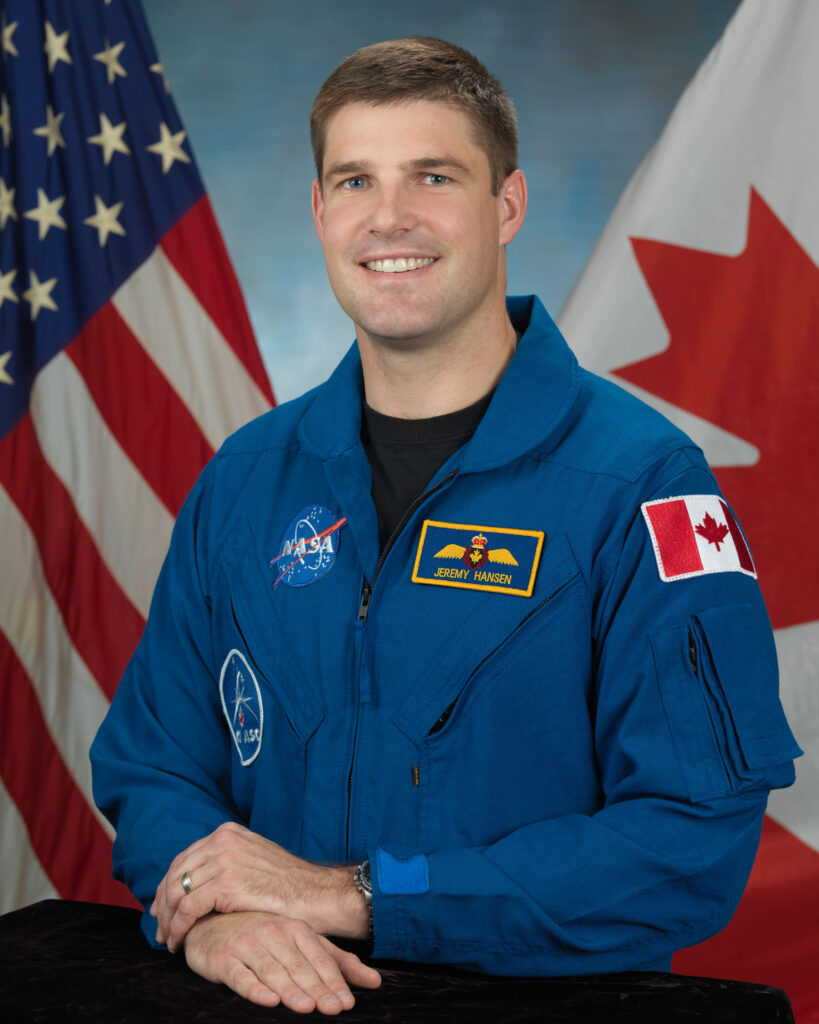
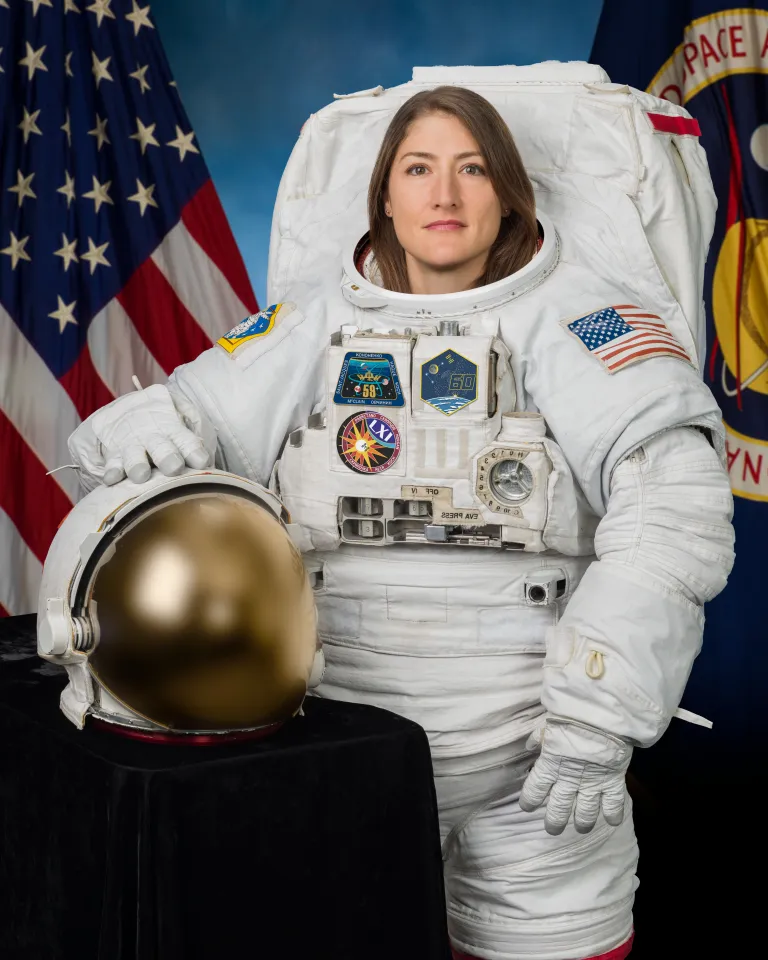
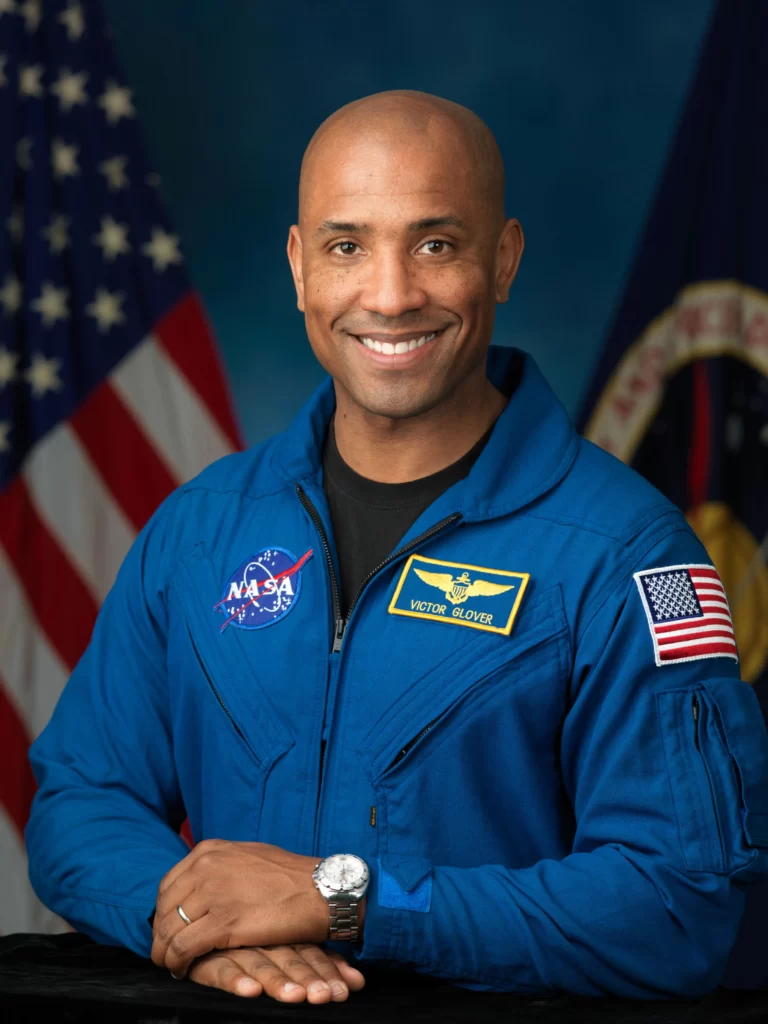
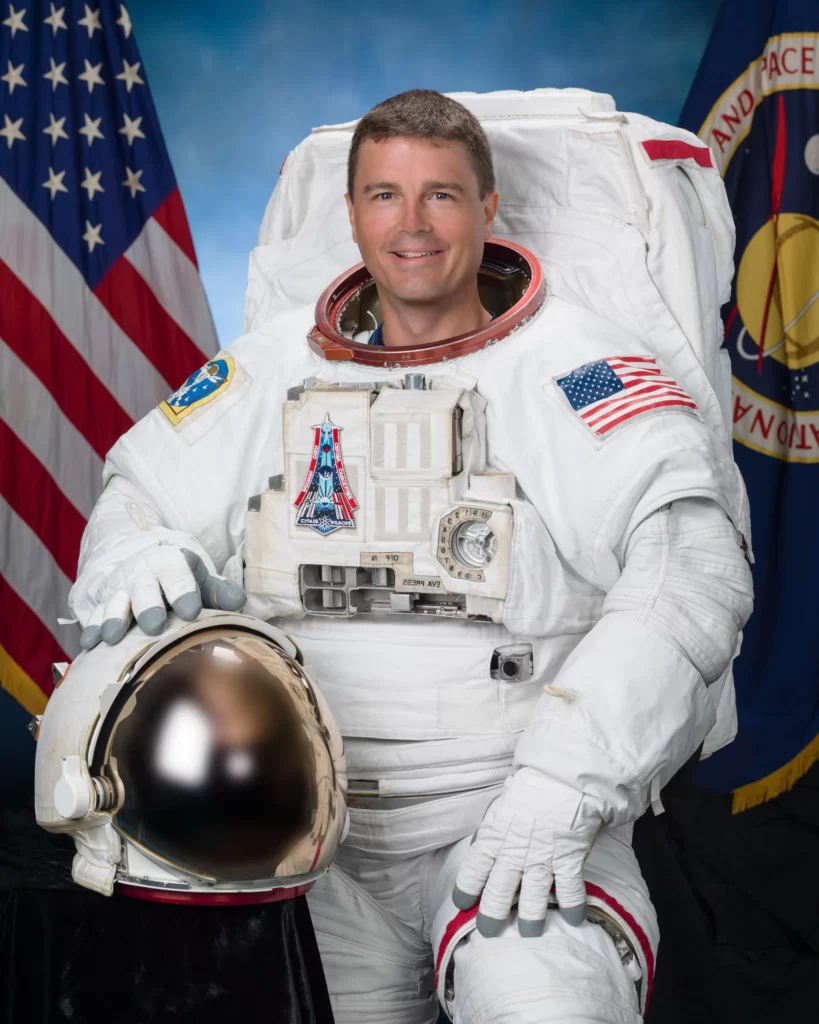
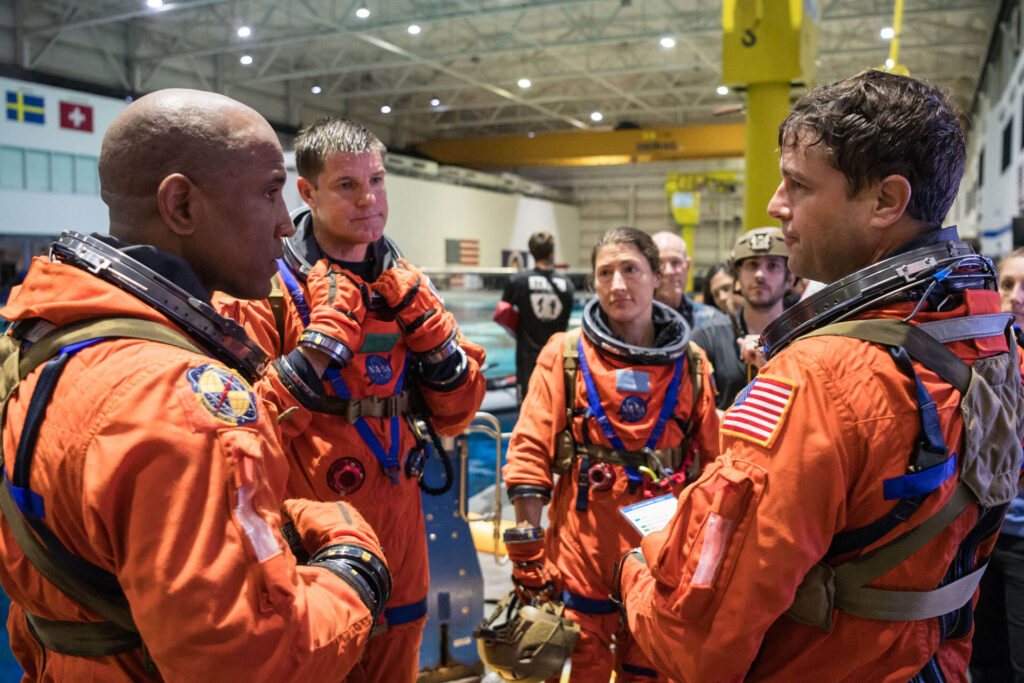
The Artemis II crew includes three Americans – Commander Reid Wiseman, pilot Victor Glover, and mission specialist Christina Koch – and one Canadian, mission specialist Jeremy Hansen. With decades of space experience among them, the team has spent over two years training for this historic mission, learning to live and work in the compact confines of the Orion spacecraft.
Commander Wiseman described the crew’s connection:
“You get to that point where you do not have to communicate any longer – you’re just listening to everything happening, and all four of us are watching each other and the mission, and we do not need to speak – we just know.”
Lift-off: NASA’s most powerful rocket
The astronauts will launch aboard the Space Launch System (SLS) from Kennedy Space Center, Florida. Standing 98 metres tall, the SLS is the most powerful rocket NASA has ever built, designed to carry the Orion spacecraft into space. The orange core stage alone holds over three million litres of liquid hydrogen and oxygen.
During launch, the Launch Abort System atop the rocket ensures crew safety if anything goes wrong in the initial stages, making liftoff one of the mission’s riskiest moments.
Life onboard Orion
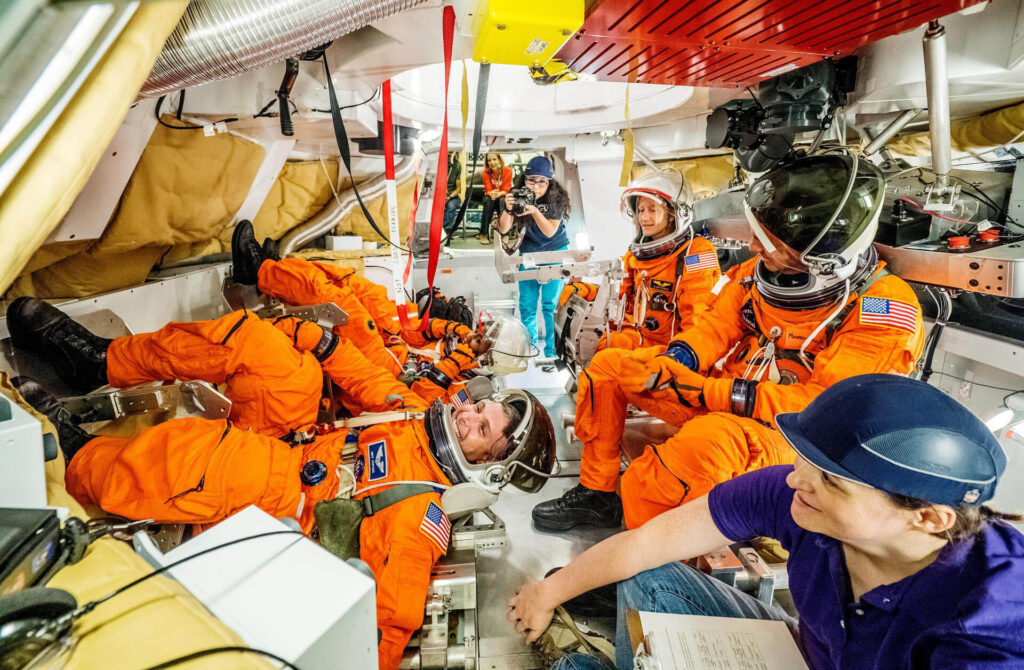
Inside the Orion crew capsule, just 5m wide and 3m high (15ft x 9ft), the crew will eat, exercise, sleep, and perform experiments in a weightless environment. The astronauts have trained for confined living with “Artemis sleepovers” to get used to spending 10 days in close quarters.
The capsule features modern amenities, including a specially designed toilet, water dispenser, and exercise equipment. Astronauts will perform 30 minutes of daily cardio and resistance training to maintain muscle and bone strength.
Journey around the Moon
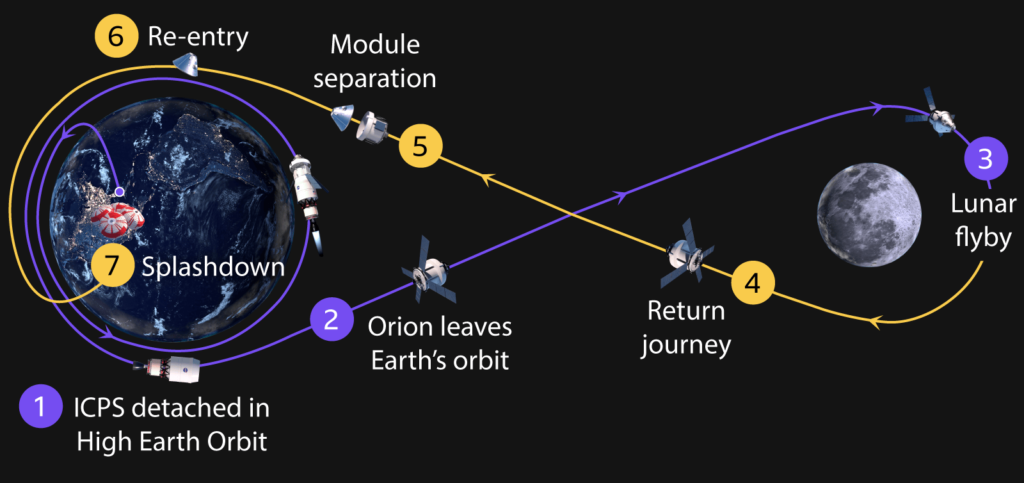
After orbiting Earth at about 70,000 km (45,000 miles) for the first day, the crew will perform the trans-lunar injection burn, sending Orion on a trajectory to the Moon. On the far side of the Moon, 6,500–9,500 km away from its surface, the astronauts will spend three hours observing the lunar landscape. These observations will provide valuable data to help plan future lunar landings and a potential Moon base.
The crew will also monitor radiation exposure with dosimeters and practise using the radiation shelter within Orion. Experiments on muscle, brain, immune system, and microbiome changes will offer insight into the effects of deep space travel.
Return to Earth
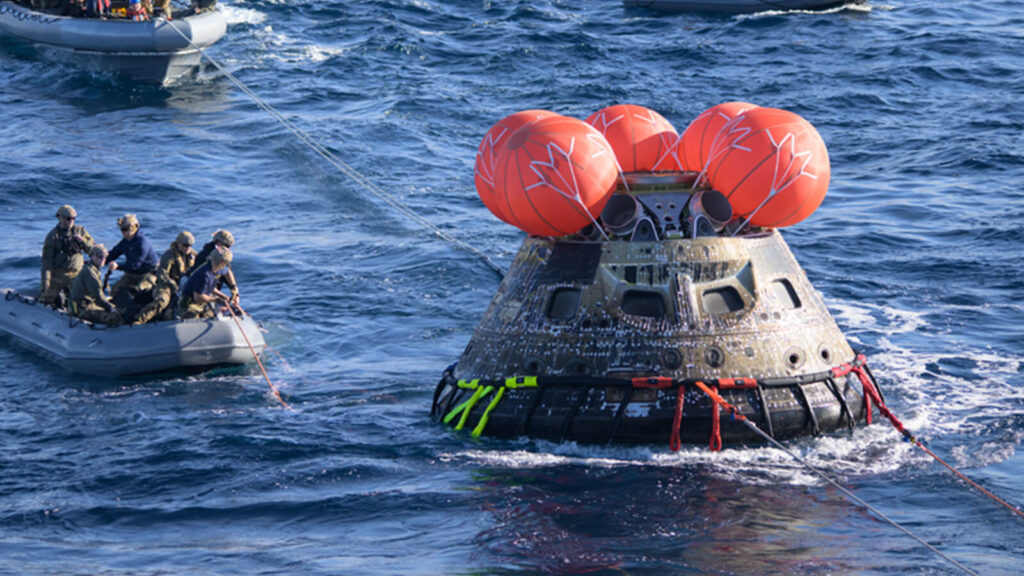
After the lunar flyby, the crew will spend four days returning home. The Orion capsule will separate from the service module, re-entering Earth’s atmosphere at 25,000 mph and enduring temperatures of around 2,700°C. Engineers have reinforced the heat shield to withstand re-entry, and the capsule will deploy parachutes and airbags for a safe splashdown in the Pacific Ocean.
Pilot Victor Glover shared his anticipation for the final stage:
“I am really looking forward to seeing those three beautiful parachutes and splashing down in the Pacific Ocean. I know that’s when my wife will have her first real, true exhale, and that means a lot to me.”
A historic step for human exploration
Artemis II will make the crew part of an elite group, only 24 astronauts have ever flown around the Moon. But this mission is only the beginning: the data and experience gained will pave the way for humans to return to the lunar surface, and eventually, to live there.
Source: BBC
Also read: Climate warning as El Niño looms
For more videos and updates, check out our YouTube channel
