

Rise of “AI-free” labels
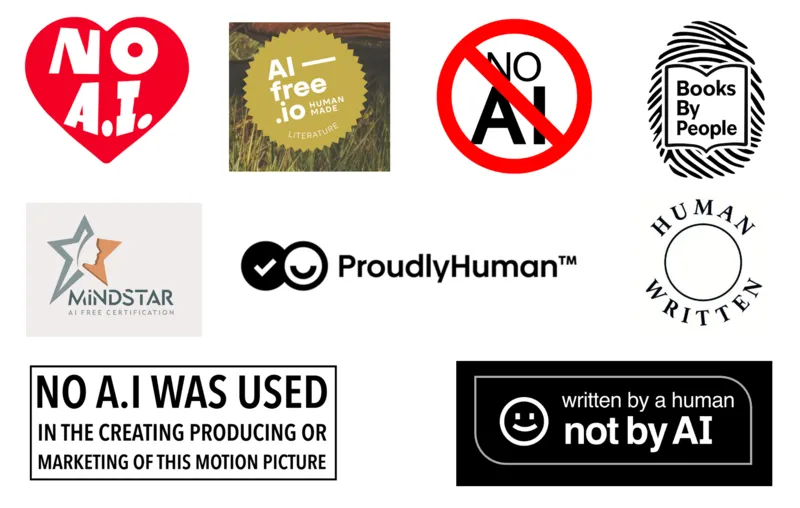
Companies and non-profits worldwide are developing labels to indicate human-made products and services amid growing concern over AI disruption. Labels such as “Proudly Human”, “Human-made”, “No AI”, and “AI-free” are appearing on films, books, marketing materials, and websites as consumers seek reassurance about human authorship.
The surge follows fears that AI-driven automation could replace jobs and creativity in sectors from publishing to advertising, music, and film. BBC News reports at least eight initiatives are attempting to create a globally recognised certification similar to the “Fair Trade” logo.
Challenges in defining “human-made”
Experts warn that competing definitions could confuse consumers. Dr Amna Khan, consumer expert at Manchester Metropolitan University, said:“AI is creating significant disruption and competing definitions of what is ‘human made’ are confusing consumers. A universal definition is essential to build trust, clarification and confidence.”
Some labels, like no-ai-icon.com, ai-free.io, and notbyai.fyi, allow free or paid downloads without auditing. Others, such as aifreecert, require strict vetting with professional auditors and AI-detection software. Experts note that defining AI-free content is increasingly difficult as AI tools are integrated into everyday processes.
AI researcher Sasha Luccioni explains:“AI is now so ubiquitous that it’s complicated to establish what ‘AI free’ means. AI is a spectrum, and we need comprehensive certification systems rather than a binary approach.”
Focus on generative AI
Many initiatives target generative AI – tools that produce text, music, code, or video from human prompts. The 2024 film Heretic included a disclaimer stating no generative AI was used. Film distributor The Mise en scène Company recently added a similar “No AI was used” stamp to its latest film, promoting an economic premium for human-made content. CEO Paul Yates said:“We support the AI industry, but human-made content carries value, and we want to highlight that.”
Auditing and certification in publishing
The publishing sector is also adopting human-made verification. UK company Books by People audits authors and publishers before awarding stamps, while Australia’s Proudly Human carries out rigorous checks at every stage of publication. Faber and Faber have added “Human Written” stamps to some books, though auditing details remain unclear.
Alan Finkel, Proudly Human CEO, stresses the importance of verified certification:“A certification of ‘human origin’ is needed. Self-certification is not sufficient, so we have a full verification process to ensure material is truly human originated.”
As AI becomes further integrated across industries, experts argue a standardised human-made certification is essential to maintain consumer trust and protect the value of human creativity.
Also read: Whistleblowers warn of social media algorithm risks
For more videos and updates, check out our YouTube channel
