

Vučić concedes defeat after historic vote
Serbia’s long-standing leader Aleksandar Vučić has conceded defeat in snap parliamentary elections to a student-led movement that grew out of protests over a deadly railway station collapse, marking a dramatic shift in the country’s political landscape.
The Serbia election results represent a major setback for Vučić’s Serbian Progressive Party (SNS), which has dominated the country’s politics for 14 years. The opposition’s victory follows nearly two years of demonstrations against alleged corruption, government negligence and political interference in public institutions.
“We still do not have final results… it is clear that we have lost these elections,” Vučić said late on Sunday at SNS headquarters in Belgrade.
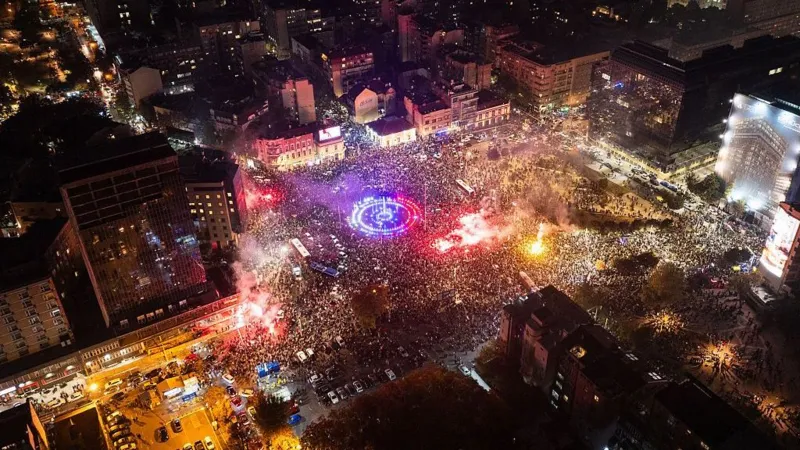
Celebrations erupted across Serbia, with crowds dancing, chanting and setting off fireworks. In Belgrade, Novi Sad and Niš, supporters gathered in city centres and outside Student List headquarters.
“Serbia is free,” the students declared on social media.
In Novi Sad, where the protest movement began, crowds filled the city centre. “Everything is going to get better now,” resident David Vasić told BBC Serbian.
Selena Lebovic, celebrating in Belgrade, described the result as “really fabulous”.
“We are all crying, and what to say. We couldn’t believe that it would be so easy,” she told Reuters.
How the Novi Sad tragedy sparked a national movement
The movement began after a concrete canopy collapsed at Novi Sad railway station on 1 November 2024, killing 16 people.
The disaster became a symbol of alleged corruption and negligence surrounding public infrastructure projects. Critics questioned the station’s renovation, a project with which Vučić had closely associated himself.
“When the canopy collapsed that served as the last straw,” said Helena Ivanov of the Henry Jackson Society think tank.
Students initially organised blockades and weekly demonstrations demanding accountability. Their protests gradually expanded into a broader movement involving farmers, actors, judges and citizens across Serbian society.
By January 2025, the political pressure had prompted the resignation of Serbia’s prime minister, who said the move was intended to defuse tensions.
In March 2025, Belgrade witnessed what was described as Serbia’s largest anti-government demonstration.
Unlike traditional opposition parties, the students organised through university assemblies known as plenums, without establishing a single prominent leader.
According to Ivanov, the movement succeeded in turning public anger into a nationwide organisation capable of contesting an election and monitoring polling stations.
Record turnout and celebrations across Serbia
Preliminary figures from Serbia’s election commission suggested exceptionally high participation, with turnout reaching 64.9% by 18:00 local time on Sunday, two hours before polling stations closed.
Long queues formed outside polling stations across Serbia and among Serbian communities abroad, including in Ljubljana, Munich, Los Angeles, Chicago and Paris.
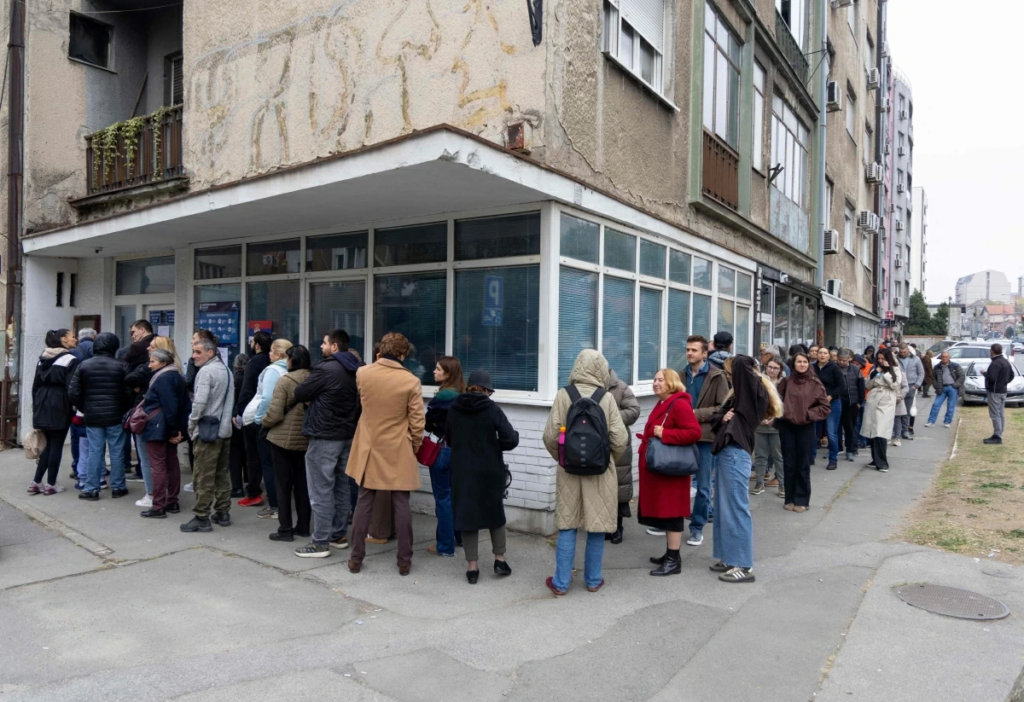
The election took place amid heightened tensions, with police sealing off streets near the Republic Electoral Commission in Belgrade.
Following Vučić’s concession, demonstrators dismantled metal barriers around Ćaciland, a pro-government tent camp established in Pioneers Park opposite the Serbian parliament.
Crowds shouted “Vučić is leaving” as the camp, which had stood for approximately 18 months, became a symbol of the governing party’s defeat.
Student List candidate Radomir Saicic told supporters that Serbians had demonstrated that “no obstacle was greater than their will”, according to Reuters.
“No force can forever overpower a people who have decided to take their destiny into their own hands,” he added.
Who will govern Serbia after the election?
Despite leading the movement, the students themselves did not stand for parliament.
Instead, the Student List-Students Win movement selected candidates from across Serbian society to contest all 250 parliamentary seats, including doctors, academics, actors, economists and sports personalities.
At least 135 candidates on the list were believed to have secured seats, although final results had not yet been announced.
Among the candidates were former basketball star Dejan Bodiroga, actor Tihomir Stanić, opera singer Nikola Mikić and former National Bank of Serbia governor Dejan Šoškić.
The list’s leading candidate, Novi Sad cardiologist and professor Ilija Srdanović, has become a prominent public representative of the movement but is not widely regarded as the obvious choice for prime minister.
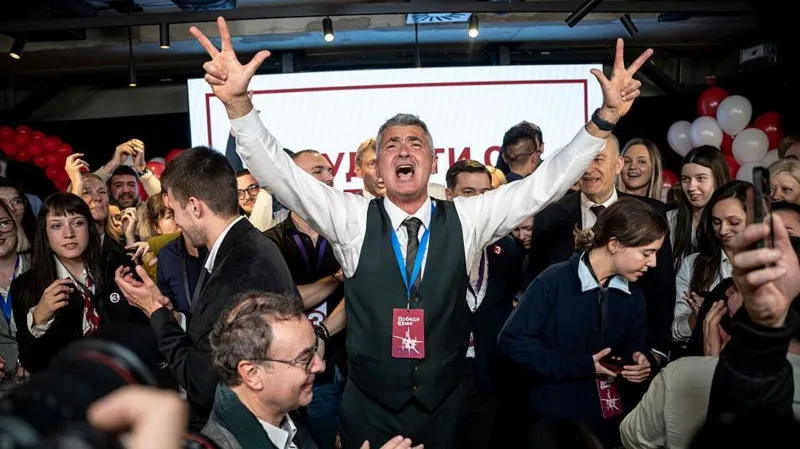
Šoškić has also been mentioned as a possible candidate for the role, having outlined proposals for economic reform and attracted criticism from pro-government media.
Speaking before the election, Srdanović said the movement’s momentum was unstoppable.
“We offer our citizens the core values of civilised society, which this previous regime has taken away from our citizens for the last time,” he told the BBC.
The question of who will lead the next government remains unresolved as the movement prepares to translate its electoral victory into parliamentary leadership.
Student movement promises anti-corruption reforms
The Student List campaigned on an 11-point programme aimed at dismantling political patronage and strengthening public institutions.
Its main proposals include:
- Eradicate corruption by forming a police unit to arrest those responsible for it
- Purge officials in the internal affairs ministry of anyone who broke rules on cracking down on protesters, or anyone linked to organised crime
- Reform Serbia’s skewed media scene and free the public broadcaster of political control
- Stop recruiting party loyalists to head public enterprises.
The movement also wants to prevent governing parties from appointing loyalists to senior positions in state-owned enterprises.
Vučić and the SNS have repeatedly denied allegations of corruption and political interference in the media.
Gordana Delić, head of the Balkans programme at the German Marshall Fund of the United States, described Sunday’s election as effectively a referendum on Serbia’s political direction.
“The message was clear: the rule of law and not ruled by the law,” she said.
The students have argued that their chosen parliamentary representatives must act responsibly and remember the purpose of the movement that brought them to office.
They say the elected candidates have been entrusted with carrying their struggle from the streets into Serbia’s institutions.
What happens next for Vučić and Serbia?
Vučić, who served two presidential terms and was unable to seek a third, had hoped to return to the prime minister’s office, a position he previously held until 2017.
During the campaign, he promised higher pensions, increased public-sector salaries, and additional investment in state healthcare.
His government has supported Serbia’s application to join the European Union while refusing to impose sanctions on Russia over its full-scale invasion of Ukraine.
Although Vučić initially described student protesters as well-intentioned, his rhetoric hardened as the movement gained momentum. Ahead of the election, he accused them of seeking to bring down Serbia.
After conceding defeat, he made an unsupported allegation that the movement had received backing from unnamed European countries and the American “deep state”.
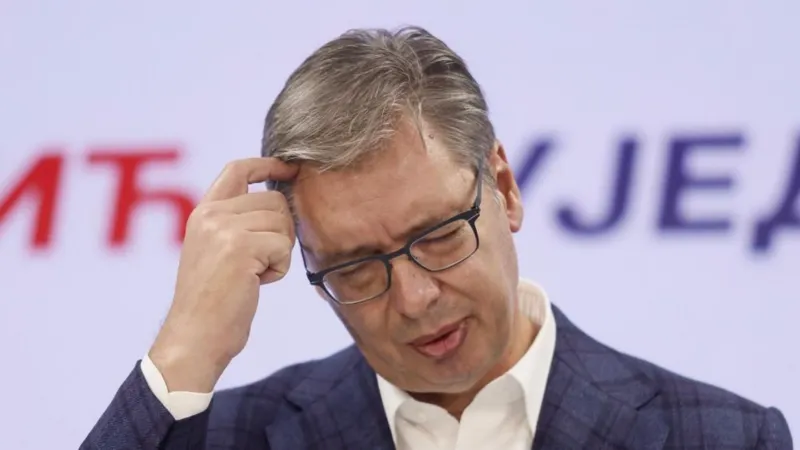
He also accused the students of having disrupted two years of life in Serbia and predicted that they would be defeated sooner than they expected.
For the student movement, the immediate challenge is now to maintain public trust while overseeing the transition from street protests to institutional reform.
The Serbia election results have delivered a political breakthrough, but the movement’s longer-term success will depend on whether its newly elected representatives can fulfil their promises on corruption, accountability and democratic governance.
Also Read: AKEL expels Costas Costas indefinitely, informing him by phone in early October
For more videos and updates, check out our YouTube channel
