

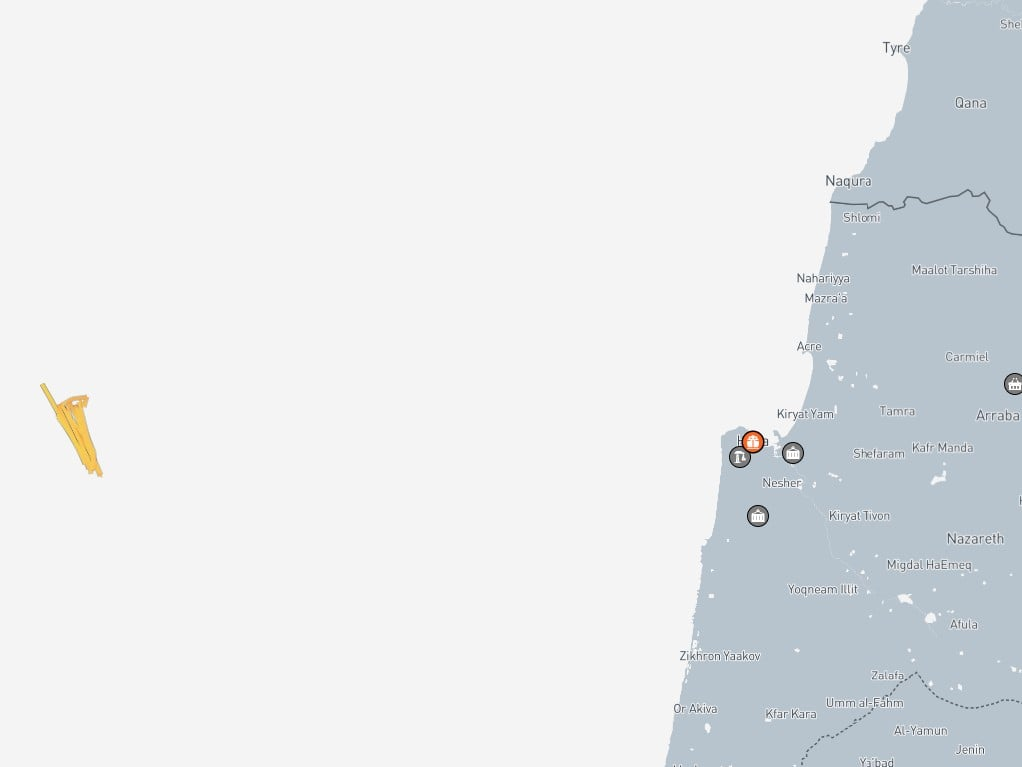
A major humanitarian aid mission bound for Gaza, led by the Republic of Cyprus, is facing unexplained delays despite having been scheduled to dock at Israel’s Ashdod port on Tuesday, 19 August. As of Thursday evening, the cargo vessel remains offshore, slowly circling near the port.
The vessel, named Henke, is carrying 1,200 tonnes of humanitarian aid—including food and essential supplies—intended for civilians in Gaza. Loaded in Limassol on 18 August, the ship was expected to begin offloading by 20 August. However, AIS tracking data shows the ship cruising at 5 knots in loops along Israel’s northern coastline, raising questions about the holdup.
The Republic of Cyprus played a central role in organising the aid shipment, contributing over 700 tonnes of supplies. Malta added a further 500 tonnes, while humanitarian organisations from the US, Italy, Kuwait, and Malta also participated. The United Arab Emirates is considered a key contributor to the operation.
The Henke, a 5,000 dwt general cargo vessel flying the Panamanian flag, is owned and operated by Turkish interests. It has a problematic inspection record—having been detained in May due to 16 deficiencies—but it currently carries vital aid including pasta, rice, baby food, canned goods and other staple items. The cargo is packed into 52 containers and is to be delivered to the non-profit World Central Kitchen for final distribution.
Η Κυπριακή Δημοκρατία συνεχίζει την έμπρακτη δράση στο ανθρωπιστικό πεδίο. Πάντα σε στενή συνεργασία και συντονισμό με διεθνείς εταίρους και ανθρωπιστικούς οργανισμούς, και εντός του πλαισίου του ΟΗΕ.
— Constantinos Kombos (@ckombos) August 19, 2025
Σε αυτή τη βάση αναχώρησε χθες βράδυ από το Λιμάνι Λεμεσού ανθρωπιστική… pic.twitter.com/mKnUr5lih6
According to Cypriot authorities, the operation is coordinated under the United Nations aid distribution mechanism. The Israeli government has reportedly agreed to the mission, and customs authorities inspected the cargo prior to the ship’s departure from Limassol.
Cyprus has stated that an agreement is in place allowing the cargo to be offloaded at Ashdod without undergoing further inspection. Nonetheless, it remains unclear why the vessel has yet to begin unloading, particularly given that the mission timeline anticipated a prompt transfer of goods upon arrival.
Also read: Cyprus sends 1,200 tons of humanitarian aid to Gaza
For more videos and updates, check out our YouTube channel.