

While getting lost in the narrow streets of downtown Nicosia, around Ledras, you will inevitably stumble upon some of the most fascinating places: small, remarkable shops that seem to have remained untouched by time. They resemble still photographs of particular moments in history, long past, memories encapsulated within such small spaces.
Looking through their old stock, you may come across old books, cameras, clothes, and countless other remnants of another era. I happened to find a magazine. It was called GYNAIKA, and the issue I found was published on February 4th, 1974.
GYNAIKA was a magazine written by women, for women. And I mean that quite literally: every position related to the writing, editing, and production of the magazine was held exclusively by women.
Even a brief reading reveals a great deal, not only about the women of that period but also, through comparison, about women today. One section that particularly stood out was dedicated to letters from female readers who chose to share their opinions, experiences, and ideas on social and political issues.
For example, Eleni Akila-Giannakopoulou, a physicist and mathematician living in Ekali, wrote to GYNAIKA and its readers about corporal punishment in schools. She expressed her disbelief that “teachers to this day have the audacity to hit our [their] children” and that she “never believed that a teacher in this day and age could hit a child.” When she reported the incident to the school principal, she was allegedly told that “hitting is permitted by the Ministry of Education.”
Akila-Giannakopoulou therefore addressed the Ministry of Education directly through the magazine: “We are asking directly here, the Minister of Education, under which policy does he allow beatings at school as a method of education? And when beating someone is a crime in the eyes of the law, how can the same supposedly law-abiding Ministry permit that?”
In the same section, law student Betty Apergi openly criticised the government and its response to homelessness. Betty wrote: “I could have never believed how, under a so-called democratic government, thousands of homeless people are still residing outside of train stations, outside of stores, and even outside of the universities. They are staying there and asking the public for money. I am talking about men, women and children, every day, everywhere you go in Athens.”
She continued by questioning the responsibility of both citizens and the state: “What can we do as citizens for the homelessness in our town? If we give them our remaining money, do we encourage the fact that they are unemployed? Do we believe them, do we sit there and listen about their sickness, about their crooked arms and legs? How does that affect the tourism of our town? Where is our democratic government in all this?”
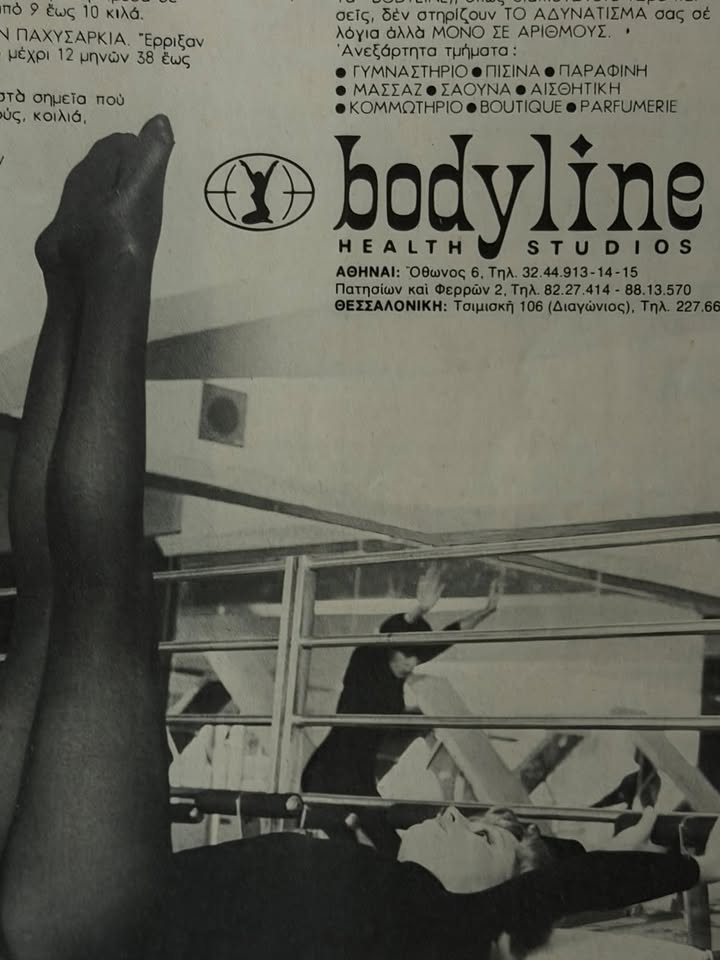
Other sections of the magazine focused on different aspects of women’s everyday lives. One particularly interesting example was the Life and Nutrition section, which argued that, beyond beauty, women should maintain a healthy diet and exercise regularly in order to protect their health and well-being.
The section offered a detailed discussion of how nutrition, nature, and physical exercise could influence, or even predetermine, a woman’s health. What is particularly striking is that the entire discussion consistently uses feminine pronouns. Rather than treating the male experience as universal and simply adapting its advice to women, the magazine directly addresses women as its primary audience.
In addition, another section was devoted exclusively to extracts from novels, something GYNAIKA appears to have included regularly in its issues. The copy I found featured The Night Was Cold by Jack London, alongside a separate section providing readers with information about the author. Literature, therefore, existed alongside discussions of health, beauty, politics and social concerns, contributing to the surprising (for the modern reader) range of material contained within the magazine.
When I first held the magazine in my hands, it was the beautiful image of the young model dressed in red that caught my attention. I immediately thought: I have to have this. I skimmed through the subheadings on the front page. They promised advice on what women could do to stay young, an exploration of two different types of infidelity, and guidance on what clothes should be worn during winter.
Yet the magazine was thick, and I thought there was no way that could be all it had to offer. I was right.
Those eye-catching subheadings occupied only a page or two each. Perhaps this was not entirely surprising, the owner of the magazine was, after all, a man. But beyond them was a plethora of women criticising the government, protecting their children, fighting for their rights, informing one another and helping each other improve their mental and physical health and ultimately their lives.
That contrast is perhaps what makes GYNAIKA so fascinating. On its surface, it could easily be dismissed (why are beauty, fashion and relationships dismissable, anyway?) as another women’s magazine concerned with beauty, fashion, youth and relationships. Yet within its pages, women were participating in conversations that extended far beyond those subjects (why are our “expected” subjects somehow incompatible with serious political thought?). They were questioning institutions, challenging government policies, discussing social problems, demanding better treatment for their children and sharing knowledge with one another.
In 1974, a woman in Greece might not have always had literally “A Room of One’s Own,” but she had something Woolf perhaps would appreciate much more:
A means. A means of communication, a means of connection, a social network written by women, for women.
And the thing about means, in contrast to rooms, is that they can take you places.
Also read: The yolk: A guide to summer reading
