

Cyprus continues to rely heavily on landfills despite years of investment in waste treatment and recycling. New plans worth €162 million aim to upgrade existing facilities, while authorities prepare a longer-term strategy to reduce the amount of rubbish buried on the island.
Cyprus generated approximately 669,000 tonnes of municipal waste in 2024, an increase of 5.6% compared with the previous year. Yet recycling remains limited, with almost four out of every five tonnes of treated waste ending up in landfills.
The figures highlight the challenges facing the country’s waste management system, where household rubbish, recycling infrastructure and the future of existing disposal facilities remain central issues.
According to the Statistical Service of Cyprus (CYSTAT), each person generated an average of 664kg of municipal waste in 2024. This was considerably higher than the European Union average of 517kg, placing Cyprus fourth among EU member states.
Of the 566,070 tonnes of municipal waste treated during the year, 78.5% went to landfill, 14.2% was recycled, 4.4% was composted and 2.9% was used for energy recovery.gov.cy

This is one of the most important findings: almost four out of every five tonnes of treated municipal waste ended up in landfill.
In absolute terms:
| Treatment | Tonnes |
|---|---|
| Landfill | 444,260 |
| Recycling | 80,260 |
| Composting | 25,380 |
| Energy recovery | 16,160 |
How many landfills does Cyprus have?
Cyprus has three main municipal waste management facilities serving the island’s districts: Koshi, Pentakomo and Paphos. However, they do not all operate in the same way. Some combine mechanical and biological waste treatment with landfill disposal, while others rely much more heavily on burial.
According to Eurostat’s description of the Cypriot waste management system, three landfill facilities were operating in 2022: two integrated mechanical-biological treatment and landfill facilities and one landfill facility. The country also had 11 landfills for inert waste, which is waste such as construction and demolition materials that does not undergo significant physical, chemical or biological changes.
The three main municipal facilities are:
1. Koshi – Larnaca and Famagusta
The Koshi Integrated Waste Management Facility serves Larnaca and Famagusta. It also began receiving waste from Nicosia after the closure of the Kotsiatis disposal site.
The additional waste substantially increased the facility’s workload, pushing it beyond its original design capacity. Its mechanical equipment and infrastructure now require significant upgrades.
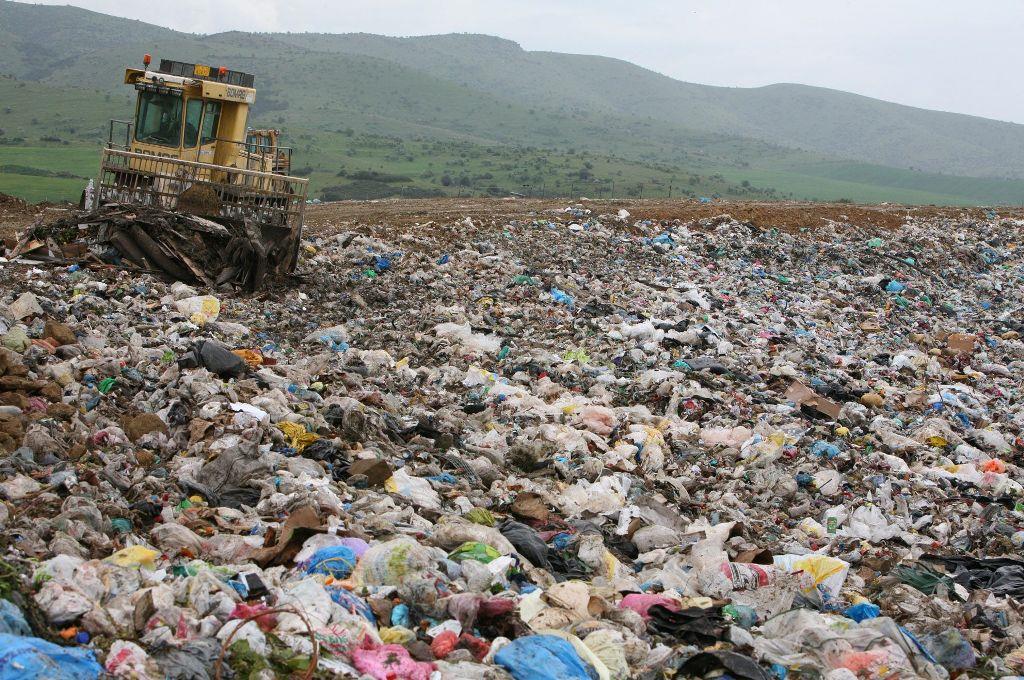
2. Pentakomo – Limassol
The Pentakomo facility was designed to process mixed household waste, recover recyclable materials and produce alternative fuel.
It includes mechanical sorting, biological treatment of organic waste, biogas production and a sanitary landfill for the residues that remain after processing.
The facility began operating in November 2017 and was designed to process approximately 140,000 tonnes of mixed household waste annually, alongside additional pre-sorted recyclable and organic materials.
However, its performance has fallen short of expectations. According to a report by Politis in August 2026, around 80% of the waste processed at Pentakomo still ends up in landfill.
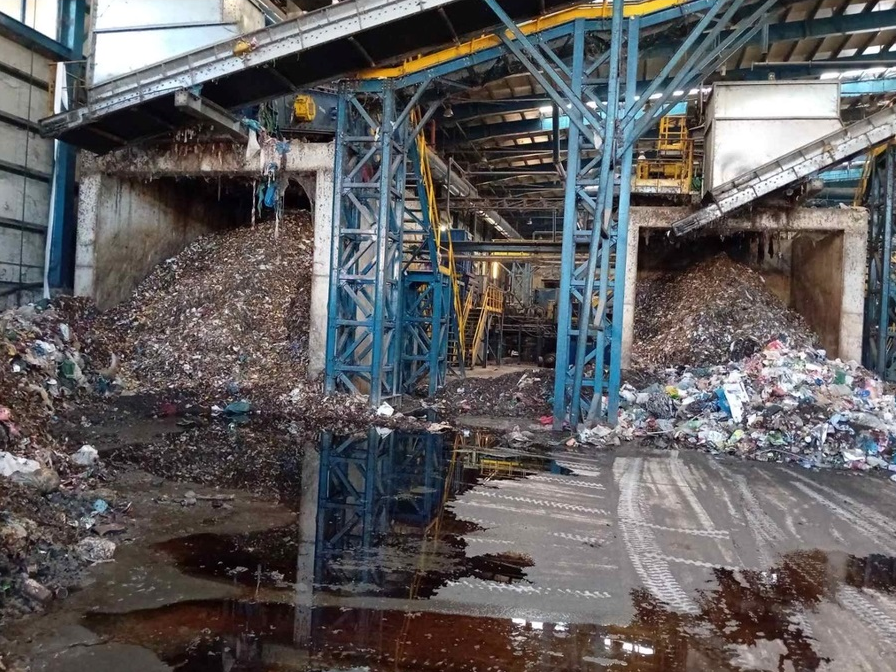
3. Paphos – Marathounta
The Paphos facility has historically served the district through landfill disposal. Unlike Koshi and Pentakomo, it does not currently have an operational integrated treatment facility comparable to those two installations.
According to the August 2026 Politis report, virtually all waste generated in Paphos is sent to landfill.
The government is examining the district’s future infrastructure needs as part of its wider waste management planning.
What happened to the old landfills?
Kotsiatis, which previously received waste from Nicosia, was closed in 2018. Waste from the district was gradually redirected to Koshi, with the transfer completed following the closure.
Vati in Limassol was also among the uncontrolled waste disposal sites identified for closure and restoration as part of the national waste management programme.
The distinction is important: Cyprus has a history of numerous uncontrolled dumping sites, but these should not be confused with the three main municipal waste management facilities currently serving the districts.
The government has also undertaken projects to restore former uncontrolled disposal sites and reduce their environmental impact.
Who is responsible for waste management in Cyprus?
Responsibility is divided between national authorities, district organisations, municipalities and specialist recycling operators.
| Organisation | Main responsibility |
|---|---|
| Department of Environment | National waste policy, legislation, permits and environmental oversight |
| Municipalities and community councils | Collection of ordinary household rubbish |
| District Local Government Organisations (DLGOs) | Green Points, reuse and repair centres, composting units and other waste facilities |
| Green Dot Cyprus | Packaging recycling system |
| Private waste operators | Collection, transportation, sorting and treatment under the relevant arrangements |
An important development followed the local government reform of July 2024.
The five District Local Government Organisations took on specific waste-related responsibilities. However, the transfer of responsibility for the reception, processing and overall management of solid waste is scheduled to take place by July 2027 at the latest. Ordinary waste collection remains with municipalities and communities.
What happens to rubbish after it is collected?
Household waste in Cyprus follows different routes depending on whether it is separated for recycling or placed in ordinary rubbish bins.
General household rubbish is collected by municipalities and community authorities and transported to the relevant waste management facilities.
At integrated facilities such as Pentakomo and Koshi, mixed waste undergoes treatment intended to recover recyclable materials, process organic matter and produce alternative fuel.
However, not all materials can be recovered. Residues and unsuitable materials are ultimately sent to sanitary landfills.
Recycling operates separately through collection schemes, including the system managed by Green Dot Cyprus.
The main packaging recycling categories are:
- PMD: Plastic bottles and containers, aluminium and tin cans, and beverage cartons.
- Paper: Newspapers, magazines, cardboard and other clean paper packaging.
- Glass: Bottles and jars, deposited in designated collection bins.
How does recycling collection work?
In urban and suburban areas covered by Green Dot:
- PMD and paper are generally collected once a week.
- Residents place the appropriate materials in special transparent and brown bags outside their homes.
- Glass is deposited in designated collection bins.
- Collection arrangements can differ in tourist areas, villages and apartment buildings.
The collected PMD and paper are transported to sorting facilities in Latsia and Moni. The materials are separated and sent to recycling operators, including facilities abroad. Glass is processed in Cyprus and used as a raw material in cement and other building materials.
Residents can check collection days and glass-bin locations through the ReCYcling CY application or Green Dot’s information service.
What about items that cannot go into ordinary bins?
Cyprus has a network of Green Points, designed to receive household waste that should not be mixed with ordinary rubbish or conventional packaging recycling.
These facilities accept different categories, depending on the location, including:
- Old furniture and mattresses.
- Electrical and electronic appliances.
- Batteries and light bulbs.
- Paints and certain household chemicals.
- Medicines and thermometers.
- Garden waste and pruning materials.
- Clothing, textiles and carpets.
- Metals, wood and certain construction materials.
- Used cooking oil.
Green Points are intended to prevent illegal dumping and ensure that these materials are directed to appropriate recycling or treatment facilities.
Pay-As-You-Throw: Will households pay according to the rubbish they produce?
Another major part of the planned reform is the introduction of the Pay-As-You-Throw (PAYT) system.
Under this approach, households would pay according to the amount of mixed rubbish they dispose of. The aim is to encourage residents to separate recyclable and organic waste rather than placing everything in general rubbish bins.
The government had envisaged introducing the system in 2027. However, municipalities have questioned whether this timetable is realistic.
In September 2026, local authorities proposed a more gradual implementation, with compulsory recycling introduced first, followed by separate household collection of organic waste and full PAYT implementation in late 2028 or early 2029.
Municipalities estimate that approximately €80 million would be needed for the necessary equipment and infrastructure. Around €25 million had been secured, leaving a funding gap of approximately €55 million.
The requirements include additional recycling bins, specialised collection vehicles, infrastructure for organic waste and public awareness campaigns.
Can Cyprus reduce its dependence on landfills?
The challenge facing Cyprus is not simply the availability of landfill space. It is also the country’s ability to reduce the amount of rubbish produced, improve recycling participation and establish sufficient infrastructure to process different types of waste.
The planned €162 million investment is intended to address immediate problems at two major facilities, while the national study will determine the longer-term direction.
For households, the proposed changes could eventually mean more separate collection, new recycling requirements and waste charges linked to the amount of rubbish produced.
For now, however, the latest official figures show that Cyprus continues to send most of its treated municipal waste to landfill, leaving the country with a substantial gap to close before meeting its European targets.
Also read: Koshi landfill nears capacity as Cyprus faces waste management crisis
For more videos and updates, check out our YouTube channel.