

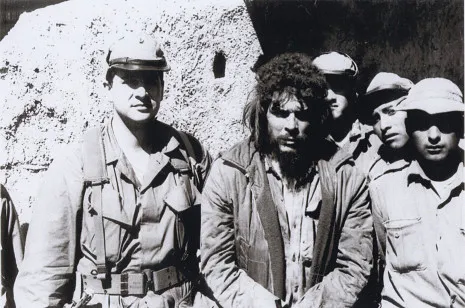
Argentine revolutionary Ernesto “Che” Guevara was captured by the Bolivian army on 8 October 1967, bringing his attempt to establish a guerrilla movement in Bolivia to an end. Wounded during a clash at the Quebrada del Yuro ravine, Guevara was taken to the nearby village of La Higuera, where he was held overnight.
The capture came nearly a decade after Guevara had become one of the most prominent figures of the Cuban Revolution. His political career, writings and campaigns made him an influential figure on the international left, while his methods and role in revolutionary violence remained deeply controversial.
From medicine to revolution
Born in Rosario, Argentina, in 1928, Guevara trained as a doctor before travelling extensively across Latin America. His experiences during those journeys influenced his political outlook and contributed to his adoption of Marxist revolutionary ideas.
He joined Fidel Castro’s revolutionary movement in Mexico in the 1950s and became a key commander during the Cuban Revolution. The rebels eventually overthrew the government of Fulgencio Batista in 1959.
Following the revolution, Guevara held several senior positions in the new Cuban government, including responsibility for the country’s central bank and later the Ministry of Industries. He also became an important international representative of the Cuban Revolution.
Guerrilla campaigns beyond Cuba
Guevara believed revolutionary movements could spread beyond Cuba. After disappearing from public view in 1965, he travelled secretly to Africa, where he became involved in an unsuccessful guerrilla campaign in the Congo. He later returned to Cuba before travelling to Bolivia in 1966.
In Bolivia, he operated under the name “Ramón” and led the Ñancahuazú guerrilla group. The campaign struggled to attract local support and faced increasing pressure from Bolivian security forces. Documents recovered by Bolivian authorities helped confirm Guevara’s presence and identity.
By October 1967, Guevara’s remaining fighters were isolated and under intense military pressure.
Capture at Quebrada del Yuro
On 8 October, Bolivian Rangers clashed with Guevara’s guerrillas near the Quebrada del Yuro, several kilometres from La Higuera. A declassified CIA field report recorded that the fighting lasted several hours and resulted in guerrillas being killed and captured. Guevara was among those taken prisoner and had been wounded in the leg.
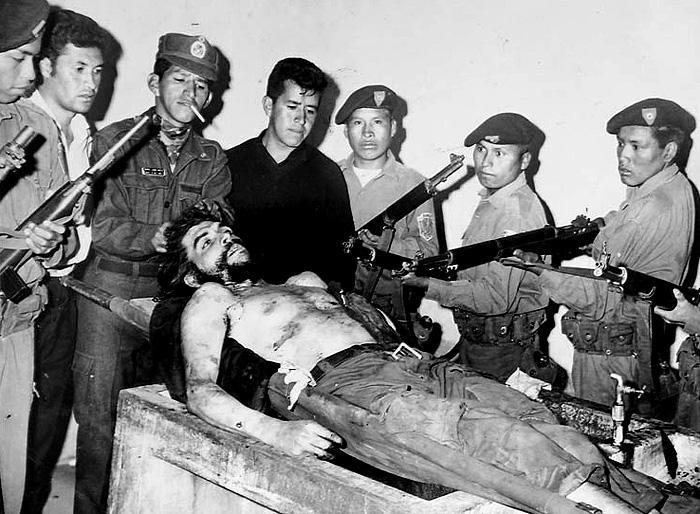
He was brought to a small schoolhouse in La Higuera. Declassified US documents later contradicted early public accounts that he had died from battle wounds, reporting that he was captured alive and remained in relatively good condition apart from his injury.
On 9 October, Bolivian military authorities ordered his execution. Guevara was killed in the schoolhouse at La Higuera, aged 39.
A legacy that remains deeply divided
Guevara’s death transformed his public image. His photograph, taken by Alberto Korda in 1960, became one of the most recognisable political images of the 20th century and was reproduced around the world on posters, clothing and other merchandise.
His writings on Marxism, guerrilla warfare and revolutionary strategy also continued to circulate after his death. His diary from Bolivia was published and became an important part of the record of his final campaign.
For supporters, Guevara became a symbol of international revolution and opposition to imperialism. Critics have instead focused on his role in revolutionary violence, executions and the authoritarian aspects of the Cuban revolutionary project. His legacy therefore remains contested, with his image often separated from the more complex historical record of his political career and actions.
Che Guevara’s capture in Bolivia ultimately marked the final chapter of his attempt to export armed revolution beyond Cuba. His death the following day ended his life, but not the debate surrounding his ideas, methods and enduring place in 20th-century political history.
Also read: ON THIS DAY: Hollywood legend Bette Davis dies aged 81 (1989)
For more videos and updates, check out our YouTube channel
