

About this Summary
This summary was created with the help of artificial intelligence (AI) to help readers quickly understand the key points of the article.
It has been reviewed by our editorial team before publication. For complete information and full details, please read the full article.
- Although 69.3% work full time, 88.9% are open to changing jobs or considering the right offer.
- Higher salary or benefits would motivate 70.4% of respondents to change jobs, making pay the strongest trigger.
- A clear salary range makes 73.6% more likely to apply, while 78.3% have skipped applications when salary was missing.
- Respondents value work-life balance, career growth, flexibility and employer information when evaluating new roles.
Cyprus employers are recruiting in a market where talent may already have a job, yet remains highly open to moving. That is the clearest signal from the Ergodotisi Job Seekers Pulse 2026, based on more than 1,000 responses collected in June and July.
Although 69.3% of respondents work full time, 88.9% are actively searching, open to the right opportunity or willing to consider a strong offer. Only 5.8% say they are not interested in changing jobs. For employers, the available talent pool is therefore much wider than the group of people who are unemployed and applying urgently.
The findings also show what turns interest into action. Competitive pay matters most, but candidates want enough information to judge the complete role: salary, progression, working conditions, flexibility, management and the employer itself.
The employed workforce is highly mobile
The survey separates employment status from willingness to move. Only 16.6% describe themselves as unemployed and looking for work, while nearly nine in ten respondents show some openness to a new role. Within that group, 46.1% are actively looking, 28.9% are open to the right opportunity and 13.8% would consider a strong offer.
This changes the recruitment brief. Vacancies must persuade people who can afford to be selective. A job advert aimed only at urgent applicants may miss employed candidates who need a clear reason to leave a familiar workplace.
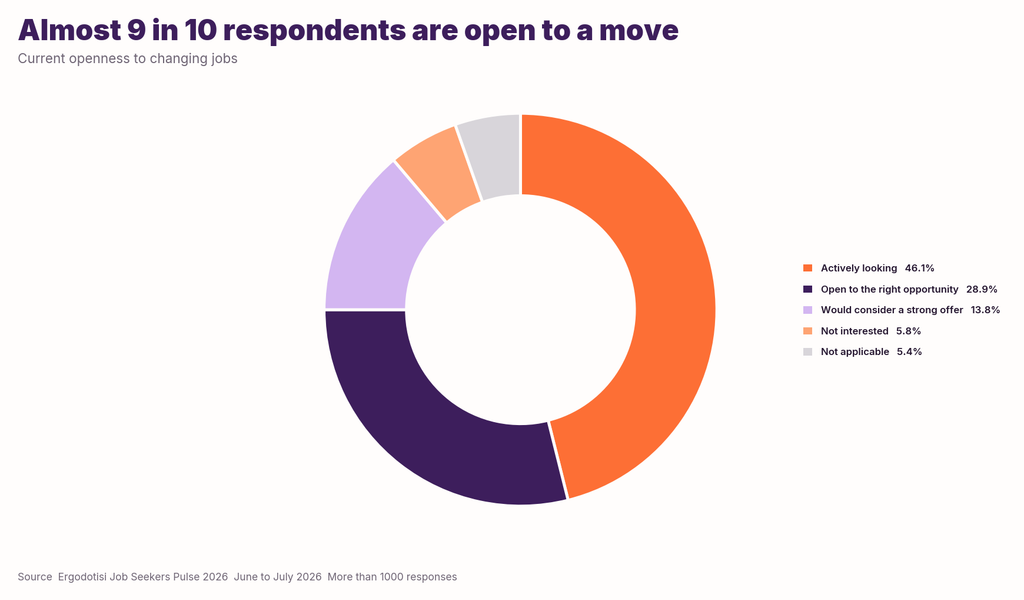
Figure 1 Openness to changing jobs among Job Seekers Pulse respondents
Salary pressure is feeding job mobility
Pay is the strongest immediate trigger in the Pulse. Higher salary or benefits would motivate 70.4% of respondents to change jobs. Low salaries are also the most selected challenge facing their industry, at 49.9%, and 53.6% identify salary as a reason they would leave an employer.
Recent pay movement helps explain that sensitivity. Half of respondents reported no salary change in the previous 12 months and 6.5% reported a decrease. In total, 56.7% saw no positive salary movement. Only 24.8% describe themselves as satisfied or very satisfied with their pay, compared with 34.8% who are dissatisfied or very dissatisfied.
The size of the increase matters too. A combined 41.7% say a rise of at least 20% would seriously motivate a move. Another 24.3% selected an increase of 10% to 20%, while 21.6% say salary is not their main factor. Employers need to benchmark pay carefully, but they should not assume that a small uplift will overcome the risk and disruption of changing jobs.
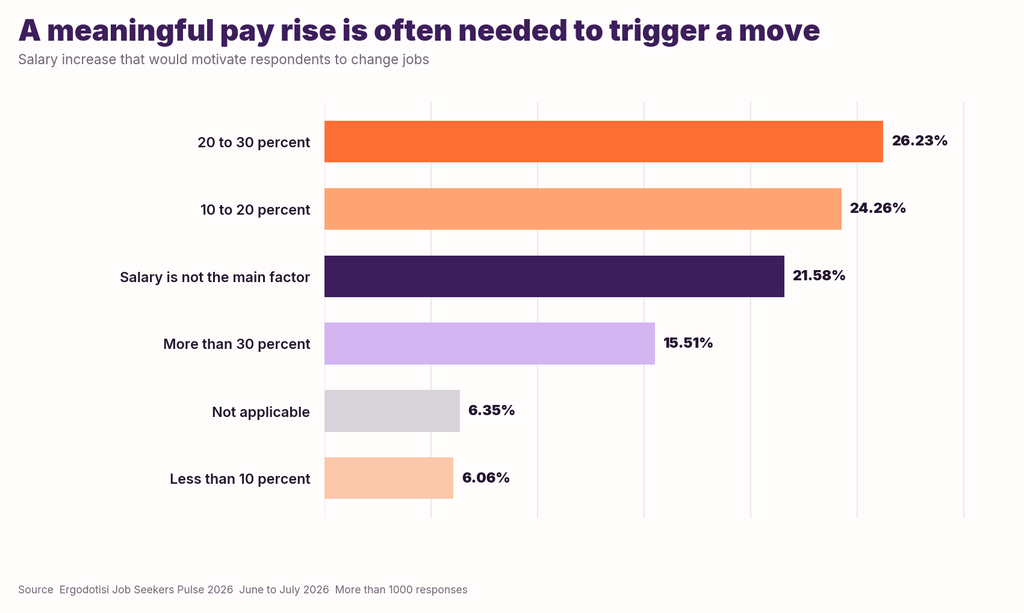
Figure 2 Salary increase that would motivate a job change
Salary transparency affects whether people apply
The case for publishing pay ranges is behavioural, not theoretical. A clear salary range makes 73.6% of respondents more likely to apply, while another 22.0% say its importance depends on the role. Only 4.4% consider salary information unimportant.
More importantly, 44.1% have often abandoned an application because salary was missing and 34.1% have sometimes done so. The report records the combined figure as 78.3%, allowing for rounded response values. Omitting pay can therefore reduce the candidate pool before an employer has any chance to explain the role.
A useful salary range should be credible, specific enough to guide a decision and consistent with the experience requested. If the final offer depends on seniority, employers can explain what determines placement within the range.
Candidates compare the whole employment offer
Salary may open the conversation, but it does not complete it. After pay and benefits, the leading reasons to consider a new job are better work life balance at 45.1% and stronger career growth at 39.8%. Flexible or hybrid work follows at 28.5%, with better management or company culture at 26.2%.
The reasons for leaving an employer follow the same pattern. Salary leads at 53.6%, followed by limited career progression at 34.4%, work life balance at 28.1%, management issues at 24.1% and company culture at 18.2%.
For recruitment and retention, this means a vacancy should explain how the role works in practice. Candidates need useful detail on responsibilities, reporting lines, working hours, learning, progression, benefits, flexibility and the team they may join.
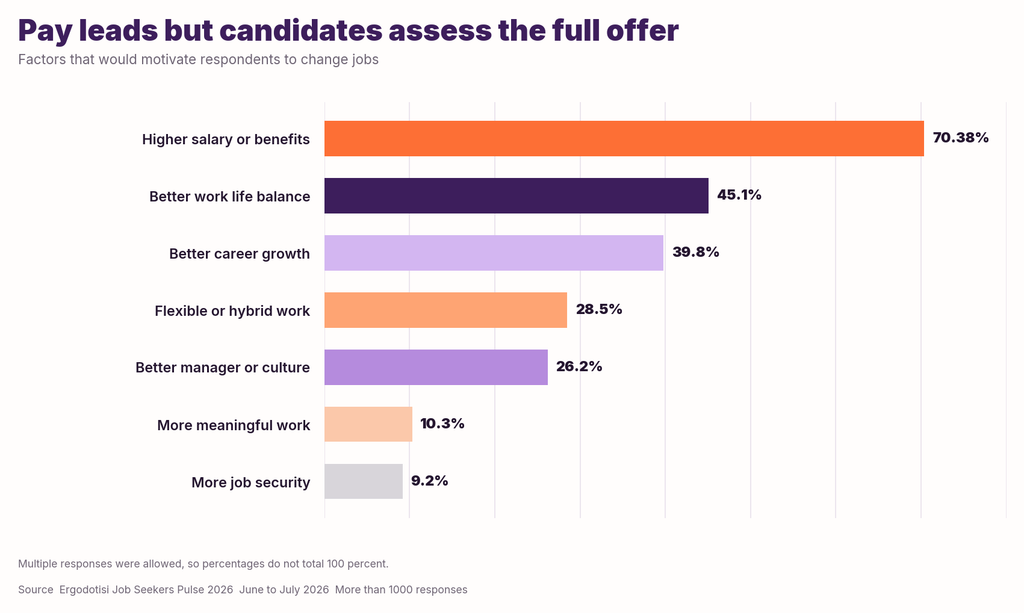
Figure 3 Factors that would motivate respondents to change jobs
Employer information helps convert interest into applications
Employer branding has a measurable role in the application decision. Company descriptions, photos, benefits, location and other profile details help 52.3% of respondents a lot and 32.3% somewhat. Together, 84.6% say this information has a substantial influence, while 93.8% say it helps to at least some extent.
Candidates use these details to reduce uncertainty before they invest time in an application. An employer profile should therefore answer practical questions: what the organisation does, where the role is based, how the team works, what benefits are offered and what employees can expect from the hiring process.
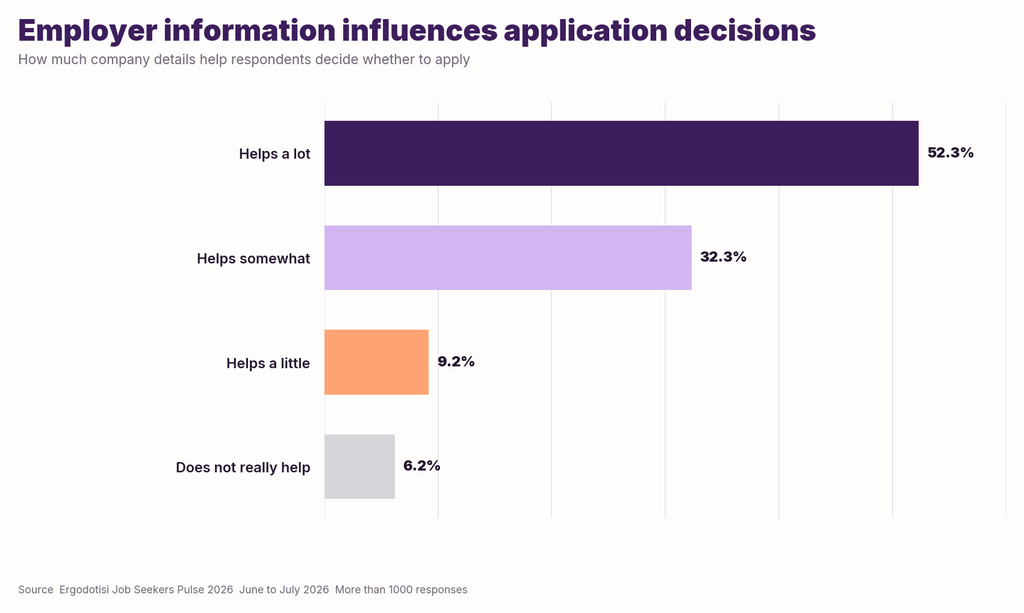
Figure 4 Influence of employer information on application decisions
Flexibility matters but preferences are diverse
The Pulse does not support the claim that every candidate wants a fully remote role. Combined, 46.7% prefer hybrid or some form of remote work. At the same time, 24.4% prefer mostly or fully office based work, and 28.9% have no preference.
The employer lesson is clarity. State the normal working arrangement, location expectations and any flexibility early. Candidates can then self select, and recruiters spend less time resolving a mismatch late in the process.
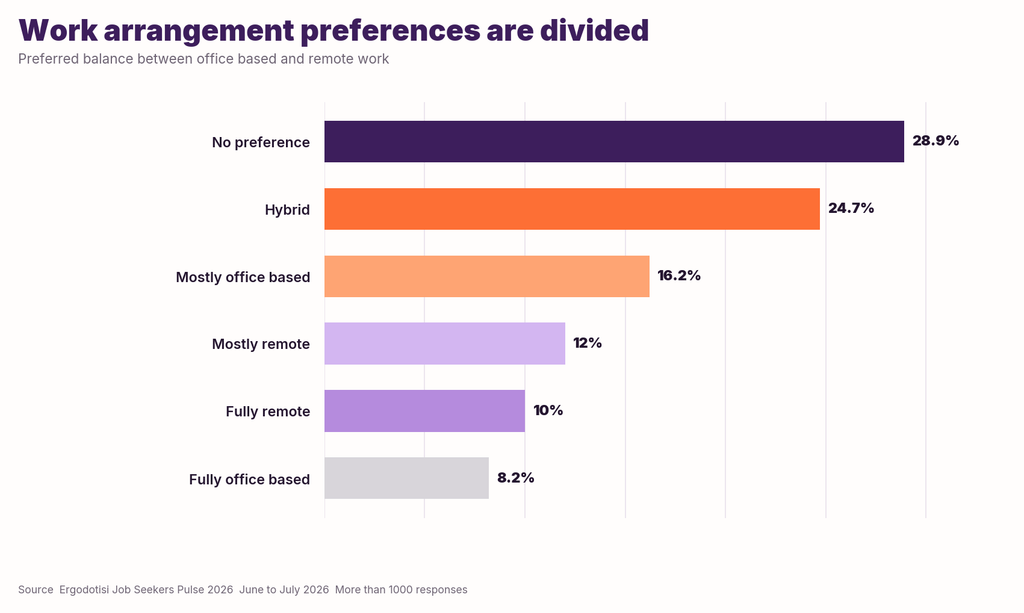
Figure 5 Preferred work arrangements among respondents
The Cyprus job market mood is mixed rather than negative
Respondents do not describe a market in broad crisis. A combined 53.0% see their industry as stable or growing, while 31.7% perceive slowdown, pressure or uncertainty. Another 15.2% are unsure.
High mobility alongside a mostly stable outlook suggests that many people are exploring because they believe a better role may be available, rather than moving only because their industry is deteriorating. Employers in Cyprus are competing for attention in a selective market, including from candidates who may be reasonably secure where they are.
What employers in Cyprus should do next
- Publish a credible salary range and explain what determines the final offer.
- Benchmark the complete reward package, including benefits, leave and working conditions.
- Show realistic career paths, learning opportunities and the scope of the role.
- State the working arrangement, hours and location expectations clearly.
- Build a detailed employer profile with useful evidence about culture, management and the employee experience.
- Review the application journey for missing information that may cause qualified candidates to leave.
- Treat retention and recruitment as connected, because pay, progression and management affect both.
A clearer offer will reach a larger talent pool
The Job Seekers Pulse 2026 points to a Cyprus workforce that is employed but persuadable. Candidates will consider moving when the opportunity feels materially better and the employer gives them enough information to make a confident decision.
For employers, the practical priority is to make the value of the role visible. Competitive pay attracts attention. Transparent job information, credible progression, workable conditions and a clear employer story help turn that attention into applications and longer term commitment.
Explore the full Job Seekers Pulse 2026 report.
Frequently asked questions
What do job seekers in Cyprus want most from a new role
Higher salary or benefits are the leading motivation, selected by 70.4% of respondents. Better work life balance and stronger career growth are the next most common priorities.
Should employers include salary ranges in Cyprus job adverts
The Pulse strongly supports salary transparency. A stated range makes 73.6% more likely to apply, and 78.3% have often or sometimes skipped an application when salary was missing.
Do most job seekers in Cyprus want remote work
Preferences are divided. While 46.7% prefer hybrid or some form of remote work, 24.4% prefer primarily office based work and 28.9% have no preference. Clear working arrangements help candidates choose suitable roles.
Also read: €820m pension reform bill to reach Parliament by end of September
For more videos and updates, check out our YouTube channel
