

On 8 September 1504, Michelangelo’s David was unveiled to the people of Florence, marking the public debut of one of the most celebrated masterpieces of the Italian Renaissance.
A masterpiece carved from marble
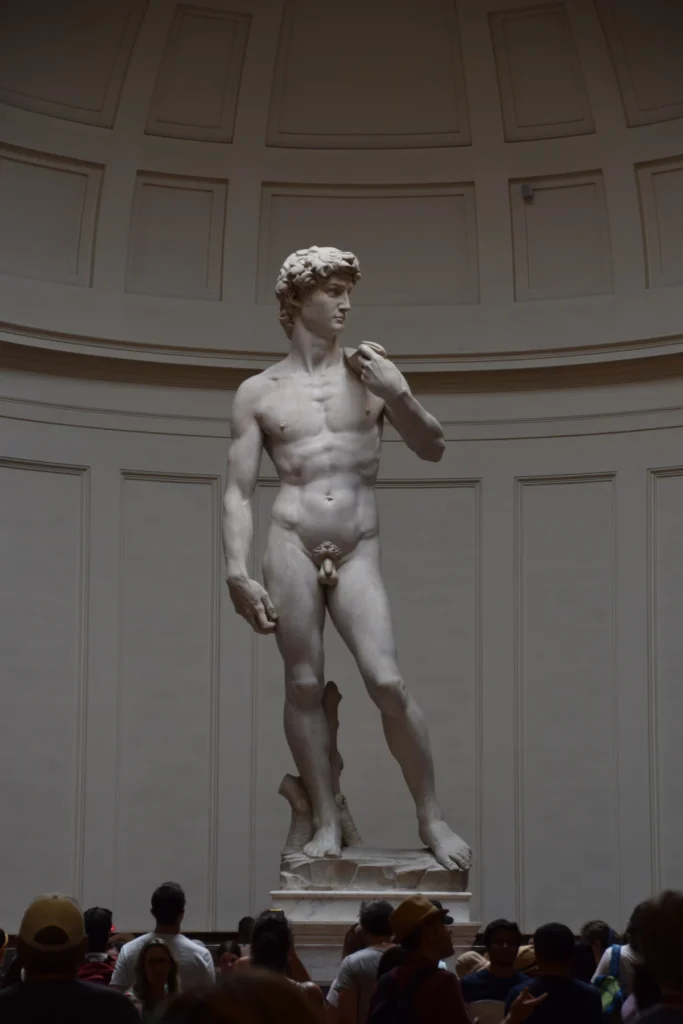
Michelangelo began work on the sculpture in 1501, when he was just 26 years old. The statue was carved from a single block of white Carrara marble that had previously been worked on and abandoned by other artists. Standing 5.17 metres tall and weighing around 5,560 kilograms, it depicts the biblical hero David before his battle with Goliath.
The sculpture was originally commissioned for Florence Cathedral and was intended to be placed high above the ground. However, after seeing the completed work, a committee of prominent Florentine artists and officials decided that it deserved a more prominent public location.
David becomes a symbol of Florence
The committee selected a position outside the Palazzo Vecchio in Piazza della Signoria, the political heart of Florence. Michelangelo’s David quickly became associated with the strength, independence and civic ideals of the Florentine Republic.
Moving the enormous sculpture to the square was a major undertaking. It was transported from the cathedral area using a specially constructed wooden structure and took several days to reach its destination.
The statue’s journey to the Accademia
David remained in Piazza della Signoria for almost four centuries. In 1873, it was moved indoors to protect the marble from weathering and damage. The original is now housed at the Galleria dell’Accademia in Florence, while a replica stands in its former location in the square.
Today, Michelangelo’s David remains one of the defining works of Renaissance sculpture and a symbol of Florence’s artistic heritage.
Also read: ON THIS DAY: First infant to receive incubator care (1888)
For more videos and updates, check out our YouTube channel
