

About this Summary
This summary was created with the help of artificial intelligence (AI) to help readers quickly understand the key points of the article.
It has been reviewed by our editorial team before publication. For complete information and full details, please read the full article.
- The project lies 120 metres from the Akamas Natura 2000 area and triggered strong reactions and scientific disagreement in the Ad-Hoc Evaluation Committee.
- The quarry will cover 49,727 square metres and extract 900,000 cubic metres of limestone for Paphos district demand over 2.5 to three years.
- Environmental groups opposed the plan, citing habitat loss, impacts on wildlife and birds, and concerns over cumulative effects.
- The authority imposed special protection for 20 Ophrys kotschyi orchids found on site, requiring demarcation and transplantation by Forests Department staff.
The Environmental Authority has approved the quarry expansion under strict environmental conditions and restrictions, allowing the development of a new quarry outside the existing Androlikou quarrying zone.
The proposed project is adjacent to the protected Natura 2000 area of the Akamas Peninsula and prompted strong reactions and scientific disagreement within the Ad-Hoc Evaluation Committee.
A new quarrying zone is also planned in Androlikou, with the relevant environmental studies expected to be submitted to the Mines and Quarries Service for assessment.
The application was submitted by Gennadios Theologou & Sons (Concrete) Ltd and Pullas Tsadiotis Ltd, which operate within the Androlikou quarrying zone.
Quarry to extract 900,000 cubic metres of limestone
The proposed quarry covers an area of 49,727 square metres. The project aims to extract 900,000 cubic metres of limestone, of which 720,000 cubic metres would be recoverable material.
The extraction process would involve 315,000 kilograms of explosives and is intended to meet the Paphos district’s demand for aggregates for a period of between 2.5 and three years.
The project is expected to produce approximately 1.512 million tonnes of final products, including material for earthworks and material suitable for concrete production, particularly sand.
According to the Department of Environment’s Special Ecological Assessment, published in July 2026, the site is located 120 metres from the Akamas Special Area of Conservation and Special Protection Area.
Around 31% of the site, covering 18,968 square metres, has already been affected by human activity, while the remaining 69%, or 30,759 square metres, consists of natural vegetation and limestone formations. Part of the area is also cultivated.
The Department of Environment concluded that the project’s effects would be mainly local and temporary. It estimated that the quarry would not substantially increase existing disturbance to wildlife and habitats, but would extend it for 2.5 to three years, provided strict conditions are followed.
Bat caves found more than 1km away
The project will involve extraction only, with the quarried material transported to existing crushing and processing facilities within the Androlikou quarrying zone.
Caves containing bats have been identified around 1.1 to 1.5 kilometres from the project site, to the north and north-west of the existing quarry.
The proposed quarry is located to the south-east, on the opposite side from the known bat locations.
According to an acoustic environment simulation submitted by the project consultant, the effects of quarry operations would be limited to a radius of approximately 500 metres. As a result, no significant direct impact on the known bat sites is expected.
Environmental groups oppose the project
The Ad-Hoc Committee, which examined the Special Ecological Assessment on February 10, was divided over the proposal.
The Game and Fauna Service did not object to the project, provided strict conditions are met. These include clearly defining the project boundaries, preventing the dumping of waste outside the approved area and submitting an annual compliance report with photographic documentation.
Environmental organisations, however, strongly opposed the project.
The Federation of Environmental Organisations of Cyprus (OPOK) criticised the fact that 31% of the area has already been disturbed by unauthorised quarrying activities. It also highlighted the loss of thousands of trees and natural habitats that act as a buffer zone for the Natura 2000 network.
Terra Cypria expressed serious concern over the loss of protected habitats and rare flora and called for approval to be rejected for areas covered by natural vegetation.
BirdLife Cyprus also opposed the project, citing potential impacts on birdlife, particularly the protected European roller (Coracias garrulus), as well as rare birds of prey. It also criticised what it described as a lack of adequate consideration of cumulative impacts.
Special protection for rare Cyprus orchid
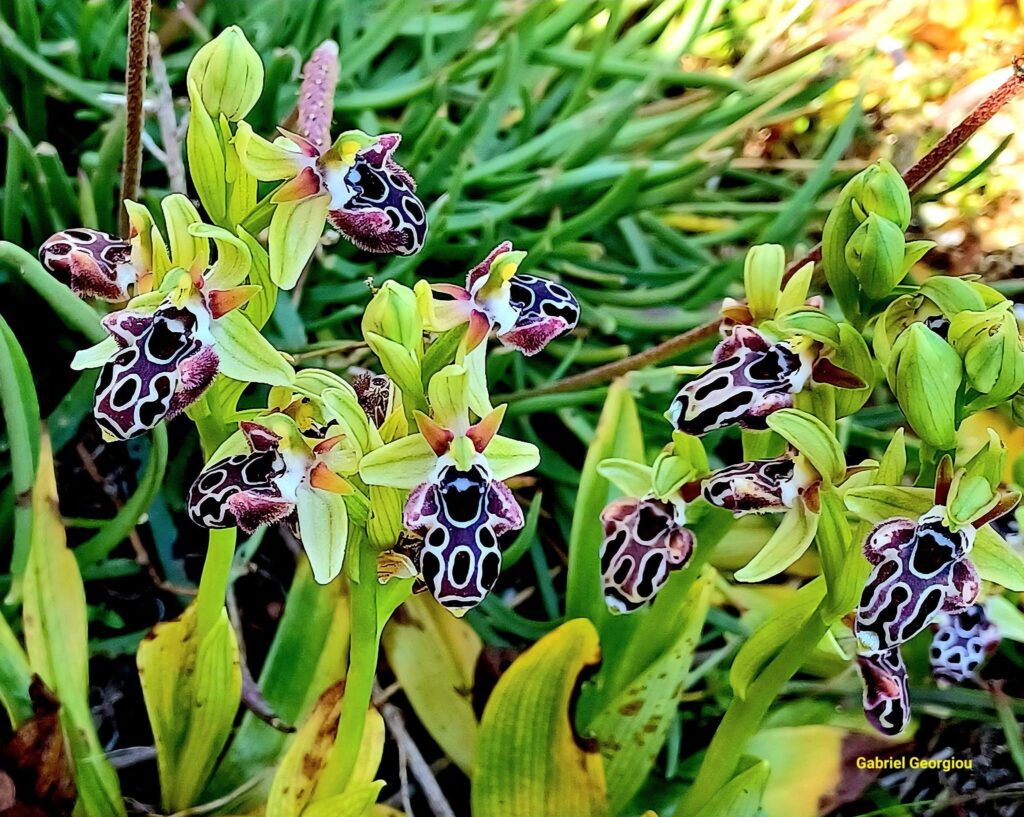
One of the most sensitive aspects of the assessment concerns the discovery of Ophrys kotschyi, a priority species endemic to Cyprus.
The orchid is protected under the EU Habitats Directive 92/43/EEC and is listed as vulnerable in the Red Data Book of the Flora of Cyprus.
Field surveys identified 20 specimens of the species at three locations within the proposed quarry site.
To prevent the destruction of the rare plant, the Environmental Authority imposed a specific binding condition. The area where Ophrys kotschyi was found must be immediately demarcated, with any intervention or disturbance strictly prohibited.
During the flowering period between March and April, the Department of Forests will conduct a field survey to record and identify all specimens.
Specialised Department of Forests personnel will then transplant the plants, together with their rhizomes and surrounding soil, to a suitable natural habitat within the Natura 2000 Special Area of Conservation.
Strict conditions imposed on quarry operations
In addition to protecting the orchid, the approval includes a package of strict environmental conditions.
No quarrying or blasting may take place from March to June to avoid disturbing bird breeding.
Roads and material piles must be systematically watered, while low-noise, modern drilling equipment must be used.
The quarry must be progressively restored through the formation of benches and replanting with native species during operations. A comprehensive Restoration Plan must also be prepared in cooperation with the Department of Forests.
Heavy vehicles must remain on designated routes and cannot operate during night-time hours.
All necessary fire-prevention measures must also be implemented, particularly during the summer months.
Also read: Cyprus only European country to see greenhouse gas emissions rise
For more videos and updates, check out our YouTube channel
