

Signs of escalating tensions are emerging across the Middle East after the United States issued coordinated security warnings on Saturday (1 August) to its citizens and diplomatic personnel across several countries in the region, amid reports of potential large-scale strikes targeting Iran’s energy infrastructure.
US advisories urged American citizens in the United Arab Emirates, Qatar, Oman, Iraq, Jordan, Israel, Kuwait, Saudi Arabia, Bahrain and Egypt to consider departing due to the risk of a “significant and unpredictable escalation.” The warnings also highlighted the possibility of flight disruptions and sudden airspace closures.
At the same time, US media outlets, including CBS News, reported that the United States and Israel are considering one of the largest operations to date against Iran’s energy sector, with potential targets including power stations, oil refineries and other critical infrastructure. According to the reports, any strikes could take place as early as this weekend.
Iran has also intensified its rhetoric. The commander of the Iranian Armed Forces warned that regional countries cooperating with the United States risk being “consumed by the flames of war,” while Tehran reiterated that it is prepared to target key US and Israeli energy assets and has again raised the possibility of restricting navigation through the Strait of Hormuz.
GPS interference intensifies around Cyprus
The heightened tensions are also reflected in the electronic environment across the Eastern Mediterranean.
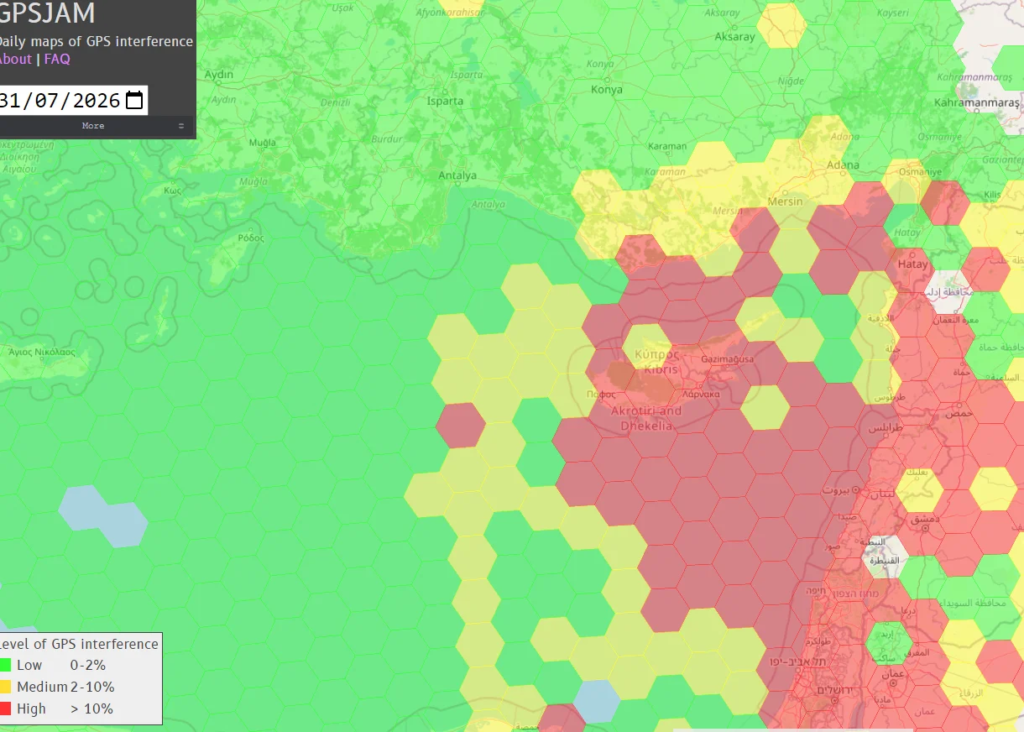
According to data from the GPSJam platform, widespread GPS jamming activity has been recorded around Cyprus, Syria, Lebanon and Israel. In several areas, interference levels exceeded 10%, potentially affecting satellite navigation systems.
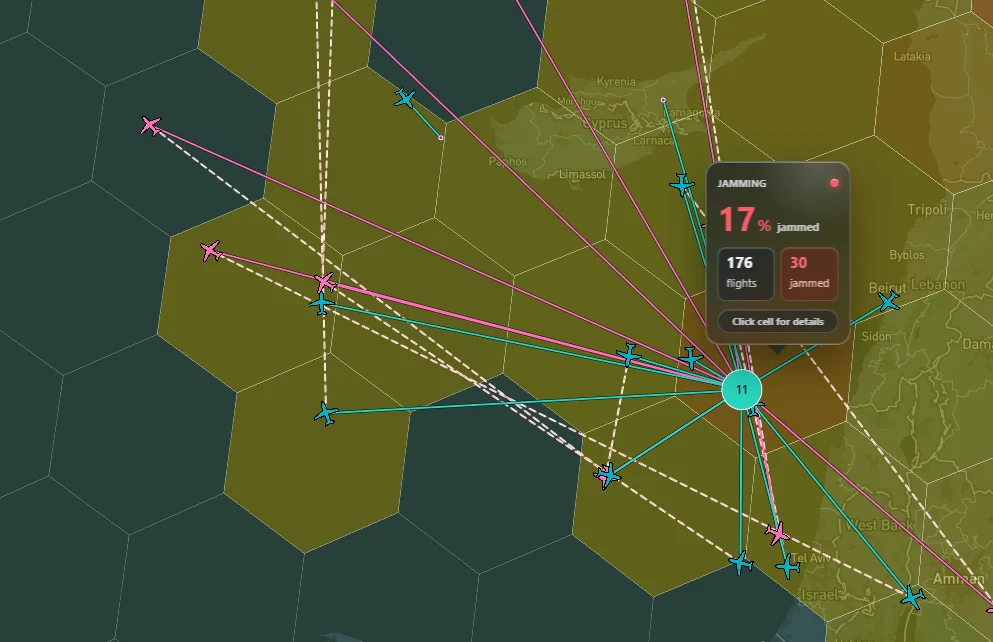
A separate aviation data map also indicated that around 17% of flights passing through parts of the Eastern Mediterranean experienced signs of GPS interference, highlighting increased electronic activity across the region.
While GPS jamming alone does not confirm military operations, it is commonly observed during periods of heightened tension, as it can be used to protect sensitive infrastructure or disrupt the guidance systems of weapons and unmanned aerial vehicles.
Source: CBS News, GPSJam
