

Red alert issued for parts of England and Wales
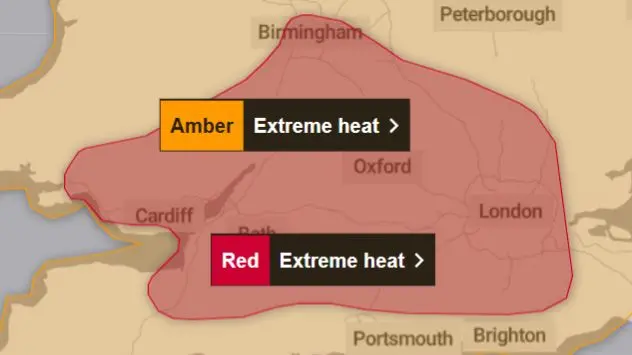
The UK Met Office has issued a rare red weather warning for extreme heat across parts of England and Wales, warning that soaring temperatures later this week could pose a danger to life.
The red warning will be in force from 9am on Wednesday until 9pm on Thursday, covering parts of southern England, the Midlands and southern Wales.
Forecasters say temperatures could reach 38°C or 39°C, while wider amber warnings remain in place across much of England and Wales until Thursday.
Health and infrastructure at risk
The Met Office said the extreme heat is likely to have significant impacts on public health, particularly for vulnerable people, and could also disrupt transport, energy supplies and other infrastructure.
Red weather warnings are issued only when dangerous weather is expected and there is a high likelihood of severe impacts.
Officials also warned that unusually warm overnight temperatures will provide little opportunity for people to cool down, with some urban areas expected to remain above 20°C or 21°C overnight in what are known as “tropical nights”.
Heatwave could break records
An official heatwave was declared on Sunday in Writtle, near Chelmsford, after temperatures exceeded the local heatwave threshold for three consecutive days.
Meteorologists say the current spell is expected to become both record-breaking and potentially dangerous, with higher humidity making conditions feel even more uncomfortable than during the UK’s record-breaking heatwave in 2022.
Hot weather grips western Europe
The heatwave is affecting much of western Europe, with red warnings already in force across large parts of France and in parts of Spain and Germany.
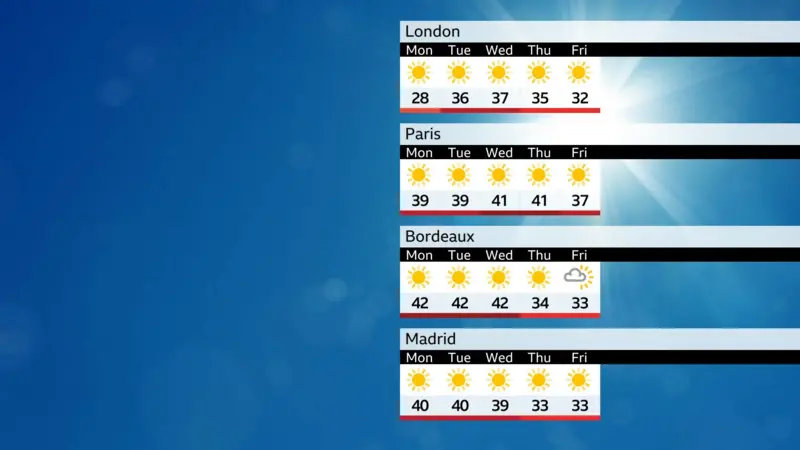
According to the Met Office, the extreme temperatures are being driven by a strong high-pressure system over Europe, which is trapping hot air while southerly winds draw additional heat northwards from the continent.
Dry ground conditions are also contributing to higher temperatures by allowing more of the sun’s energy to heat the air rather than evaporate moisture.
